By Vela Mickovic; Rudina Hoxha; G컩m Ibro詻 Aleksandra Dubak & Aida Rastoder; Dashamir Bi被u
“T롦shehur midis nesh” (“Hidden among you”) is the first film ever screened in Albania about the Lesbian, Gay, Bisexual and Transgender (LGBT) community. Supported by the Soros Foundation, a foundation promoting Albanian democratisation, the movie depicts the lives of two gay couples. Last September, it grabbed a special prize at the second annual Balkan Film and Food Festival, one of the most prominent film festivals in Albania, held in the city of Pogradec.
The 11-minute movie deals with a controversial topic addressing the desires of gay couples to have their own families. The lesbian couple declares: “We constantly think of children and they are part of our plans.”
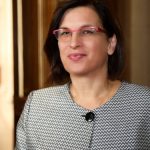
“Motherhood is the great gift” is a sentiment shared by many women including Xheni Karaj, a very well-known figure in the Albanian LGBT movement. Since coming out one year ago, she runs the Alliance Against Discrimination of LGBT (Aleanca LGBT), an NGO in support of human rights which started in 2009. Dressed in autumn colors, Xheni agreed to be interviewed over a coffee. Elegant, no makeup with a modern cropped hairstyle, she emits simplicity, neatness and good manners.
With a degree in psychology and a steady job, Xheni, 27, is sure that many gay couples, who are her friends, want to have children, and they do believe in the institution of marriage. “Usually, as they are heading into their thirties, some of them start feeling the need to have a baby,” she says. But she points out that “it is worrying to see that most of Albanians do not yet believe that the LGBT community can have families and babies like everybody else. Even though we believe in love and long term relations and our relationships have the same dynamics as heterosexual ones, we do suffer the outside pressure because of prejudices”
Xheni herself is looking forward to being a mother one day, too.
“Also I think I will have a baby. I am already thinking about that,” she confesses with a big smile. Already in a three year relationship, she plans to make her dream a reality soon after most of the issues relating to LBGT community improve in Albania.
“Children are sacred to Albanian families and my (parents), too, won’t make an exception in this. They might not like the way we will have a baby,” but she believes that her baby would be still loved by her parents.
Zdravko Cimbaljevic, 33, is the only gay man to come out in Montenegro. Through Facebook, he said he sees it is hard for him to think of being a parent. “It would not be easy to have a child. I believe I can marry 10 years from now. I don’t believe I will be able to adopt kids as a gay person,” Zdravko says.
He is fully conscious that some members of his family might be against his decision but “the better part of the family will definitely accept my child as something totally normal. I will raise my children like every parent that loves their child does.”
Family reaction remains one of the biggest obstacles and source of stress for homosexuals. Some believe older Albanian parents, who belong to a generation molded by the communist, patriarchal rules, find it hard to accept homosexuality, let alone children coming from the homosexual marriages.
“They are worried whether the children will be gay or how they will be grow up when it comes to values because people think we lack morals,” Xheni says. But for her, the only concern are the obstacles her children may face coming from a gay family.
Albanian society is facing many social changes, in part, sexual liberation. That has helped the gay community. But still homosexuality continues to be perceived as abnormal by the major part of the society and gay couples. The latter, though in long-term relationships, face regular social pressure and legal challenges that impede them from getting married.
Out on the streets of Tirana, there are many different points of view as well.
“Agron”, 30, thinks that all Albanians, generally speaking, still hold negative attitudes towards gays. He does not support the gay community and does not approve of them getting married and having children. I think that is something bad.”
On the other hand, “Liljana”, 50, has changed her opinion. “If you asked me one year ago, I would give a different answer, but now I accepted that they are a reality in our society. If my child would be a LGBT person, I would have considered that as something bad but would have accepted it at the very end,” she said.
Homosexuality as a fundamental human right is one of the key criteria that Albania and Montenegro have to fulfill for joining the EU. In Montenegro, the proposed Law on Same Sex Partnership is still pending.
Zdravko, too, thinks it is hard to gaze how people around him perceive homosexuality. “Many think that if I even look at someone’s eyes they become gay immediately. Someone believes that if I sleep with a woman I will change my sexual orientation and be cured. Others say that gay people are only hairdressers and fashion designers etc. That I am not born in this country and that I am importing from somewhere else to poison the people in Montenegro…,” he said.
NGOs like Xheni’s Aleanca LGBT or Pinderi’s Pro-LGBT are working hard to raise media and community awareness about the rights of this community.
“We are spreading the right information in other cities. In our efforts, we are being helped a lot by the Albanian Ombudsman, Mr. Igli Totozani, who has been very active and devoted to LBGT community rights,” Xheni says.
Totozani says that “time has come to make an effective implementation of the law and get tangible results in applying anti-discrimination policies.” To that end, he has asked the Albanian government to take the necessary and immediate steps to respect the legislation against discrimination. Aleanca LGBT is also collaborating with the Albanian Ministry of Labor and Equal Opportunities to put into practice a plan of action on LGBT community, put forth in December, 2012, in the context of EU integration. ‘In addition, police, once reluctant to help the gay community organize rallies, are more supportive now,” Xheni says confirming that representatives of the Albanian Ministry of Interior are at least willing to cooperate with the Aleanca LGBT.
“Things have changed faster that I expected with the LBGT community in Albania. When we founded Aleanca LGBT four years ago, I really had no idea I would come out. I thought I would do this underground. But things change. In the very beginning we were just five girls and now the number has been grown. I am very positive and I think that in Albania things are going in the right direction.”
In her view, Albanian society is very open to changes as time has shown in these 20 past years. “Still we need to transmit a lot of information and talk with the peoples and give positive examples to do away with the myths and the stereotypes that have been existing about the lesbians and the gays. This will happen as the new generation is much more open to changes. For sure, it will take time,” she says.
Likewise Zdravko is fond of his parenthood instinct. “Sometimes I see myself like my father. But only sometimes. So I try to not behave as my father just to be myself.”
He will raise his children like every parent. “Nothing different than giving my love, teach him/her good things, be worried about his/her future and taking care that every day is wonderful day for my child.”
This article was produced during the five-day training course “The Role of Media in Strengthening Social Cohesion” (Feb. 4-8, 2013), funded by the State Department’s Special Representative to Muslim Communities (SRMC) and organized by U.S. Embassy Tirana and Albanian Media Institute (AMI)