TIRANA, April 21 – Albania’s public universities held elections to elect their new leaders under a new controversial higher education law this week and amid a pre-election process marred by accusations of intimidation and calls for a boycott.
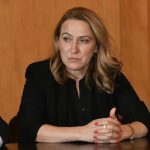
All eyes were on the country’s biggest University of Tirana and its six faculties where the rector’s race between Klodeta Dibra, the former head of the Faculty of Foreign Languages and a Tirana Municipality councillor representing the Socialist Party and Mynyr Koni, the former head of the Faculty of Natural Sciences, was marred by accusations of intimidation by a notorious gangster who has recently been arrested. Professor Koni won the race by a landslide.
Professor Koni claimed he had been intimidated to withdraw from the race by Emiljano Shullazi, a notorious gangster arrested in the past few days also on charges of blackmailing several businessmen.
Klodeta Dibra also claimed she was not allowed to campaign in the Faculty of Natural Sciences where Koni is a dean.
Meanwhile, the so-called Movement for the University, a group of professors and students opposing the new higher education law, called for an election boycott.
The movement claims the new higher education law, makes it too expensive for them to attend school and shifts funding from public universities to private ones.
Professors and students voted on Wednesday to elect 14 rectors, 55 faculty deans and 155 chiefs of departments and research centres for the next four years. Professors held the overwhelming majority 90 percent say in the voting process in 14 public universities compared to only 10 percent for students.
More than 170 observers elected by the running candidates including 20 members of the U.S. Embassy Youth Council Albania monitored the election process.
The Albanian government has recently hired a British agency to rank the quality of some 35 public and private universities in the country as part of ongoing reform in the education system culminating in 2014 with the closure of more than a dozen of so-called pyramid schemes of education. U.K.-based Quality Assurance Agency (QAA) will be paid a reported €700,000 to conduct the ranking.
Expectations from the new rating remain mixed as public universities offering a limited number of students are already favoured over private universities which almost accept everybody if they pay the registration fees. Both public and private universities are often the second choice for those who can afford to study abroad.
The reform of the higher education sector has been one of the priorities of the Socialist-led government since taking power in September 2013.
Several private universities were closed in 2014 after they were found to not meet even minimal quality standards.
Prime Minister Edi Rama himself labelled these higher education institutions as pyramid schemes in education drawing parallels with the Ponzi schemes that robbed Albanians of life savings in 1997.
Albania had gone from having no private universities a decade ago to more than 40 private universities and professional colleges today. It had a mere 17 private universities in 2009. The rest had sprang out since then, according to data by Albania’s Public Agency for Accreditation of Private Higher Education. By comparison, there are only 14 public universities.