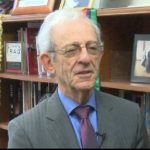
Keep up reforms to ensure Albanians have better prospect of living in their own country and of working for the future of their own country, Poland’s Ambassador to Albania, Marek Jeziorski, says in an interview.
He spoke to journalist Rudina Hoxha.
Poland has constantly confirmed its determination to share its European integration experience with Albania. What are some concrete steps taken in that context?
I would like to mention two developments in this context. Firstly, in May 2014 foreign ministers of Albania and Poland Ditmir Bushati and Radosław Sikorski signed Memorandum of Cooperation in the Field of European Integration. Within the framework of its implementation Embassy of Poland organized already two seminars in Tirana, in December 2014 and March 2015, in cooperation with the Albanian MFA and Ministry of European Integration, with the participation of Polish experts. Issues discussed at the seminars ranged from the coordination of the European policy at the government’s level, through best practices in absorption of EU funds, impact assessment of EU legislation, up to Common European Security and Defence Policy. We will continue the Memorandum’s implementation in other forms as well. Secondly, cooperation between the Supreme State Audit offices of both countries developed very well in recent years. The Supreme State Audit Office of Poland organized, within the framework of bilateral cooperation, four training sessions for Albanian state auditors. It will implement, as a senior partner, an EU twinning project to support Albania’s KLSh.
Our experience from the period of accession to the EU is highly valued in Albania. We are ready to continue our assistance, both bilaterally and within the framework of international projects. Our experts have given advice on important issues such as EU legislation’s transposition into the national law, administrative-territorial reform, public administration reform. They will also be involved in the French-Italian twinning project to support the functioning of the Albanian school of public administration. It is also worth of highlighting a very good cooperation between the two countries’ independent institutions. A very good example of it is a close collaboration between the People’s Advocate and the Polish Human Rights Defender.
What do you think are going to be some of the biggest challenges Albania is likely to face in its next steps toward EU membership?
We support you in your effort within the EU accession process. Its success requires constant mobilization and determination, cooperation of all political forces and civil society, fulfillment of clearly defined mutually accepted criteria and regular dialogue between the authorities and the people on challenges and advantages of the European integration. The EU accession of Albania, as well as of other Western Balkans countries, has to be well prepared. The conditionality principle should not be understood as an unnecessary obstacle, but as an indispensable instrument of reforming the country and important element of strengthening the internal cohesion of the EU as a union of values, standards and solidarity. It would be helpful to remember that you do reforms not for us, but for yourself. Albanian people need Albania with strong rule of law, with effectively functioning public administration and sound public finances management, free of corruption and organized crime, protecting human rights of every citizen.
Responding more directly to your question, I would mention several issues that both the EU and the Albanian authorities consider of utmost importance. We all do hope that the planned reform of the judiciary will bring soon results. An effective honest professional judiciary is key for the implementation of criteria of progress in the European integration process, for faster development of the economy and investments. It would respond to Albanian people’s expectations regarding their rights and obligations. Secondly, I would refer to the agreement of all political parties in the parliament of the 24th of December 2014. It contains a number of significant provisions, with the issue of decriminalization among them. Many people see this question as decisive for the strengthening of the rule of law and fight against corruption and organized crime. Finally, among the issues that have a direct influence on how the economy is developing and on how effective the European integration process could be, I would single out the problem of the property registration.
As local administrative elections approach, what sort of advice would you offer to Albanian politicians and voters?
Albania has been cooperating for years with many international organizations on the issue of organizing and managing elections. They have given a lot of useful and principal advice. It is always important to ensure all required conditions for the smooth conduct of elections in accordance with Albanian legislation and international standards. Our Polish experience from the 25-year functioning of local self-government shows that the best results have been achieved in those municipalities and regional local government units where honest professional hard-working and creative people were proposed as candidates and elected.
There is a recent wave of Albanians trying to migrate to Germany, France and other European countries using asylum claims. What is your view on the EU policy on this matter?
The EU policy in this field is an agreed policy being implemented by all EU institutions and all Member States. In the context of the most recent wave of Albanian emigration, it is worth recalling that asylum cannot be granted for economic immigrants. We share the concerns expressed by the EU countries affected by the phenomenon in question. A proper information concerning conditions of travel to the European Union should be constantly ensured. The activity of some criminal groups abusing a very difficult situation of some Albanians, misinforming them and promising things that cannot be delivered, has rightly been in the focus of the government’s attention. But certainly the best reaction to this phenomenon, as I have already said publicly, is to continue with determination the implementation of reforms in the framework of the EU integration process and to ensure in this way to all Albanians a better prospect of living in their own country and of working for the future of their own country.
On May 3, Poland celebrated its national day. How did this commemorative day find the Polish people?
The commemorations almost coincided with the 11th anniversary of Poland’s EU membership. Those years were for Poland a period of unprecedented success. EU structural and cohesion funds constituted a strong stimulus in every aspect. Poland and its regions changed enormously. Co-financing requirement made the central government and local authorities mobilize budget resources and create a transparent and effective public finances management system. It helped to focus on priorities of development. Through the EU financing some 172 000 investments were implemented since 2004. They created new workplaces, increased the competitiveness of the Polish economy, stimulated export growth and strengthened the pace of GDP growth. The accumulated growth of GDP in Poland since 2004 is close to 60%. In the period in question Poland was the only EU country that did not experience recession. EU Common Agricultural Policy helped to completely change the landscape of the Polish countryside. Up to 2013 Polish farmers and rural areas received about 26 billion euro within CAP. An average income in agriculture rose more than 60%.
As a result of all these changes we feel stronger, more self-confident and safer. That is why support for Poland’s membership of the European Union for the last few years has remained stable and high. According to a recent poll, 72% of surveyed Poles supported Poland’s EU membership.
At the same time both the authorities of Poland and the Polish people have today the issue of our security in the center of attention as we are faced with challenges and threats coming from the East, Middle East and the South. The illegal annexation of Crimea by Russia, separatist Russian-backed destabilization of Ukraine changed the security landscape not only in Eastern Europe, but in the whole continent. As President of Poland Bronisław Komorowski said at the 3rd of May celebrations: “This is the image of today’s turbulent, unstable world. And in these conditions we have to build our Polish security, security with our children in mind”. In this context Poland’s cooperation with all our allies, among them the United States, is considered to be an absolutely crucial element of our security system. We appreciate very much the decisions of the NATO Summit in 2014 focusing on the strengthening of the allied capabilities and of the Eastern flank of the Alliance. We are active in implementing those decisions, also through efforts to modernize our armed forces.
It is worth noting that in spite of the tough political and economic conditions the Polish economy has been developing very well. GDP rose by 3,4% in 2014. Record-breaking results in Polish foreign trade were noted last year. Exports of goods in general achieved a historic value and were higher by 5,2% than those recorded a year earlier. In 2014 the situation on the Polish labour market clearly improved. In the fourth quarter of 2014 the unemployment stood at the level of 8,3%, compared with 10% for the whole European Union.
The trends mentioned above allow us to look positively at our future. 3rd of May is the day of optimism. Unity around the fundamental values for the Polish state and the Polish people, independence, freedom and democracy, was strongly manifested during the National Day celebrations. At the same time, it was a very joyful holiday, with family meetings, open air events, concerts, sport activities throughout the country. The 3rd of May Constitution of 1791 remains always for us a symbol of our vital creative forces capable to keep modernizing and strengthening the state and the people.