TIRANA, July 17 – The reactivation of domestic oil refining in late 2016 has significantly reduced reliance on fuel imports in the first half of this year but slowed down oil exports as international oil prices have significantly picked up following a 12-year low of $30 a barrel in early 2016.
Finance ministry data shows oil imports in the first five months of this year dropped by a sharp 30 percent to 135,000 metric tons as domestic refining is estimated to meet about a third of the country’s needs.
The situation is a result of a late August 2016 deal between Bankers Petroleum, the country’s largest oil producer, and an offshore company that envisaged Bankers could sell up to 65 percent of its crude oil production from October 2016 to December 2017.
The late August 2016 deal with Ionian Refining and Trading Co. – IRTC SH.A., a newly established offshore at the British Virgin Islands and also registered as a joint stock company with Albania’s National Business Center, was made just before Chinese investors fully acquired Bankers Petroleum for C$575 million (€392 mln).
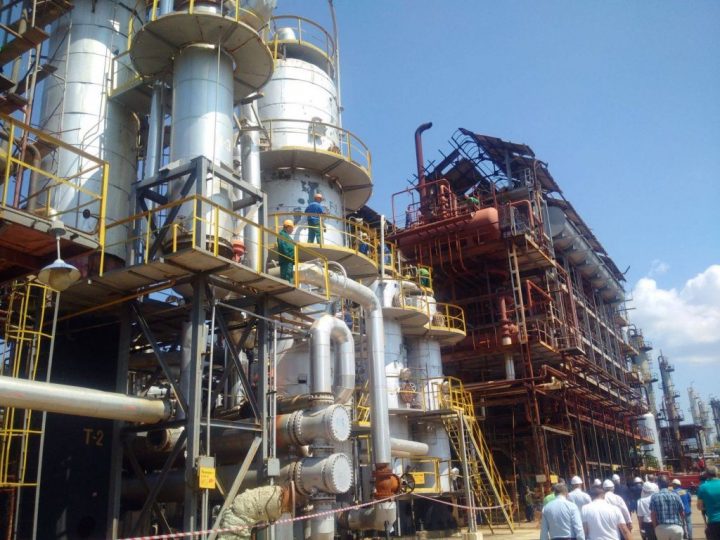
The deal reactivated the bankrupt ARMO oil refiner which had left hundreds of workers jobless since more than a year in its Fier and Ballsh refineries.
The 2016 bankruptcy of Albania’s oil refiner ARMO and its suspension of operations led to an almost 10 percent increase in fuel imports in 2016, when Albania met almost all of its domestic consumption with imports of more than 507,000 metric tons.
ARMO, whose 15 percent stake is still held by the Albanian government, has been in financial trouble for several years now following a failed 2008 privatization.
The increase in domestic oil refining also affected oil exports in the first half of this year.
Data published by state statistical institute, INSTAT, shows exports of ‘minerals, fuel and electricity,’ within which fuel holds the lion’s share, rose by only 11 percent to about 23 billion lek (€170 mln) in the first half of this year despite international oil prices having recovered to about $50 a barrel, from a 12-year low of $30 a barrel in early 2016.
Due to heavy refining needs, Albania exports most of its crude oil at about 80 percent of the Brent price and imports the overwhelming majority of needs.
Because of the high tax burden, Albanians face one of Europe’s highest fuel prices, despite the country’s GDP per capita and consumption levels being among Europe’s poorest.
A recent investigation by the Albanian Journalism Lab show the country key oil distributors overwhelmingly trade fuel mixed with cheaper substances such as kerosene and crude oil, at a time when the product is not fully refined.
Lab tests showed Albania’s oil quality is the region’s poorest, with a negative impact on the environment, pollution-related diseases and some 430,000 cars possessed by Albanians.
The Supreme State Audit has often unveiled oil concessionaires are engaged in tax evasion by using adulterated fuels and not declaring the extra production.
The practice is also widely used even in retail fuel stations where certified fuel is mixed with non-standard products to increase the volume at the expense of consumers and to avoid paying taxes.