Change font size:
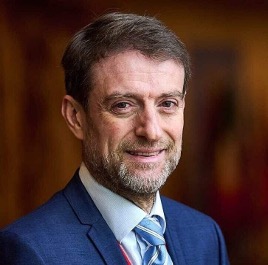
By Janusz Bugajski
Serbia’s government may be planning to eliminate Kosova statehood by supporting a “Greater Albanian” project. Since the break-up of Yugoslavia, officials in Belgrade have toyed with various solutions that would permanently settle relations between Serbs and Albanians and finally eliminate the “Kosova question.” The current focus on territorial partition can be viewed in thisstrategic perspective.
All Serbianleaderssince Slobodan Milosevic have resisted negotiating with the authorities in Prishtina, and onlyacquiesced because of pressure from the EU and the US. They prefer to deal with Tirana and in bypassing Prishtina they deliberately seek to undercut the legitimacy of the Kosova state and its officials.
Tirana has sometimes fallen into this diplomatic trap even though it has firmly supported Kosova’s independence and territorial integrity.In November 2014,Prime Minister Edi Rama paid a historic visit to Serbia, the first by an Albanian premier in 68 years, paving the way for the normalization of relations between the two countries. This was followed a few months later by the first visit by a Serbian prime minister when Aleksandar Vucic travelled to Tirana. Such visits are important to promote regional stability, but they may also disguise a more divisive agenda.
Officials of both major parties in Tirana have periodically claimed that they are the leaders of all Albanians in the Balkans. Such statements, usually made during election campaigns,may be intended to give support to various Albanian communities but they inadvertently assist Belgrade by undercutting Prishtina’s position. Politicians in Kosova do not want rifts with their counterparts in Tirana, and although they view Albania as their historic motherland, they do not consider its politicians as their “elder brothers.”
Belgrade will consider almost any option to avoid recognizing Kosova as an independent state.Having failed to reintegrate the territory into Serbia or to disqualify Kosova on the international arena, it has revisited the concept of a “Greater Albania” that could serve Serbian interests. Partitioning Kosova and merging most of the country with Albaniacould achieve several objectives.
First, for domestic consumption, the government can claim that Serbia has actually benefited by gaining Serb majority areas without recognizing Kosova’sright to exist. Such border changes would evidently ensure greater ethnic cohesion and homogenization and enable Serbs to focus on the future of Bosnia-Herzegovina. The “Greater Serbia” project would have received its most significant boost since the demise of Milosevic.
Second, for an EU audience, Belgrade can claim a breakthrough in stabilizing the Balkans by forging a lasting Belgrade-Tirana compact. This would help the government in moving forward in its bid toward EU membership andappeal to Washington, which is in search ofother permanent regional solutions following the landmark Skopje-Athens agreement.
Third, negotiations fora Belgrade-Tirana accord,depicted as an historic treaty “between Serbs and Albanians,” would serve an additional objective even if they fail by provoking rifts between Albanians in both states.One cannot assume that relations between Tirana and Prishtina will always be trouble free. An undercurrent of resentment of Tosk linguistic and cultural dominance that is periodically expressed could bubble to the surface if Kosova feels it is treated as a second-class partner.
There is also a rational political calculation, in that an accord between Belgrade and Tirana over Prishtina’s headcould marginalize Kosova’s leaders and weaken Kosova’s international position. The new state would be viewed as a mere province of Albania rather than an equal partner. Support in Prishtinafor a loose confederation between Albania and Kosova or a merger through an EU-driven process that dissolves borders does not envisage outright annexation.
A Serbia-Albania agreement also carries loomingthreats to other neighboring states, particularly to Montenegro and North Macedonia.TheAlbanian population in southern Montenegro could be enticed with secession to “join the motherland” and used as a wedge against the government in Podgorica in an effort to reintegrate Montenegro in alarger Serbian state.In North Macedonia, any territorial union between Albania and Kosova could revive the ghosts of separatism among the Albanian population in the western districts and even in Skopje.
In an idyllic world, Albania, Kosova, and Serbia would move toward a common future in the EU where borders would cease to be significantmarkers of ethnic exclusivity. But the region is far from idyllic and the wider Europe itself is now rocked by greater demands for ethnic borders.
*Janusz Bugajski is a Senior Fellow at the Center for European Policy Analysis in Washington DC and host of “Bugajski Hour” and “Bugajski Time, ” television shows broadcast in the Balkans.