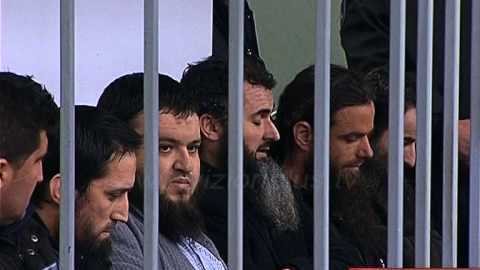
TIRANA, June 2 – A witness in the trial against several people facing charges of recruiting Albanians to fight in the Syrian conflict has told a Tirana court he had trained with militants there for six months before returning home and that he had been accompanied in two trips to Syria by one of the accused recruiters.
Edmond Spataraku, 23, told the court this week he had trained on how to fight in Syria during two three-month trips to the conflict zone.
Spataraku made the comments after he refused to take the customary oath to tell the truth under Albanian law, saying he would only obey a religious oath.
Spataraku said how he was accompanied to Syria by Gerti Pashja, one of the nine Albanians, including two preachers, who have gone on trial on charges of recruiting and sending more than 70 men to fight with rebel and extremist groups in Syria.
Spataraku said he was accompanied in his trips by Pashja, an imam of the mosque in the central Albanian city of Elbasan, where they had met.
While experts believe that part of the group of Albanians who have traveled to fight do it for financial reasons, Spataraku said his trips to Syria had been as a volunteer, and he had received no money, adding he “wanted to help Muslim brothers.”
As a witness, Spataraku helps the prosecution’s case, and had he admitted to traveling to Syria after the Albanian parliament made fighting in foreign wars illegal, he would have faced criminal charges as well, according to legal experts. The law targets its harshest penalties for recruiters.
The previous week, another witness testified how his son was taken to Syria by another one from the suspects on trial.
Authorities have said several Albanians have died in the fighting in Syria, citing information provided by their families.
Last month, an Albanian man had been killed by the ISIS group after he expressed disillusion with the cause and tried to return to Albania.
The nine accused recruiters were arrested a year ago and charged with promoting and funding terrorist activities. They face a minimum 10-year prison sentence if convicted.
Prosecutors claim the suspects recruited Muslims in Tirana from two mosques that are not recognized by the country’s official Muslim Community organization.
About 57 of Albania’s 2.8 million residents self-declared as mainstream Muslims in the 2011 census, but most are nonpracticing and the country has a long history of secularism and religious tolerance. However authorities have grown concerned that a tiny subsection of the population has become radicalized and poses a threat to the country’s security.
Mainstream religious leaders have repeatedly asked people not to join rebel groups in Syria.
Similar trials are taking place in other Balkan states as well, where the trend is the same. Local recruiters are accused of sending locals to Syria via Turkey.
The trials underline how countries in the Balkans have increased their efforts to prevent the recruitment of fighters for foreign wars following reports that hundreds of people from the region have been fighting with groups in Syria, including ISIS.
Authorities have increased their focus on Albanians who have joined the ranks of violent extremist groups in the Middle East because of the danger they represent, Interior Minister Saimir Tahiri said last week at a conference organized by the Albanian Institute for International Studies.
He added he does not want to cause alarm, but rather to increase awareness that a tiny subsection of society could threaten the country’s values.
“This is not an Albanian phenomenon, it is regional, and it is global,” Tahiri said, however, he added, “Albania is not immune to violent extremism.”