By Professor MENTOR PETRELA
Albania spends 70 Euro per capita on health
With a mere 3 per cent of the GDP it is nigh on impossible for the health system to survive. In other words to enjoy sound health there is no price, but there is a cost. In the member countries of the OECD, the average cost of health is at 8.9 per cent, and differs in Germany, in France 11 per cent, in the UK and Spain 7.7 per cent. Albania spends 70 Euro per capita on health. The above countries spend more than 3,000 Euro per capita on health, and they do permit themselves, occasionally, the luxury of appointing a Minister of Health who is not a Doctor, for the sake of a compromise, or when they don’t have anyone who fits the bill with a political commitment.
This is the reason why, the parodies in the media based on this argument, to me have never seemed reasonable. Take the two neighbouring countries that I know well, Italy and France. In Italy, there is the experience with the Prodi Government, a Minister of Health, distinguished Professor of Oncology from Verona, who in the Prodi-2 Government prolonged the representation of his group in this post due to the fact that he had exceeded 10 years of age. In the Berlusconi Governments, 1 and 2, the health ministers were Doctors of repute, Professor Sirchia, hematologist. In France, in the Rafarin Government, the Minister of Health Professor Mattei, a leading expert in genetics, was replaced by Douste Blazy, a cardiologist, who in the Villepin Cabinet switched functions with the Minister of Foreign Affairs.
Medicine need the transfer of technologies
The University hospitals, where top level technologies are used today, one fifth of the expenses of the Albanians today, a total of 570 million Euro (data of the Bank of Albania) go on medical treatment. Albanian medicine has always needed, what is known as, the transfer of technologies and competences. King Zog realized this historically by sending many persons abroad for long term specialization and by bringing Jewish Professors to Albania between1933-39; in a later period from 1965-1975, Soviet and Chinese assistance yielded its fruits. But then autarchy blacked out the country, with the consequences we are aware of. Here, politicians fail to grasp the fact that education is the essence of the principle of a society with a European and not communal orientation. Their contribution, in the opposite sense, is often witnessed, beginning with the monies they take from their compatriots as “a second hand people.” In other words, they have distinguished themselves in the deepening of the exodus from the country. The heteroclite situation, which is illusive for the above mentioned reasons in terms of turning a politician, but which could be used with demagogy, for personal gain.
International assistance in a monitoring sense
The evolution of Albanian Medicine following the Nineties’ has enjoyed international assistance, in a monitoring sense, which has brought in to the country prepared documents and strategies for reforms, which have progressed in fits and starts, because some Albanian partner would be picked up along the way who didn’t know foreign languages adequately. This strikes the eye especially in the case of the politicians. Internationals, who have known their Leviticus predecessors in Health, are most sensitive, especially in direct contacts. To sum up, there will be fewer projects, less funds for health.
The kleptomaniac proselytism has not managed to entrench itself
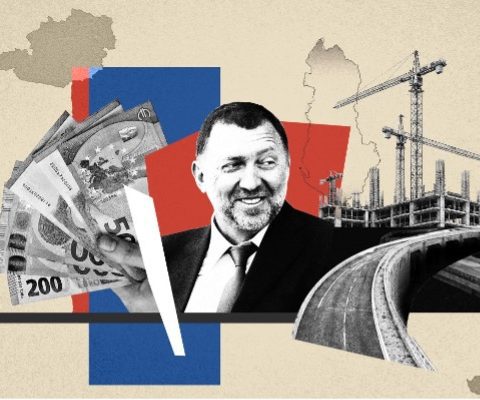
Albania has a society which resembles the developments in the countries of the East, chiefly Russia, more than anything else. The frenzy to become rich, the absence of social cohesion, the conflict of interests, the lobbying, oligarchy, and plutocracy, all of the above erode democracy. The politicians are more likely to support or to become oligarchic Ayatollah, quenching their thirst for power with figures, and obviously receiving the Communion wafer as an Act in the Show. So far at least, this kind of oligarchy is not known amongst professional persons of Medicine and kleptomaniac proselytism has not managed to entrench itself.
The medical clasas has inspired the society
Fukuyama says that politicians will continue to be needed in advanced Western societies for as long as the professionals listen to them. Heidegger says the opposite, because he foresaw the collapse of totalitarianism, supported the development of society and the professionals. The medical class, with its roots sunk deep in humanism, has inspired society; it has the sense of rendering service; it is an eternal spring.
The author is Professor of the University and Hospitals Paris.