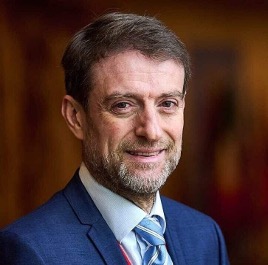
The reason for PASOK’s return to power with such spectacular public support must be mainly sought in Greeks’ hope for quick economic recovery. Prime Minister Papandreou warned the beginning of a new chapter for Greece under socialist leadership, pointing at issues awaiting immediate attention: economic recovery and development, modernization of public services, enhancement of transparency and of confidence in institutions, and protection of civic rights.
Athens has yet to pronounce the objectives and course of its foreign policy. However, the fact that the Greek Prime Minister will also be Minister of Foreign Affairs promises, if not substantial change, at least a more favorable climate for the Balkans’ current integration trends.
It is clear that George Papandreou will first and foremost attempt to change Greece’s image and role in the European Union. Greece’s political agenda in the Balkans is tied to that change. In 2003, Greece took on a leading role in the Balkans owing to the George Papandreou’s European vision.
PASOK returns to power at a time when in the Balkans, the little left of it, substantial change has taken place. The political map of the region has changed with the independence of Kosovo, the new state that Greece has yet to recognize. Albania is a NATO member. Greece’s previous administration unreservedly supported this membership, while the Former Yugoslav Republic of Macedonia is not a member exactly due to the Greek veto. Serbia, on the other hand, hopes that Greece will not take the last step to recognize Kosovo’s independence. Furthermore, all the countries of the Western Balkans have applied for candidate status and it is clear to all by now that the European Union is reluctant to speed up the region’s integration process.
In this new context that PASOK comes to visit, can one expect change in Greece’s foreign policy? And will George Papandreou in particular resurrect his European plan for the Balkans?
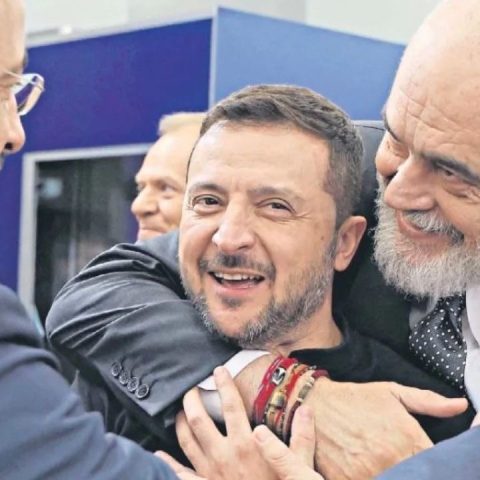
First of all, Albanian-Greek relations are not due to change. George Papandreou, also President of the Socialist International, appeared in Tirana on the side of the Albanian Socialists on the eve of parliamentary elections, and he might have hoped at the time of another Albanian counterpart, not Sali Berisha. However, this is simply a desire of the past that cannot reasonably hinder the deepening of Greek-Albanian relations. Previous experience has shown that PASOK conduct in relations with Albania has not been shaped by the name of the Albanian party in power.
Greece is one of the EU member states that has not yet recognized the independence of Kosovo and no immediate radical changes can be expected. Even the previous conservative administration has been cautious regarding the Kosovo issue. Former foreign minister, Bakoyannis has visited Kosovo and Greece has recognized the passports of the new state. Despite Serbia’s high hopes, Greece has not in practice been a case of full commitment to no-recognition. Moreover, Greece is hesitant to file its opinion at the International Court hearing planned to be held in December.
Greece’s conduct vis-ஶis FYROM is becoming less and less vulnerable to criticism. FYROM’s Prime Minister Gruevski is clearly not walking on a path of partnership with its neighboring countries, Greece, Bulgaria, Albania and Kosovo. It seems that this nationalistic course Gruevski is following has raised his government’s domestic popularity and support. However, a legitimate question comes to mind. Do Gruevski and other FYROM leaders want to see their country as a future member of NATO and EU, or not? A diplomat and a statesman with a clear European essence can help in changing the actual climate of the foreign relations with FYROM, but if the latter does not want integration in NATO and EU, then no one can help.
Greece has always seen and will continue to see the Balkans as an opportunity. Its strong return to the European ideas under Papandreou’s leadership will not only benefit Greece but the region as well.