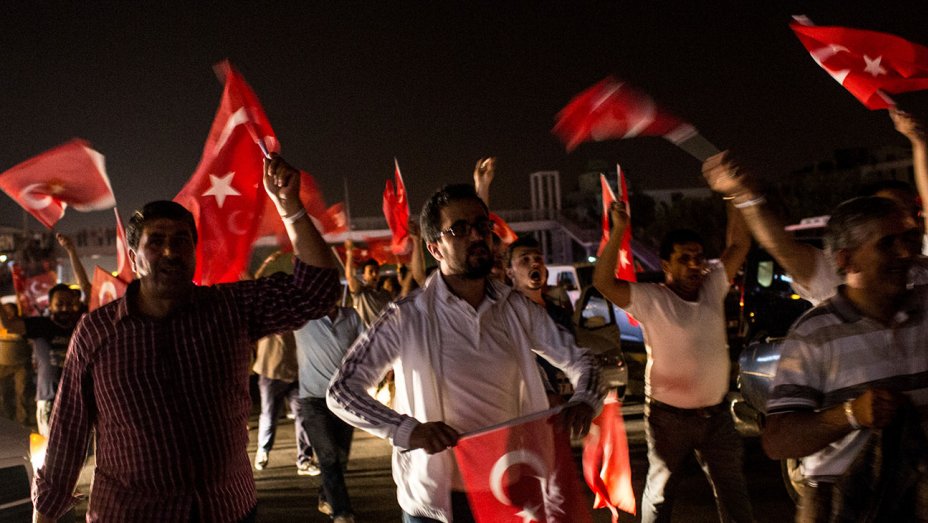
In the past days, the most significant development in the entire global arena has been the dramatic failed coup in Turkey. The circumstances and motivation of that part of the Turkish army which organized this are very dark and insinuations that this was a staged coup continue. It is very hard to reach a clear conclusion since many aftershocks are still being felt. One thing is certain: the health of the Turkish democracy and stability has taken a very strong hit and will need a long time to recover. Moreover the aftermath of the development and the way the Turkish state deals with it will determine the course of healing and normalcy, whether it can be accomplished at all in this stage.
It is interesting to examine the Albanian reaction to these developments as well as any implications that shall follow in the short and medium term since Turkey is Albania’s strategic partner, a country with which the current administration has forged special even personal ties as well as one of the countries that stands high in amicable feelings among the wider population.
First and foremost the extent of attention, sympathies, controversy and concern that the news created among Albanian’s is unparalleled to any other example. Thousands of Albanians took to the social media pages to express their very strong opinions in favor and against the coup, in favor and against president Erdogan, praising or condemning the Turkish army, debating the virtues of Islamism versus Kemalims, discussing at length the accomplishments of the AKP rule, etc. The virtual discussion magnitude revealed that Albanians follow closely the Turkish politics: some of them trying to expose it as a counterexample but some presenting it as a role model for Albania.
The second revelation is that there exist several clearly discernable camps among Albanians: sympathizers with Erdogan, unattached critics of authoritarianism in Turkey and finally sympathizers with his rival Gulen. These groups include interestingly members from the entire Albanian community in the Balkans with the most ardent ones visibly in Kosovo and Macedonia. The emotional reaction of the people was quite considerable and shows the influence of strong competing rivalries in the region. These rivalries should be monitored closely because they permeate important groups and communities in Albania and the region including official Muslim communities, education sector, allegedly even the police, etc. There are hundreds of people who have studied in Turkey or have worked there and who are more closely related to the dynamics there. Their reactions and behaviors, this failed coup showed, are very much determined by their allegiance.
As for the immediate impact of these developments in Albania, various factors come to play: Albania hosts several well established schools that belong to the network of Gulen, where children of the most influential Albanians politicians and opinion-makers complete their education. One request of Erdogan to close these schools has been already rebuffed from the Albanian authorities. Should the same request be repeated after this dramatic turn of events, Albania will face a very difficult situation. Rama has forged a close relation to Erdogan, one that would be put to a tight test should such a request emerge again. Albanian media has already been trapped in the game with some portals allegedly exposing the Gulen ties in the country. This sort of problem importing is unnecessary and harmful in Albania and decision makers should steer clear of any muddling with it.
Second, the relation of Turkey to the United States and to the European Union have deteriorated sharply in the immediate days after the coup. Should the situation continue to be adverse, it will produce additional tension to Albania whose Euro-Atlantic path remains national priority but whose traditional ties to Turkey also carry significance and substantial clout.
A destabilized Turkey is the worst scenario that could happen to the Balkans in this moment. Turkey’s role is pivotal in the management of crisis and handling of problems that soon reach the Balkan borders. The internal political dynamics of Turkey sends strong reverberations throughout the Balkan states. Therefore extreme caution is needed on the latter side to face the situation at least until calmer and better days dawn in Turkey as well.