 By Dewi van de Weerd
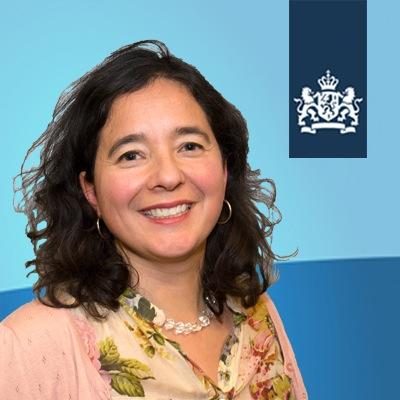
Ambassador of the Kingdom of the Netherlands
This week we celebrated Women’s Day in Albania. But also, a National Conference took place on women, peace and security. I would like to share the Dutch perspective on this issue.
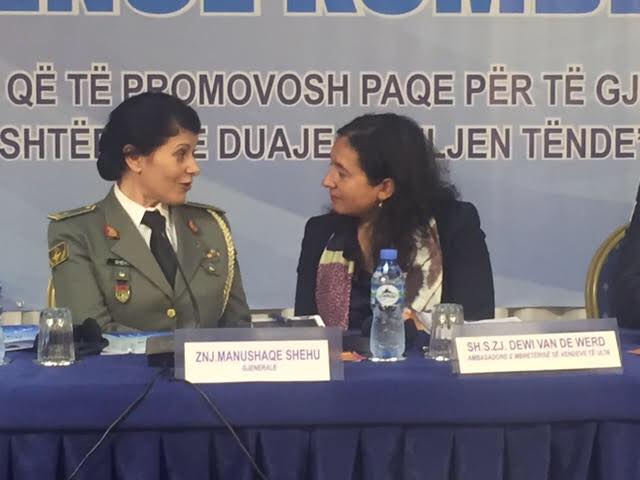
“I intend to remain Minister of Defense until we have a female general in our armed forces”, Albanian Minister of Defense, Mimi Kodheli, told her Dutch counterpart Jeanine Hennis when she came to visit Tirana last October. She had also said this to her Chief of Staff, who then joked “Are you intending to stay that long, Minister?”. But indeed, it’s a few months later, and the first Albanian female general has been appointed. She heads the military academy, which seems an appropriate function for her to inspire other military recruits, both male and female.
The two ministers are not alone any more in this predominantly male culture. Today, a quarter of NATO’s defense ministers are women. In both the Albanian and Dutch armies, however, only around 15 percent of the staff is female. Talking about equal treatment of women in relation to peace and security, Dutch Minister Hennis says: “I find involving female military in the field the main issue. We need to get our women out there in peace-keeping operations. They can make a difference, through actively participating in resolving conflicts, preventing them and in bridging the communication gap with vulnerable women in conflict areas.” For example, it is important in conflict resolution that not only men sit around the negotiation tables, but that women also actively take part in debates. In fact, having them at the table might make the chances much higher for conflicts to be solved. It is clear however, that we do need men to commit to making this happen. And, also as a He4She Ambassador, I would like to stress that. We are all in this together.
Training to include women at all levels
To increase the number of women in the military at all levels, the Dutch Ministry of Defense recently created its own roadmap. Extra attention goes to training, making leaders in the military aware of the importance of gender equality, inspiring their staff and creating safe environments for women to thrive. We are eager to share experiences in this field. A training course we organize together with Spain twice a year tries to do just that: to train and equip participants with practical tools. Two Albanians participated last December at the invitation of the Netherlands.
There is a lot of international attention on this issue. UNSCR 1325 was adopted in 2000 and addresses the effects of armed conflict on men and women. The resolution calls for specific gender-based action, and indeed many countries have made action plans to try to implement the resolution in their national policies. The roadmap mentioned above is part of the third national action plan in the Netherlands. NATO has a special envoy for the implementation of the resolution, Marriet Schuurman, she is Dutch as well. Fifteen years ago when the Netherlands was a member of the UN Security Council, we were one of the main advocates of this resolution. Implementation of UNSCR 1325 will remain high on the Dutch agenda, also in the period that we have a seat in the UN Security Council in 2018.
Albania getting ready for action on UNSCR 1325
Other countries in the region already have such action plans. In Albania, the interest in implementing the resolution is growing. Recently there has been more attention for equal rights for men and women, for instance in political decision-making. The country took a big step when in local elections in 2015, political parties had to have the same number of men and women on their candidates lists. As a result, some municipalities now have more women than men on their councils. So the time seemed right to also start thinking about a national action plan to implement resolution UNSCR 1325 in Albania. The Association of Women with Social Problems (AWSP), an Albanian NGO, developed different kinds of training, debates and meetings with many different actors to explain the importance of women’s increased participation, treating women equally and knowing how to deal with gender-based violence. NGOs play a crucial role in sensitizing civil society and assisting and monitoring the work of governments. In fact, the UNSCR 1325 national action plans are usually cooperation between civil society and government. The Albanian deputy ministers of the Ministry of the Interior, and of Defense and an expert from the Ministry of Foreign Affairs joined us at the Dutch embassy together with specialists from UNWOMEN, OSCE, ICITAP and of course the inspiring Bajana Ceveli from AWSP. It was an exciting morning, where the room was full of energy to start marking the achievements Albania is making in this field, and to decide together what more can be done. There was a very similar vibe at the national conference. We will meet again soon and I am hopeful that in 2017 an Albanian National Action Plan on Resolution UNSCR 1325 will be born.