Moscow’s invasion of Georgia has dramatically exposed the strategic confrontation between Russia and the West. Georgia lies at the epicenter of an escalating struggle between an expansionist Russia and Western institutions that serve as magnets for aspiring democracies throughout Europe.
The war over Georgia has been brewing for several years. Calculating that the Western reaction would be weak and divided the Putin-Medvedev regime concluded that forceful action against Tbilisi’s attempt to regain the secessionist territory of South Ossetia would serve three strategic goals.
First, Moscow uses the pretext of defending the Russian populations in South Ossetia and Abkhazia to truncate Georgia, undermine its military capabilities, weaken the pro-Western government, and disable Tbilisi from moving forward toward NATO membership.
Second, the attack on Georgia sends a powerful signal to other states neighboring Russia that their strategic orientation will not be a sovereign decision. The Georgian crisis is intended as a warning to Ukraine and Moldova that they should desist from petitioning for NATO entry. Otherwise, Moscow may intervene to protect the allegedly threatened interests of the Russian minorities.
Third, through its actions in Georgia Russia intends to actively stem the further expansion of the Western or Euro-Atlantic zone and to reverse the influence of the United States in the Caucasian, Caspian, and Black Sea regions.
NATO is seen as a threat by the Kremlin not because of its aggressive posture but because it provides some degree of protection to countries fearing Russian ambitions, as affirmed by the Central European and Baltic capitals. The EU is also viewed as a menace by Moscow principally because its standards for democratic governance, the rule of law, and business transparency undermine Russia’s strategy of political corruption.
The Russian authorities believe that the U.S. has passed its zenith as a global power and a new multi-polar world order needs to be constructed. Washington’s preoccupation with Iraq, Afghanistan, and jihadist terrorism provides a valuable opportunity for a resurgent Russia to extend its influences throughout the wider Europe.
In its longer-range calculations, Moscow’s overarching ambition is to expand the “Eurasian space” in which Russia becomes the dominant political player. This would involve transforming Europe as a whole into an appendage of the Russian sphere and undercutting Europe’s connections with the U.S.
Russia has deployed a range of tools to curtail the further expansion of the NATO-EU zone and to weaken its effectiveness. These include divisive diplomacy, political subversion, informational warfare, and energy entrapment. Moscow is also gaining major economic inroads in Europe through the purchase of strategic assets that enable it to leverage politicians and business leaders to acquiesce to Russian interests. The Balkans also figure in this equation as an unsettled zone from which Moscow can benefit to divide the Alliance and expand its political influence.
The war in Georgia has added another weapon to Moscow’s arsenal. The use of force against an independent pro-Western state will send shock waves throughout all former Soviet satellites. The Kremlin calculates that few Western capitals will seek to avoid a prolonged confrontation with Russia, and it is banking on division and indecisiveness by EU members compounded by a lame duck American presidency.
The Russian-Georgia war has become a test case for EU and NATO unity and their effectiveness in dealing with a major crisis in the wider Europe. An inability to pressure Russia to withdraw its troops, to emplace an international peace-keeping mission in Georgia’s disputed territories, or to restore Georgia’s territorial integrity will send a negative signal to all nearby states threatened by Russia’s expansionism. It will also encourage Moscow to more vigorously pursue its broader “Eurasian” agenda.
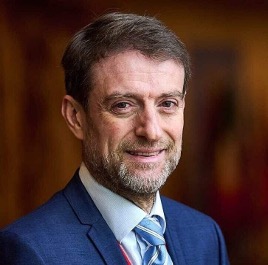
Janusz Bugajski, director of the New European Democracies project, is a contributing editor of Tirana Times. Actually he is publishing a CSIS Significant Issue Series monograph entitled “Expanding Eurasia: Russia’s European Ambitions” in the fall of 2008.