The year was 2004. The event was the most crucial economic happening since the launch of privatization, namely the acquisition of the most important bank in Albania, the state owned Savings Bank. The buyer, one of the most important European banks with headquarters in Vienna, Raiffeisen Bank. For the next year the economic chronicle of Raiffeisen would be impressive. A wide range of services, state of the art computerized systems synchronized with the entire global network of Raiffeisen, a staff dedicated to qualitative services. One could say the bank already had the comparative advantage of having a predecessor, which was operative throughout the geographic location of Albania. Nevertheless, one has to give the bank credit for the new huge enterprises that it skillfully undertook like the major responsibility of covering key state programs. One crucial example is taking care of the payroll of employees with budgeted salaries like teachers and doctors.
Today Raiffeisen Bank helps thousands of people while it has revolutionized the way it provides the service. The bank introduced in their case a system of account-based service, which allows employed taxpayers even to overdraw their account. It has issued debit cards to all its account holders. It is an important loan-provider mainly for big-scale businesses and a safe partner for clients ranging from the biggest companies to the smallest households.
For the interested reader with a keen eye on business and economics the story of Raiffeisen presents a curious success story in a market saturated with formidable challenges.
Who are the people behind the success? What are their strategies for managing the considerable risky environment as far as business conditions and economic parameters are concerned? What is the real potential of Raiffeisen and what does the future look like for the ones who stand on top of the enterprise?
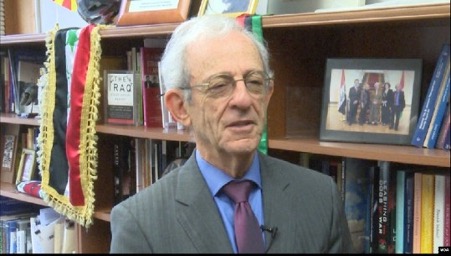
For a local account, I approached the director of the Raiffeisen branch in Berat, Dhurata Dundo. She graduated Finance with an enviable transcript at the Economic Faculty at the University of Tirana in 1983. Mrs. Dundo worked for the Bank of the State, renamed the Savings Bank after 1990, for 22 years before it changed owners. She went through all possible career steps and thus is familiar with the daily operations down to the minute details. An insider with valuable experience, she was an asset to the bank and a key figure committed to making the transition from state-enterprise to profit-oriented corporation smooth and effective.
What were the main difficulties that you faced when Raiffeisen took over the Savings Bank?
The major difficulty was to change the mentality of the clientele. It was hard to introduce and explain new services and new ways of doing things to customers who were used to the old way. They were resistant to novelty especially in a time when they could not fully grasp that the new ways would benefit them. With the staff it was different because they were provided with many opportunities to go through trainings that made the transition process gradual, clear and hence acceptable. Indeed, the trainings go on even now for the entire staff from the lower operative levels to the top management.
How important are human resources for a business like banking?
They are the number one factor. There is nothing more important than that. The staff determines everything.
What do you think is the major achievement of Raiffeisen in Albania, focusing on the new services offered after 2004?
I would point out the services that benefit the individual clients. Many banks offer new services to business companies but few are the banks with a special consideration of individual clientele like households or budget salary recipients. Offering cards and ATM machines, consumer loans and overdraft options may look like a small thing but it is these small efficient ways that make the daily life better.
Berat, despite being subject of the general economic climate in Albania, has its own peculiarities. One could say that tourism might provide an impetus for development if developed properly. How does Raiffeisen Berat respond to this potential? Do you have any special loan programs for small business targeted at tourism and hospitality for the residents of this particular region?
Not for the time being. I would say the period of transition is far from over and presently the bank has a general national strategy. The territory is conceived in three operative units: Tirana, the South and the North. This design has made the implementation of the strategy easier. Maybe later we can examine the possibility of having specific programs sensitive to local needs.
Why should someone work for this bank?
This is a huge company and working for it offers an insight on true modern world banking. The opportunities of experiencing diverse learning situations are innumerable. The potential achievements certainly go beyond a good salary and optimal working conditions.