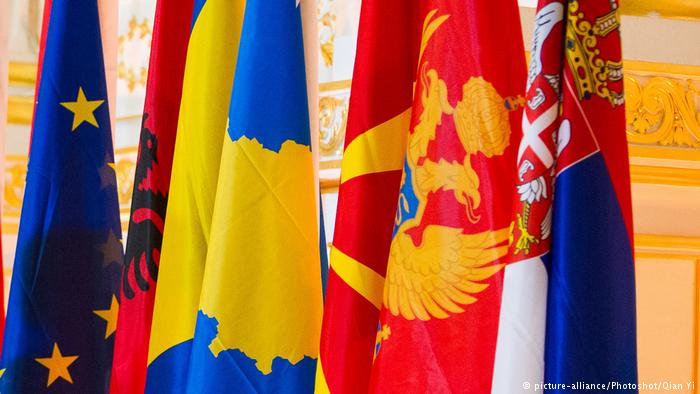
TIRANA, July 12 – As Western Balkan leaders gather in Italy at the Trieste Summit on Wednesday, Albania has reconfirmed its support to a regional economic area to facilitate the EU integration process for the six EU aspirant countries.
In an op-ed published at the Wall Street Journal ahead of the Trieste Summit, Albania’s Prime Minister Edi Rama says he will “strongly be endorsing a regional economic area as a stepping stone to facilitating the EU accession process.”
The July 12 Trieste Summit is the fourth annual summit of Western Balkan leaders held as part of the Berlin Process initiative on Western Balkans EU integration initiated in 2014 with the Conference of Western Balkan States.
“The critical benefit of a regional economic area is immediate. A Western Balkan market of 20 million is more attractive to investors and trade than an Albanian market of less than 4 million. This is important to my government,” wrote Prime Minister Rama, recently re-elected for a second consecutive mandate.
“We want to unleash our nation’s capabilities and encourage the creation of jobs and production. So will be persuading our neighbours to get behind this plan,” said Rama, bringing the example of how CEFTA’s original founders, the Czech Republic, Poland and Slovakia, have become successful EU members.
“Ultimately, this is about stability. We can’t have that without a growing economy. It’s time to put Balkan instability behind us,” he added.
Kosovo, which gained independence from Serbia in 2008, has publicly refused the regional market idea, saying it will give an unfair advantage to Serbia, the largest Western Balkan country and economy, at a time when Serbia does not still recognize Kosovo and negotiations to normalize relations are poorly progressing.
Speaking in an interview ahead of the Trieste Summit, EU foreign policy chief Federica Mogherini said the Berlin Process is not a substitute for the EU enlargement.
“The Berlin Process is meant to accompany the Balkans’ path towards the European Union. It is not a substitute, not a competitor, but on the contrary a facilitator of our common work. The European Union will never be complete without the Western Balkans,” she has told the European Western Balkans, reconfirming the accession despite the enlargement fatigue following Brexit, the migrant and economic crises.
In an article ahead of the summit, Deutsche Welle writes Balkan states are sitting in endless EU waiting room as Trieste summit begins.
“The Balkan region continues to struggle with the lack of an independent judiciary, media freedom, and misappropriation of public money by politicians. Moreover, political tensions seem unconquerable, such as Prishtina and Belgrade’s quarrel over Kosovo, the name controversy between Macedonia and Greece, and lack of popular will for constitutional reforms in Bosnia and Herzegovina from the country’s three ethnic groups,” writes the Deutsche Welle.
Wednesday’s summit in Trieste will focus most heavily on financial programs, akin to a Marshall Plan for the Balkans. Where the money would come from remains to be seen, meaning that while some Balkan politicians have rejoiced over the announcement of increased funding, they have also expressed concern, Deutsche Welle reports, stressing the Western Balkans high unemployment rates and low income, triggering migration to Western Europe.