
TIRANA, Nov. 5 – Turkish-owned BKT, the second biggest bank in Albania, has increased its share of Albania’s domestic debt in the past four years by around 5 percent filling the gap left by Raiffeisen which has sharply withdrawn from investments in Albania’s government securities.
Data show BKT, which is part of the Calik Group, present in Albania with Albtelecom and Eagle Mobile operators, increased its debt share to 15.7 percent at the end of the third quarter of 2014, up from 12.66 percent at the end of 2013 and 10.37 percent at the end of 2010.
Bank of Albania data show Raiffeisen Bank, the country’s biggest bank, has lowered its exposure to Albania’s domestic public debt by around 14.5 percent since the onset of the global crisis in 2008 as part of its funding withdrawal policy. Raiffeisen’s share at the end of the third quarter of 2014 dropped to 19.16 percent of the total domestic debt stock, compared to 29.5 percent in 2012, 34 percent in 2011 and around 37 percent at the end of 2008.
However, Raiffeisen’s withdrawal has been compensated by BKT bank and other commercial banks which have increased their share to 27 percent of total domestic public debt, up from 24 percent at the end of 2010. The Bank of Albania share also slightly dropped to 11.4 percent at the end of the third quarter of 2014, down from 12.48 percent in 2012, 14.3 percent at the end of 2011 and 17.75 percent at the end of 2008.
Meanwhile, non-banking financial institutions increased their domestic debt share to 14.96 percent at the end of the third quarter of 2014, up from 6.16 percent in 2012, 3.7 percent in 2011 and a mere 2.46 percent in 2008.
The share held by individuals slightly dropped to 11.65 percent at the end of the third quarter 2014 but was up from 8.33 percent in 2008.
External borrowing by the government of Albania consists of multilateral and bilateral official credits, syndicated bank borrowing, and a Eurobond.
At the end of the third quarter of 2014, Albania’s public debt stock climbed to 961.4 billion lek (Euro 6.78 billion) or 67.8 percent of the GDP without including government arrears of around 3 percent of the GDP. Domestic debt accounted for 35.55 percent of the GDP compared to 26.41 percent for external debt.
Total debt service cost the Albanian government 41.3 billion lek (around Euro 291 million) in the first three quarters of this year, up from 38.6 billion lek (Euro 272 million) during the same period last year, severely affecting public investments which at around 30 billion lek (Euro 210 million) for the first three quarters of 2014, public investments were down by 43 percent compared to the same period last year, hitting a record low since 2007.
Turkey’s BKT increases share in government domestic debt

Change font size:


Latest from Business & Economy
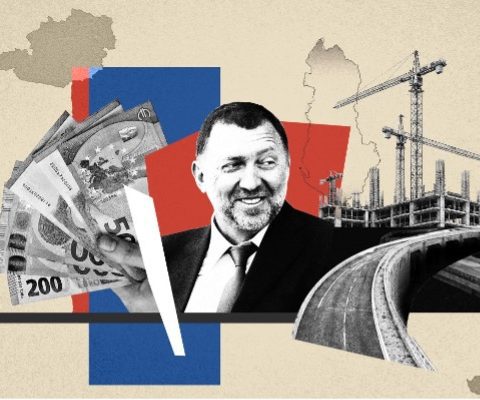
How a Sanctioned Russian Oligarch’s Business Interests Reached Albanian Public Contracts
Change font size: - + Reset Millions of euros flowed to companies linked to Strabag while Oleg Deripaska remained a major shareholder, exposing gaps in Albania’s ability to identify who ultimately benefits
Albania’s Cash Boom Raises Money Laundering Concerns
Change font size: - + Reset Cash outside Albania’s banking system reached a record 5.6 billion euros, last month. Tirana Times, August 30, 2026 – The amount of cash circulating outside Albania’s

Vlora Airport Heads to Arbitration
Change font size: - + Reset Albania faces another potentially costly international dispute after losing several arbitration cases in recent years that have exposed the state to hundreds of millions of euros

Concrete, Cocaine and Corruption: Albania’s Fragile Growth Model
Change font size: - + Reset Albania’s Concrete Economy: How Construction Became the Country’s Dominant Growth Model Tirana Times, July 10, 2026 – A booming construction sector has made Albania an outlier

Austria Leads FDI, but Real Estate Tells the Bigger Story
Change font size: - + Reset Bank of Albania data show Austria topping first-quarter foreign investment flows, while property and construction continue to shape Albania’s FDI model. Tirana Times June 25, 2026