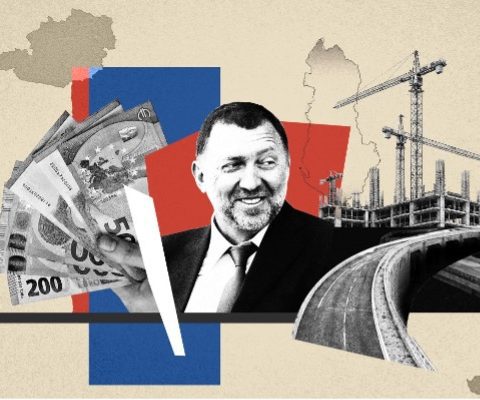
TIRANA, Oct. 16 – The Ministry of Economy, Trade and Energy organized Monday a conference on “Reducing informal economy – a challenge for the Albanian Government.” The underground economy has particularly plagued the economies in transition, like Albania’s, where the possibility to circumvent the state regulations presents many businesses with the opportunity to draw illegal profits of considerable amounts. The phenomenon is often linked to corruption at the highest instances of official administration and organized crime. Economy Minister Genc Ruli acknowledged the difficulties in defining the “informal economy”, summarizing it as “the entire spectrum of economic and trade activities that are not registered in the legal and fiscal system.” Prime Minister Sali Berisha identified the underground economy as one of the major issues that the actual government has to deal with. “The informal economy is, for the government that I presently lead, the primary challenge and test of our performance and functionality for the upcoming year,” he said. Finance Minister Ridvan Bode separated the notion of underground economy from that of criminal or black economy, emphasizing, nevertheless, that the interaction between the two phenomena was real and tangible. As determining factors of the informal economy he listed corruption, excessive bureaucratic processes, high taxation levels, the nature of the small businesses in Albania, which are mostly family-owned and other factors of a more general nature, like the lack of the ownership concept as well as irregularities in the identification documents of individuals.” The latter seems to be a major fuel to all sorts of criminal activities that plague the country. The minister also elaborated on specific programs designed by the government, which place the Ministry of Finance in the forefront of the war against informal economy.
Fatos Ibrahimi, Vice governor of the central Bank of Albania, said in his speech that issue was more technical. He listed some of the drastic measures that have reduced the cash transactions and have made it easier for the bank to collect accurate and legal information about a significant portion of the economy. He mentioned the salary payroll; the option to pay monthly bills of electricity through banks; expansion of the network of ATM machines; of the network of banks and their respective local branches, etc. Ibrahimi also explained some new interesting approaches of the BoA in the fight against informal economy like higher transparency of loan examination commissions and lower commission percentages for internal bank transactions that will encourage higher interaction of the individual and the businesses with banks. Ibrahimi said that ratio of the money in circulation outside the banks’ network over that inside had fallen from 31 percent in 2004 to 24 percent this year. This positive development though comes short in comparative perspective. In developed countries that figure is lower than 10 percent.
Excerpt from the keynote speech of Minister of the Economy, Trade and Energy Genc Ruli
“The process of globalization has engulfed both developed and developing countries bringing along a fundamental restructuring of the national economies. We have to start thinking in concrete terms about the potential structure of our economy in the long term, be it in 5 or 10 years, in order to be better prepare when faced with problems such as this one that goes along economies of transition.
First I think that we will be quite competitive in the manufacturing sector and in that of production in general due to our natural competitive advantages and our latest policies that are targeted at enhancing domestic production and employment. This will make us envision a thorough reform in the context of employment regulations with the aim of introducing more flexibility and transparency.
Second, in the structure of our economy the service sector is persistently expanding. Re we prepared to deal with the present and the future fiscal evasion and most importantly the evasion of responsibility by the companies that operate in this sector what should we do and how? What are the best policies? Conferences and open discussion tables like this should be organized more often in order to seek the best answers for these crucial questions.
I am confident that trying to reduce informal economy requires immense resources: efforts, time and financial support. But I am also confident that with this process we have initiated an important first step. This phenomenon and especially the war to tackle it are complex processes, but I am here to testify once again on behalf of the Albanian that we are seriously committed to achieve quick and concrete results. In order to accomplish this we will need the support of all related actors and here the business sector must be aligned as our frontline ally.”