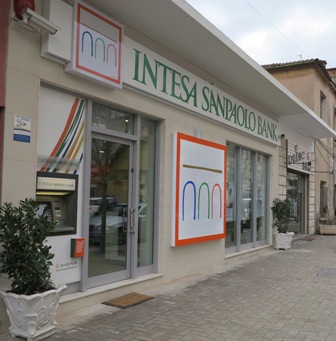
TIRANA, June 28 – Italy’s Intesa Sanpaolo is set to increase its Albania presence after acquiring the bankrupt Veneto Bank in Italy and its subsidiaries in several European countries including Albania.
The Albanian subsidiary of Intesa Sanpaolo, Italy’s largest retail bank, is already the fourth largest bank in term of assets in Albania, where 16 overwhelmingly foreign-owned banks operate. Its assets were reported at 155.7 billion lek (€1.17 billion) at the end of 2016, accounting for 10.86 percent of total assets in the country’s banking system, according to the Albanian Association of Banks.
Intesa Sanpaolo has been operating in Albania since 2007 when it acquired the American Bank of Albania, the first private bank in Albania established in 1998 by the Albanian-American Enterprise Fund.
The Veneto Bank acquisition and possible rebranding could cut the number of commercial banks operating in Albania to 15, but increase Intesa Sanpaolo’s Albania market share making it the third largest commercial bank in term of assets.
Vento Bank has been operating in Albania since 2009 after purchasing and rebranding Banca Italiana di Svillupo (BIS Bank). Its assets at the end of 2016 were estimated at 26.4 billion lek (€198 mln), accounting for 1.84 percent of total assets. Veneto Banka Albania has a network of 15 branches operating in the main districts of Albania, serving small and medium-sized businesses, especially Italian-run companies who dominate foreign owned companies in the country.
“For the Albanian banking system, this means that Veneto Banka until recently fully owned by the Gruppo Veneto Banca will now be owned by the Intesa Sanpaolo group and that its operations will become part of this banking group,” Albania’s central bank said in a statement.
“The shareholder change will preserve the good indicators of this bank and improve its management. The same as in other acquisitions, the change in ownership will be a smooth process for the general activity, depositors and other bank customers,” it added.
The Veneto Bank operations in Albania were considered safe because of tight rules and supervision imposed by the country’s central bank after the outbreak of the global financial crisis in 2008 and concerns over possible spillover effects from Greek-owned banks operating in the country. Legal changes made it compulsory for foreign-owned banks to operate as independent from their parent banks.
The bankrupt Veneto Banca and Banca Popolare di Vicenza in Italy have been acquired by Intesa San Paolo for a symbolic Euro 1.
“The move prevents a disorderly failure of the medium-sized banks and the rescue, which sees the new good banks stripped of their non-performing loans, will require some 5.2 billion euros in public money,” wrote Italy’s Ansa news agency.
Due to the small share in Albania, where Veneto Banka is the 12th largest bank with 1.84 percent of assets, the acquisition increases Intesa Sanpaolo’s market share to 12.7 percent of total assets, making it the third largest bank.
Turkish-owned BKT has emerged as the country’s largest bank in the past couple of years, overtaking Austrian Raiffesen Bank. The BKT national commercial bank is part of the Calik Group, also present in Albania with Albtelecom internet, mobile and IPTV provider.
The Albanian subsidiary of Austria-based Raiffeisen was the country’s largest bank and lender for more than a decade since 2004 when it took over the state-run Savings Bank.
However, the Austrian giant has diversified its portfolio with leading investment in the emerging investment and pension funds.
Credins Bank, a majority Albanian-owned bank, is currently the third largest bank in Albania.
In late 2016, Credins diversified investment in the rapidly growing investment funds, breaking Raiffeisen’s monopoly with its two funds established in 2012. Credins also has a majority stake in a private pension fund.
Neighboring Italy is Albania main trading partner and one of the top investors. Some 500,000 Albanians live and work in the neighbouring country, making it a key source in terms of migrant remittances.