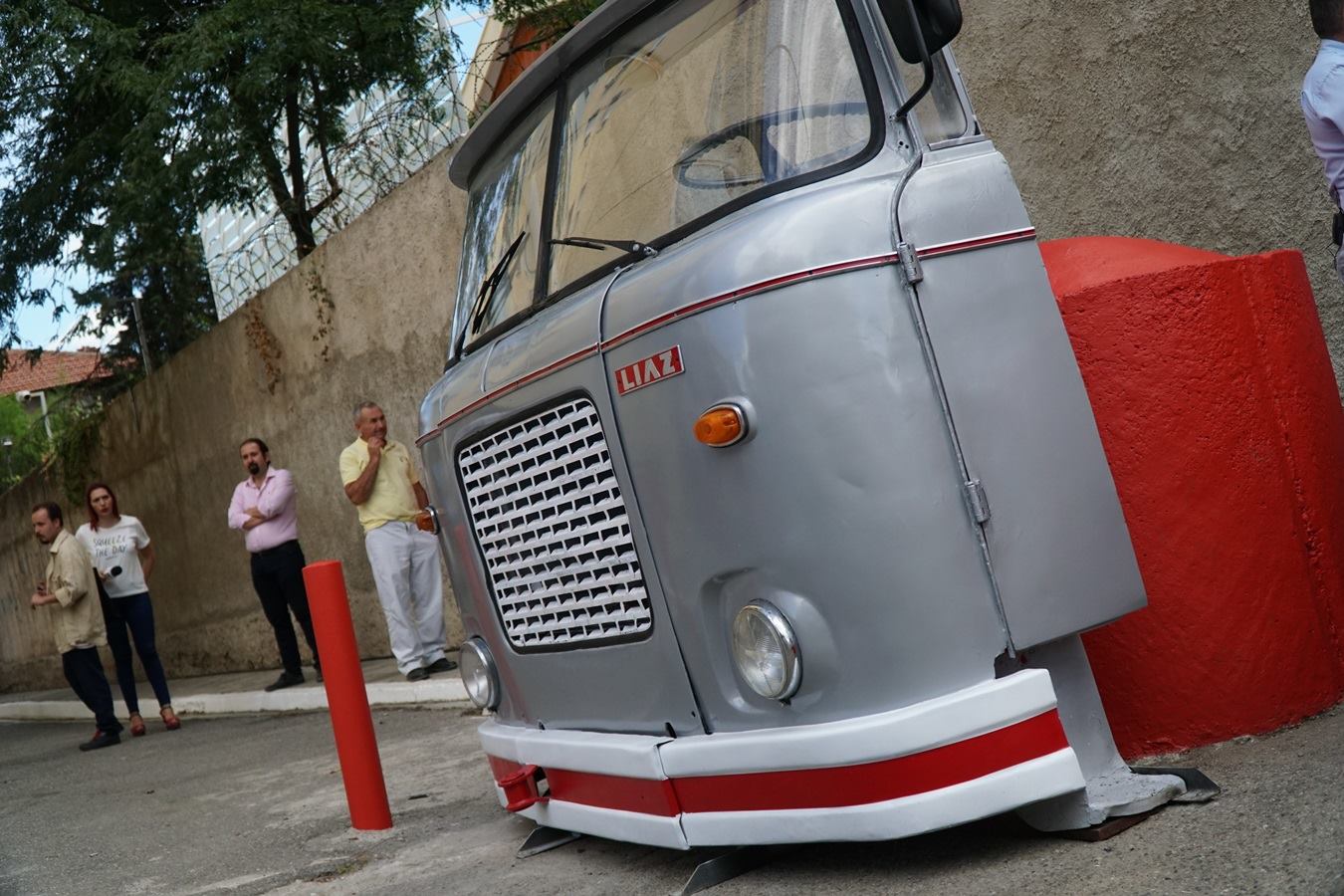
TIRANA, July 6 – The cabin of a former Czechoslovak LIAZ truck used to smash the wall of the German embassy in Tirana in 1990 when thousands of Albanians entered the embassy to seek asylum and protection from the communist authorities has been immortalized in an installation commemorating Albanians’ embassy exodus 27 years ago.
“The Wall” is an installation created by Albanian civil society activists and artists Gjergj Islami, Ana Pekmezi and Eljan Tanini that has been placed in backyard surrounding wall of the German embassy in Tirana exactly where 27 years ago on July 2, 1990 Albanian driver Ylli Bodinaku broke in.
Bodinaku, in his 30s at that time, used his state-run enterprise LIAZ truck to smash the German embassy wall, opening a crack that provided refuge to more than 3,000 Albanians who were later granted asylum and taken to Germany.
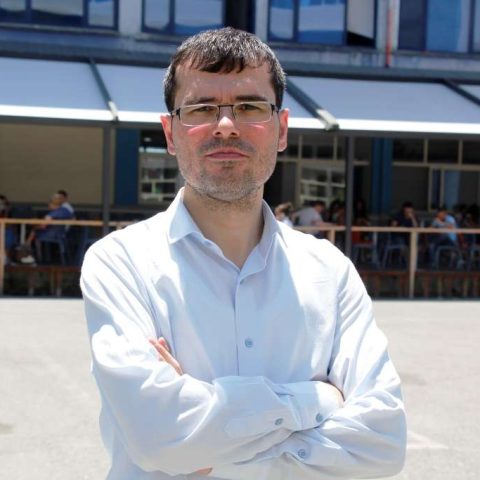
The 60 year-old man who lived in Germany for three years before returning to work in a car service in Tirana, says the installation is very special as it recalls history and the first anti-communist protests before the December 1990s student protests paved the way to the collapse of the communist regime, one Europe’s harshest led with an iron fist by late Stalinist dictator Enver Hoxha.
“Twenty-seven years on, with this installation I recall history and where it all began, as everything began in July and not in December at this place where 5,200 Albanians left the country after killing fear,” Bodinaku told local Albanian media.
“I can’t get out of my mind what happened that day 27 years ago, as it was a life-threatening situation. There were forty Albanians that day. I was together with my 3-month and 12-year-old sons, my wife and a lamb which I couldn’t leave as I felt I was abandoning him,” Bodinaku has told daily Shekulli.
“During Enver Hoxha’s time, I fed my children with this truck. This Skoda saved my life and that’s why it is very important for me. It’s the best car I have driven in my life and believe me I have gone through thousands of cars, but this one is the most special one,” he adds.
“That’s why, the symbolism of this Skoda displayed here is special. I repaired it after it was brought to me ruined. I cut, repaired and painted it the same way as the original one,” says Bodinaku.
Under communism, for almost five decades until the early 1990s, Albania was Europe’s most isolated country and any attempt to illegally cross the border could result in severe consequences. Everything was state-run and private ownership, including cars, was banned.
Under communism Albania also became the world’s first official atheist country after religion was banned in the 1967.
German Ambassador to Albania Susanne Schutz said the “July 1990s days were really dramatic,” recalling how more than 3,000 Albanians resisted for 12 days at the German embassy premises in tough conditions.
On July 12, 1990 all Albanians who had entered the German embassy in Tirana were allowed to leave for Germany following negotiations between the German government and the Albanian communist authorities.
“The ‘Wall’ art installation commemorates both this historic date and transmits among the younger generations, their predecessors’ strong desire for freedom and democracy,” says the German embassy.
The break-in to the embassy came as a new era was heralding across Europe with the collapse of the Berlin Wall and several communist regimes across Eastern Europe.
“The idea was to give Tirana something which both Albanians and foreigners can visit as a story that uprooted communism and brought democracy. This is an installation whose display will later change through pictures and images,” says curator Eljan Tanini.
About 5,000 people escaped Albania in July 1990 by seeking asylum at Tirana embassies, mostly at the German embassy.
The collapse of Albania’s communist regime in 1991 following student protests paved the way to a mass exodus with dozens of thousands leaving the impoverished country to go mainly to neighboring Italy and Greece.
More than 1 million Albanians have left the country since the early 1990s seeking better opportunities abroad.
Twenty-seven years on, Albania is a NATO member and EU candidate country facing a lot of challenges to complete its transition to democracy and market economy.