
By Janusz Bugajski
Allied capitals are asking important questions about the future of NATO. Above all, is NATO still a vital global player in resolving conflicts and combating regional crises? Or has NATO become a peace keeping and state rebuilding operation subordinate to U.S global strategy and the national interests of individual members?
NATO’s role no longer revolves around hard security, but it is not exactly soft security, where the European Union claims pre-eminence. Its operations in places such as Afghanistan and Kosova now resemble “medium-soft security” where the “exit strategy” cannot be predicted.
NATO engages in several missions beyond Europe’s borders most of which have little to do with combat operations. Some new members are wondering whether such a role for the Alliance has undermined NATO’s capabilities and commitment to article five guarantees.
NATO’s changing posture also has important implications for further enlargement. Some analysts charge that enlargement has contributed to transforming the organization from one of mutual military defense to a loose security body with diverse interests and multiple goals.
Others argue that enlargement has actually helped prolong NATO’s lifespan by giving it purpose in absorbing new allies rather than drifting out of business. In this context, policy makers must decide whether the entry of future members will contribute to or detract from NATO’s capabilities.
NATO-EU relations also remain a battleground. The overriding question is whether the Alliance and the Union will compete or complement each other in future security challenges. And ultimately, can Europe afford both NATO and the EU’s evolving security instruments?
Furthermore, many candidates have viewed NATO entry as a step toward EU membership, but what if the latter process were blocked or indefinitely delayed. Would this constrain support for meeting NATO standards among current aspirants? In reality, Alliance enlargement could become even more urgent to consolidate democratic reform in the absence of EU membership commitments.
Non-NATO capitals can be grouped into four groups: eager (Croatia, Albania, Macedonia, Georgia), interested (Montenegro, Bosnia-Hercegovina, Moldova, Kosova), skeptical (Serbia, Ukraine), and opposed (Belarus, Russia). For smaller democratic countries with a pro-Western consensus, NATO entry is a successful benchmark of national progress, irrespective of NATO’s current global role. This is unlikely to change, especially if open door promises continue to be issued by Alliance leaders.
However, if the NATO door closes, then several capitals could turn neutral and seek to benefit from military modernization without formally joining NATO or undertaking any operational commitments. But such a strategy may not be successful in stabilizing NATO’s neighborhood, given that expansion has been one of NATO’s most successful political strategies.
If U.S. political and military commitments to NATO were to diminish, the posture of candidates and new members could shift significantly. Many countries view the Alliance as an organization that ensures American engagement in Europe. Their commitments to NATO could dissipate if U.S. withdrawal became evident and they are likely to focus on building stronger bilateral ties with the U.S. instead of investing in NATO.
The Southern Dimension is a probable next step for NATO, with planned invitations for Croatia, Albania, and Macedonia at the next Alliance summit in 2008. There is political consensus and public support in each candidate state for membership and progress has been made in the reform agenda. The U.S. supports their membership as this could also spur the progress of the remaining West Balkan states and close the chapter on Yugoslavia.
Prospects for a NATO Eastern Dimension, with the entry of Ukraine, Georgia, and Moldova, are much slimmer, especially as Moscow intends to keep them within its orbit. Indeed, NATO may have outlived one of its core purposes if there comes a time when Moscow genuinely welcomes its further enlargement. This would mean that one of NATO’s major successes, in stimulating and ensuring the construction of stable, democratic, and pro-Western state systems in a broader Europe, would no longer be valid.
What Is Nato’s Future?

Change font size:

Latest from Op-Ed

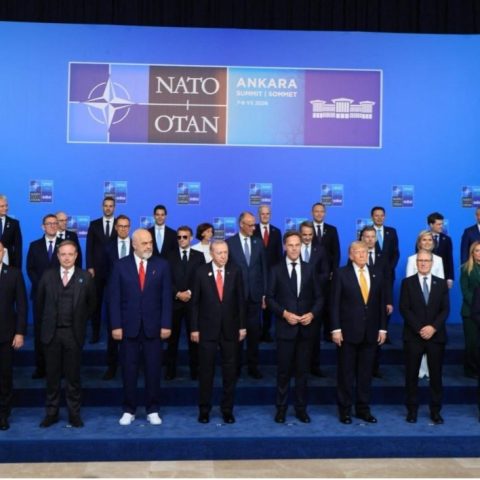
NATO’s Ankara Summit and Albania’s Uncertain Moment
Change font size: - + Reset Tirana Times, July 07, 2026 – The next NATO Summit, where the leaders of Allied member states gather annually, will take place on July 7–8, 2026,

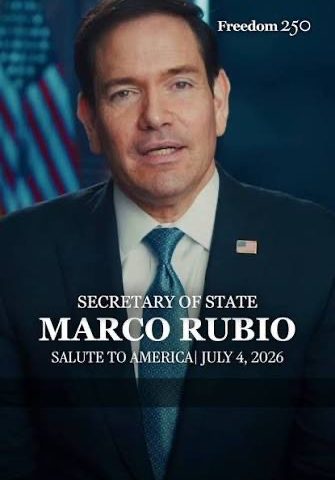
A salute to America
Change font size: - + Reset By Marco Rubio Two hundred and fifty years ago today, in a brick hall in Philadelphia, our forefathers declared their independence from the most powerful empire

From the Nile to the Balkans
Change font size: - + Reset By Dr. Arben Ramkaj Tirana Times, July 3, 2026 – If you sit by the banks of the Nile on a quiet afternoon and allow its

The Strategic Price of Non-Enlargement
Change font size: - + Reset By Albert Rakipi Tirana Times, June 30, 2026 – For more than two decades, the Western Balkans have lived inside the promise of European integration. In

The Political Myth of the “Beautiful Protest”
Change font size: - + Reset A Barthesian Reading By Diana Gëllçi, Ph.D. Tirana Times, June 30, 2026 – A beautiful protest has been unfolding in Tirana for several weeks. What is particularly