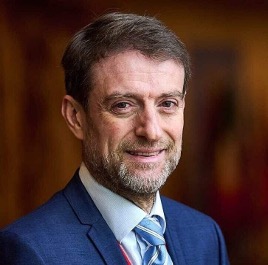
“Significant external shocks from Greece and/or Italy would depress growth prospects further given Albania’s large trade, labor market, and banking system links with Italy and Greece,” said World Bank’s Jane Armitage
TIRANA, Oct. 8 – Citing significant external shocks from Greece and Italy, the World Bank has downgraded Albania’s GDP growth forecast to 1 percent, down from 1.6 percent last summer. The forecast was announced by Jane Armitage, Country Director and Regional Coordinator of Southeast Europe in a conference held in Tirana last weekend on the 20th anniversary of the World Bank Group activity in Albania.
“The growth outlook for 2012 is at around 1 percent, mainly due to the continued deterioration of the external environment. Significant external shocks from Greece and/or Italy would depress growth prospects further given Albania’s large trade, labor market, and banking system links with Italy and Greece,” said Armitage.
The new World Bank forecast is slightly more optimistic compared to IMF’s 0.5 percent outlook, worse than EBRD’s 1.2 percent for 2012 but yet three times lower compared to government’s expectations. The Albanian government has recently lowered its 2012 target to 3 percent, down from 4.3 percent in the initial budget on poor performance of government revenues although it expects Euro 1 billion from the privatization of Albpetrol oil firm and four small and medium sized hydropower plants.
Speaking of the challenges the crisis poses, Armitage said “Albania, like many of its neighbors will have to develop strategies to stimulate growth, build human capital, and provide a reliable safety net for its most vulnerable.”
Despite managing to maintain positive growth in 2009, the crisis did, however, lower remittances and exports, which led to the moderation of growth and fiscal revenues.
The World Bank says it is closely following the evolving events and their impact on Albania and is working to identify policy measures and financial support help address the emerging challenges. One immediate and important decision was to increase the available financial support for Albania, particularly to deal with key issues such as public debt, financial stability and energy. The additional funds would practically double planned lending to Albania under the current Country Partnership Strategy (CPS) which aims to further advance Albania’s EU accession agenda as outlined in the National Strategy for Development and Integration. The CPS aims to achieve solid development results in areas that are vitally important for Albania’s future. Its three main pillars are increasing competitiveness, sustaining social gains and strengthening water resource management.
The World Banks suggest increasing Albania’s competitiveness through improving energy supply, strengthening road network securing property rights and making broad improvements in governance, anti-corruption efforts and public sector management. Sustaining social gains in spite of economic slowdown by continuing to invest in education and health and putting in place an effective and efficient safety net to prevent unacceptable declines in welfare would also help.
Strengthening water resource management and helping Albania to adapt to Climate Change by supporting water resource management, rehabilitating dams and introducing catastrophe risk insurance facilities is also considered a priority for development.
In an earlier SEE report examining six regional economies, the World Bank expected the Albanian economy to grow by 1.6 percent for 2012 and 2.5 percent for 2013. The report warned that Albania and Serbia will, unless major corrective measures are taken, breach their debt ceilings of 60 percent of GDP (Albania) and 45 percent of GDP respectively, set in their national legislation. Interest expenditures average around 1 percent of GDP in the SEE6 countries with the exception of Albania were interest expenditures in 2011 were 3.1 percent of GDP. Albania’s public debt as percent of government revenues at 228 percent is also the highest in the region with Montenegro ranking second with 151.5 percent.
Non-performing loans (NPLs) remain significantly elevated, averaging 14 percent across SEE6, while in Albania they are currently at 21 percent.
World Bank- Albania, 20 years of partnership
Albania became a member of the World Bank Group in 1992 and the World Bank has been one of country’s key main sources of development support along this amazing 20-year journey. Since then, the Bank has financed 71 projects totaling over US$ 1.2 billion. Throughout the past years, the World Bank Group has been able to assist Albania technically, financially, and through policy advice on virtually every aspect of its development needs.
“Widely referred to as “a development success story” and “one of the fastest growing countries in Europe” in World Bank reports, Albania is an excellent example of an effective and fruitful partnership between a country and our institution, said Philippe H. Le Houerou, World Bank Vice President of Europe and Central Asia in his greeting note. As in every partnership, both parties have been learning, changing, and adapting to new realities.”
In her remarks, Jane Armitage, Country Regional Director for Southeast Europe said that “it has been immensely satisfying to partner with Albania technically, financially, and through policy advice, on many aspects of its development needs. Our support to Albania builds on the Bank’s long experience in working in developing countries all over the world”.
Over the past 20 years, both Albania and the World Bank have expanded partnerships with other multilateral and bi-lateral development institutions and non-government players as the key for keeping abreast of new ideas and experience, and both have placed trust into the EU integration process as the best facilitator of Albania’s continued economic and social progress.
“After 20 years full of achievements and lessons, we are better prepared to work together on the next phase of Albania’s development and EU integration agenda, said Kseniya Lvovksy, Country Manager of the World Bank Office in Tirana, – and I look forward to celebrating the country’s future successes.”