TIRANA, June 5 – The World Bank has kept unchanged its economic growth forecast on Albania for the next three years, but warns a renewed decline in commodity prices, uncertainties about EU integration and reemerging political tension among Western Balkan countries could pose threats.
In its newly launched Global economic Prospects report, the World Bank expects the Albanian economy to grow by 3.5 percent in 2017 and 2018 and pick up to 3.8 percent in 2019, in forecasts which are about 0.3 percentage point lower compared to the Albanian government’s more optimistic forecasts. Compared to last January’s forecast, the World Bank left unchanged the 2017 and 2018 projections, but slightly revised upward its 2019 growth forecast by 0.1 percent to 3.8 percent, in growth rates that are among the highest in the six EU aspirant Western Balkans countries.
The report warns EU aspirant and commodity exporting countries such as Albania face the threat of a renewed slump in oil and mineral prices while populist opposition and uncertainty about EU enlargement could hurt trade and investment ties with the block, the main trading partner and investor.
“The main downside risks include renewed declines in oil and other commodity prices, policy uncertainty, and geopolitical risks, as well as international financial market disruptions. Domestic banking system weaknesses are vulnerabilities, and could become amplifiers of the effects of internal and external shocks,” says the World Bank report in its Europe and Central Asia section.
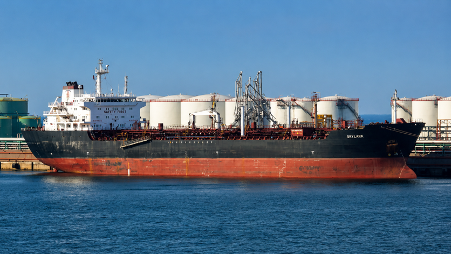
The slump in commodity prices in the past three years has severely affected Albania’s oil and mining industry and the country’s poorly diversified exports, also curbing investment and employment.
Crude Oil Brent prices currently stand at about $50 a barrel, up from a 12-year low of $30 a barrel in early 2016, but yet almost half of the peak level of more than $110 in mid-2014 just before the slump.
Meanwhile, Albania’s EU integration efforts have stagnated amid rising populism in the EU and problems at home where a last-minute deal secured fully participatory elections for the upcoming June 25 elections.
An EU candidate since mid-2014, Albania is hopeful of opening accession negotiations by the end of this year as the country’s begins the implementation of a long-awaited justice reform, a key condition set by the European Commission.
“Subdued growth and growing anti-immigration sentiment have fueled populist opposition to European integration. Even in the absence of concrete anti-integration steps, uncertainty about policies can weigh on growth by discouraging investment, employment, foreign firm entry, and FDI,” says the World Bank.
The World Bank had earlier warned uncertainties related to the upcoming June general elections, which the opposition was boycotting until a mid-2017 deal paving the way for a caretaker government, posed a threat to the country’s growth prospects and fiscal consolidation.
Albania’s neighbors also settled political tensions last May with a new government finally taking over in government in Macedonia and early elections called in Kosovo.
The Albanian economy has been growing by 1 to 3 percent in the past eight years compared to a pre-crisis decade of 6 percent annually, the growth rate estimated to bring welfare in one of Europe’s poorest countries.
GDP grew by 3.4 percent in 2016 and is projected to further pick up to 3.8 percent this year, mainly thanks to some major energy-related investment such as the Trans Adriatic Pipeline as well as a boost in the emerging tourism industry.
Growth prospects are hampered by the public debt standing at about 70 percent, a high level for the current stage of the country’s development, and credit struggling to return to positive growth rate amid tight lending standards as non-performing loans stand at about 18 percent.