TIRANA, Oct. 26 – The World Bank has downgraded Albania’s 2018-2019 economic outlook as the major energy related projects that have been driving growth over the past couple of years taper off and expects poverty rates, currently affecting about a third of the population, to slightly reduce.
In its new October Economic Outlook, the World Bank expects Albania’s growth to slightly pick up to 3.6 percent in 2017, but slow down to 3.5 percent over the next couple of years. The forecasts are considerably lower compared to the Albanian government’s more optimistic expectations of growth ranging between 3.9 to 4.3 percent over 2017-2019 and the IMF’s recently revised outlook of 3.7 to 3.8 percent over the same period.
The World Bank also expects Albania’s upper middle-income poverty rate, measured against the regional standardized benchmark of US$5.5 a day in 2011 purchasing power parity, currently affecting about 33 percent of the population, to reduce by 2.6 percentage points to 30.2 percent in 2019.
The poverty rate remains one of the regions highest and is one of the key factors for Albania having one of the world’s highest migration rates compared to its population.
“Growth strengthened to 3.4 percent in 2016 and is projected to average 3.5 percent during 2017-19. Private investments in FDI-financed energy projects and consumption drove the recent economic expansion. Growth improved labor market outcomes, gradually leading to more inclusive access to jobs and poverty reduction,” says the World Bank.
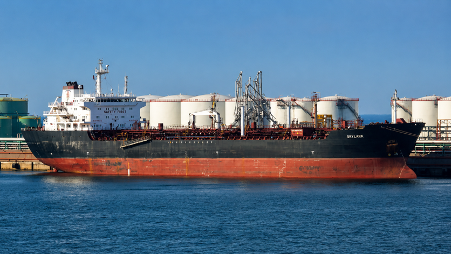
The Trans Adriatic Pipeline bringing Caspian gas to Europe and some major hydropower plants have been driving Albania’s growth over the past couple of years with investment of more than €500 million euros.
With no new major projects in sight, the completion of TAP and the Devoll Hydropower by 2018 could negatively affect Albania’s growth unless new drivers of growth are made available.
“The fiscal position remained strong in 2016 and in the first half of 2017 despite elections. Continued growth, and job creation are expected to sustain poverty reduction in the forecasting period,” adds the World Bank.
The Washington-based lender say Albania’s economic prospects are balanced.
“Uncertain global market conditions could reduce Albania’s exports and FDI inflows, further translating into lower tax revenues, less public investment and thus slower output growth,” says the World Bank.
“Harnessing growth will require macroeconomic stability and progress on structural reforms to improve the business climate including continuing judiciary reforms, energy reform, enhancing public investment management, and improving skills. The postelection is a strategic time to advance these agendas, which should be informed by equity considerations to ensure continued poverty reduction,” it adds.
The Albanian economy has been growing by 1 to 3 percent in the past eight years compared to a pre-crisis decade of 6 percent annually, the growth rate estimated to bring welfare in one of Europe’s poorest countries.
GDP grew by 3.4 percent in 2016 and is projected to further pick up to 3.9 percent this year, mainly thanks to some major energy-related investment such as the Trans Adriatic Pipeline as well as a boost in the emerging tourism industry.
Growth prospects are hampered by the public debt standing at about 70 percent, a high level for the current stage of the country’s development, and credit struggling to return to positive growth rate amid tight lending standards as non-performing loans stand at about 18 percent.