
By Artan Lame
Albania at the beginning of the 20th Century. There exists an urban legend which upholds that the very first automobile to arrive in Albania was brought here in the time of Prince Vid. I also believed that this was the case, however, two weeks ago I happened across an original photograph, on the reverse side of which are the words “Liaskoviki, November 1913,” (the first photograph). The photo shows two automobiles parked in a yard in Leskovik and standing beside them are a group of drivers and servants, the drivers in the typical uniforms of the time of their vocation. One of the automobiles is covered while the other is open and has a trailer attached at the back, probably containing the equipment needed for the group on this field trip. I need to keep rummaging through documents and photographs of the time to be certain, but I would think that these vehicles belong to an international team of border inspectors.
To speak about the roads of Albania at the beginning of the Century calls for substantial courage, because you had to speak about something that did not exist. There were only a few dirt roads, not even cobbled, which flooded with the lightest of rainfall. The bridges all dated back to medieval times and even if, in theory, they may have supported the weight of the vehicles, very rarely were they wide enough. One traveled from towns in the north and south of the country by boat, at stretches too. For example to travel from Tirana to Shkodra, you drove to Durres from Tirana first, then by boat up the coastline to the tiny Port of Shengjin, disembarked there and continued on overland by car.
The second photograph places us precisely in Shkodra, in the first months of 1914. It has already been acknowledged that this city is part of Albania, but it is still administered by the International Control Commission comprised of the troops of the six Great Powers. A vehicle transports a group of Italian officers who appear to be going to some kind of ceremony or reception. I say this because they are all dressed in ceremonial uniform, which was worn on such occasions and also because they are all piled up on top of the vehicle so at least they are not covered in mud or dust from the roads. The van is a ‘FIAT’, and that can be clearly seen on the front. The children hang off the vehicle at the back and follow it, as children have done through all periods of history. This lends something of the grotesque to the picture of the army men who are striving so hard to keep some dignity intact even perched on top of the vehicle.
The third photo was probably taken several years later. A vehicle has been driven up onto the Bridge of the Tabaks in Tirana to be photographed there. This was the only bridge that spanned the Lana, the river that flows through Tirana, linking the suburbs on the other side to the main part of the town via the Shengjergj Road. The only thing in this photo that has survived through to our days is the bridge itself. It still stands, but is only open to pedestrian traffic today; no more horse drawn carts or vehicles are allowed on it.
Forsaken Albania

Change font size:
Recommended Articles

Latest from Features
Canada’s Local Partnerships Drive Change Across Albania
Change font size: - + Reset Tirana Times, June 01, 2026 – As Albania continues to strengthen democratic governance, promote inclusive growth, and support sustainable community-driven development, Canada is positioning itself as

Transforming friendship into a strategic partnership: the common challenge for Italy and Albania
Change font size: - + Reset Tirana Times, May 28, 2026 – The importance, depth and complexity of relations between Albania and Italy can never be overstated. Just over one year after
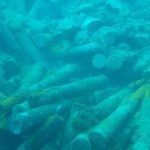
Unexploded Ordnance Puts Jared Kushner’s Resort in Albania at Risk
Change font size: - + Reset The government has paved the way for the construction of a resort on the island of Sazan, but beneath its crystal-clear waters and along its rocky

The 5Ps of Service Excellence: A Practical Roadmap for Albanian and Western Balkan Service Providers
Change font size: - + Reset By Professor Alaa Garad Tirana Times, April 07, 2026 – In my earlier article for Tirana Times, I described Albania as a country that moves from

Building a Trusted Health Tourism Ecosystem: Albania’s Next Competitive Advantage
Change font size: - + Reset by Professor Alaa Garad Tirana Times, March 17, 2026 – There are countries you visit, and there are countries you remember. Albania is rapidly becoming the