By Cedric Rehman
The head of the German department of the University of Tirana talks about her experiences in communist and democratic Albania
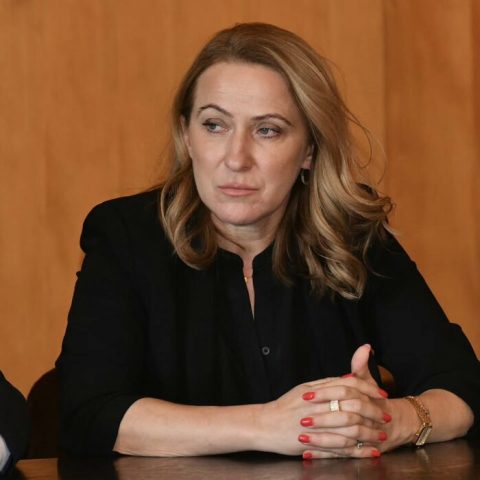
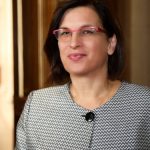
“Acquiring a difficult language is fun”, says Dr, Brikena Kadzadej-Zavalani. She heads the German language department at the University of Tirana since March 2008 and chairs likewise the association of German teachers in Albania. When she sees her students struggling with the sometimes peculiar logic of German articles, she remembers how hard her own first encounter with the language of Goethe and Marx was. “After the first day at my German class at school I was crying the whole afternoon and I was wondering if I ever will be able to utter a single German word.” With the first German dictionary in her hand, that she received at school, she soon found out, that coping with the strange words and the weird structure of sentences was not so difficult at all. Finally Kadzadej fell in love with what she calls the “logic” of German grammar. Therefore at University she chose German as her main subject, in a time when Albania was still completely isolated from the outside world and no relations were maintained to the Federal Republic or the pro-soviet communist regime in Eastern Germany. “The few German books the University disposed of at that time were treated as real treasures”, Kadzadej remembers. Things improved slightly after the Federal Republic restored its diplomatic relations with Albania as the first Western country in 1987. “We were so happy then, because the new German ambassador to Tirana gifted some German books to us”, Kadzadej says. But Fortune turned soon into misfortune, when the dean found out about the ambassador’s donation: “We were all harassed to hand out the “hostile” German literature, but we resisted the pressure.”
Conditions for Learners improved
After the fall of communism in 1991 her efforts start to pay off. Kadzadej was offered a position as a German teacher in one of Tirana’s grammar schools and soon had plenty of work to do. “Germany at that time was a dream for Albania and the language was very popular two”, she remembers. Refugees who fled 1990 from the internal turmoil to the Federal Republic returned in the following years to the country and communicated a very positive picture of Germany to their countrymen.
As a consequence more and more young people decided to learn German in school. “The numbers are steadily increasing since the early 90ies and the first bilingual grammar school were tuition is in German and Albanian just opened recently in Tirana”, Kadzadej reports. With the growing degree of esteem that Germany and the German language enjoyed in Albania, things also improved very much at the German department of the University of Tirana. “We get a lot of support from Germany and Austria for the equipment of our library as well,” Kadzadej says.
No connotation of the goose-step
Unlike as in other European countries, who where occupied by Nazi-Germany during the Second World War, the German language in Albania is not strongly associated with the Prussian goose step or worse, the swastika, says Kadzadej. “When I ask my Albanian pupils what comes first to their mind, if they think of Germany, the start to numerate German soccer stars- they never mention Hitler”, she says. The German aggression against Albania during World War II – Germany replaced the Italian occupation force after the capitulation of fascist Italy in 1943 – has not shaped the perception of Germany in a long term, says Kadzadej. Although her own grandfather was only saved from a massacre committed by German soldiers in the city of Lushnje because he knew some German words, she never felt that the language of the former occupying force was historically incriminated. “We Albanians had our own encounter with totalitarianism. So we do not see us as the proper ones to teach lessons to a country, which shares the same dark experience.”
Easy access to German cultural assets
Most important for her is, that unlike herself, her students at present are not longer completely isolated from the language they learn. “Books, films and music in German are easily available nowadays in Albania and with the help of the German Academic Exchange Service (DAAD) study visits to Germany are easy to realize for our students.”
Concerning the future of her German department there is not much that gives Kadzadej a headache. Just the adjustment to the Bachelor- and Masters-System according to EU-standards causes a lot of effort, she says. She ads, that all over Europe university lecturers are having hard times because of the extra-work the “Bologna-Process” to harmonize university degrees in Europe brings along. With a smile she ads: “We Albanians are so enthusiastic about Europe, so it goes without saying, that we also should suffer the same way our fellow Europeans do.”