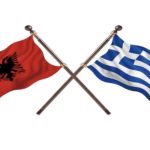
In the capacity of OSCE Chairperson-in-Office, the Greek Foreign Affairs Minister paid a visit to Tirana at the beginning of this week. At all meetings with Albanian authorities, FA Minister Bakoyannis discussed the priorities of the OSCE Presidency, OSCE expectations for Albania in the lead-up to parliamentary elections.
The almost insipid and insignificant role of the OSCE generally changes when elections approach and especially in countries like Albania. This time is no exception to the rule, and with the approach of Albania’s parliamentary elections scheduled for 28 June, so the role of the OSCE Presence in Albania is expected to assume greater importance. The International Community, including the OSCE, expects these political elections in Albania to mark a cardinal turning point as far as international standards are concerned. Everyone is waiting for Albania to finally make a clean break with its controversial past and the way it has conducted political or local government elections. In short, the OSCE, together with its Presidency, which this time round is Greek, and, in particular, the OSCE Presence in Tirana, will be at the center of attention of Albanian public opinion. Minister Bakoyannis appears to have laid it on the line to the Albanian government authorities, but also to the political parties of the Opposition, that the OSCE, like the rest of the International Community, awaits a major change in the upcoming elections, from the viewpoint of applying standards.It is expected that Albania together with Croatia will be made full members of NATO at the April Summit of this organization. A failure to conduct free and fair elections would be impermissible, but not impossible.
Although, the agenda of Minister Bakoyannis was the agenda of the Chairperson-in-Office of the OSCE, it was not difficult to observe that it was overshadowed by the bilateral relations between the two countries, Greece and Albania. Irrespective of the fact that the Greek minority in Albania and the issue of ȡmeria were not, and had no place to be on the agenda of the OSCE CEO, both Minister Bakoyannis and the Albanian FA Minister Basha felt obliged, facing the local media, to respectively reiterate the stands of the Greek and Albanian Governments on both issues, as well as on other issues of a bilateral bearing.
With the exclusion of Serbia, with which Greece has long-standing traditional relations, Albania should actually be another Balkan state with which Greece shouldn’t really have any reason not to have very good relations with. But, unluckily this is not the case. Both governments claim that bilateral relations are very good, but, in reality, this is far from reality. Greece, one of Albania’s neighbours, was one of the last EU member states to ratify Albania’s SAA with the EU. There were even disputes in Athens about whether or not the Greek Assembly should approve the Stabilization and Association Agreement prior to an assessment of the conduct of the Albanian government and State towards the Greek minority. This occurs when Albania should be held up as a model example of how rights of minorities should be respected. The way Athens uses the Greek minority in Albania is almost an on-going policy of Greece. Again, without any credible reason, our neighbour, Greece has still not ratified the membership protocol of Albania into NATO, when the bulk of the NATO member states have already done this. Strangely, Albania and Greece, two neighbouring countries which have never been at war with each other, kept an absurd Law on a State of War between them in power for many years. Although a huge Albanian work force, 500 thousand people at least, live and work in Greece, and despite all the political, economic and intellectual exchanges, there is a culture of suspicion between the two societies. According to a study of the Albanian Institute for International Studies of last year, Albanian society perceives Greece as one of the lesser important countries for Albania, occupying 8th place before Serbia and Macedonia.
The Chairperson-in-Office of the OSCE Bakoyannis declared in Tirana, “Our 2009 OSCE Chairmanship will benefit the Western Balkans on the whole, as well as Albania specifically.” This declaration seems slightly ambitious if we bear in mind the bilateral agenda of Albania and Greece and the spirit of distrust that not only prevails between the two governments, but also between both societies. And if we also add to this the fact that Greece refuses to recognize the independence of Kosovo, as well as the aggravated relations Greece maintains with Macedonia, the ambitions of Bakoyannis for a successful OSCE Presidency in the Balkans appear seriously exaggerated and not realistic at all. Taking over the OSCE presidency should not be a Greek advantage in the Balkans. Over the past two decades, Greece has had two other such advantages-being a member of the EU and of NATO. But as is common knowledge, at the best, it has failed to make use of these priorities, and at the worst, it has misused them.