
TIRANA, Nov. 7 – A high level meeting on information society development was held in the capital Tirana to reap the full potential of the Information and Communication Technologies (ICTs) to spur innovation, economic growth, regional competitiveness and improved quality of life in Southeast Europe.
The three-day event, held within the framework of the Electronic South Eastern Europe (eSEE) Initiative, was organized by the Albanian Ministry of Innovation, and Information and Communications Technologies, the Regional Cooperation Council (RCC) Secretariat and the United Nations Development Programme (UNDP).
Prime Minister Sali Berisha emphasized that “digital technology is in many aspects the Archimedes’s screw to overcome hard times, catch up for the lost time, offer citizens best services, but also to establish the foundation of transparency as a major condition for good governance.”
Berisha said that the country’s 2011 budget has enhanced support for a digital Albania. He pointed out that the government is working on the implementation of all the commitments to the eSEE Initiative and has already made substantial progress.
“Albania has been an active member of the eSEE Initiative for nine years and a signatory to the eSEE Agenda+”, said Genc Pollo, Minister for Innovation and ICT of the Republic of Albania.
“The Initiative, that is also part of our collective and individual EU integration efforts, has proved to be an important forum where we report achievements and challenges, compare notes on a variety of issues and freely discuss the way ahead together with the industry, academia and civil society. The ICT has become indispensable tool for developing knowledge based economy, and a paramount tool to improving governance.”
The participants, led by the South East European (SEE) ministers in charge of information society development, reaffirmed commitment to the implementation of the e-SEE Agenda+, as a regional ICT development framework, and to the e SEE Initiative cooperation.
They are further expected to strengthen mechanisms of cooperation between the SEE governments in their efforts to develop an Information Society, offer an ongoing and updated set of progress benchmarks, fully compatible with EU benchmarks, and support actions to enable the participation of a wide range of stakeholders.
“Science and technology driven innovation can boost the competitiveness of our companies and economies as such,” said Jelica Minic, Deputy RCC Secretary General.
“But ICT is important also in non-technical innovation for enhancing the competitiveness of the backbone of our economies, the small and medium-sized enterprises (SMEs). And, if properly used, ICT can also contribute to social inclusion.”
Information and communication technologies carry a horizontal function across different development priorities and play an important role in improving people’s quality of life, by contributing to economic, social, and human development.
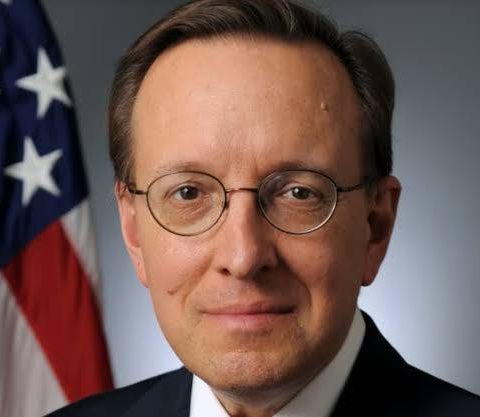
“A study entitled Best Practice Compendium, prepared by the e-SEE Secretariat in cooperation with e-Leaders and the RCC Secretariat, and launched today, showcases best e-SEE Initiative examples of smart growth as well as innovative use of ICTs in raising productivity and improving interaction between governments, citizens and businesses,” said Norimasa Shimomura, Country Director, UNDP Albania.
The participants also invited the European Commission, and other partners to continue supporting the implementation of this agenda, by means of political, financial and technical assistance.
In its Strategy and Work Programme 2011-2013, the RCC recognizes the establishment of Information Society as a key regional priority for South East Europe.
Meeting on information society development in Tirana

Change font size:



Latest from News

Milošević’s Language Returns to Serbia’s Government
Change font size: - + Reset Ethnic Cleansing Remark Tests Serbia’s Claim to Have Broken With Milošević A Serbian minister’s declared willingness to expel Kosovo Albanians has drawn condemnation across the region
Saudi Ambassador Meets Head of Albania–Saudi Parliamentary Friendship Group
Change font size: - + Reset Tirana Times, July 6,2026 – Saudi Arabia’s Ambassador to Albania, H.E. Turki bin Ibrahim Al-Madi, received Albanian MP Baldi Çomo, Chairman of the Albania–Saudi Arabia Parliamentary Friendship

Anti-Government Protests Escalate in Tirana as Demonstrators Block Parliament
Change font size: - + Reset Tirana Times, July 03, 2026 – Albania’s month-long anti-government protest movement entered a more confrontational phase on Thursday, as demonstrators gathered outside Parliament, blocked access points
Are Europe’s Star Architects Helping Launder Albania’s Criminal Economy?
Change font size: - + Reset The Albanian Files suggests that international architecture may have served not only as design, but as a prestigious façade for opaque money, captured institutions and one-man
Saudi Ambassador Presents Credentials To Albanian President As Ties Gain Momentum
Change font size: - + Reset Tirana Times, June 05, 2026 – Saudi Arabia’s new ambassador to Albania, Turki Ibraheem Almadhi, presented his credentials to President Bajram Begaj, marking the formal start