
TIRANA, Aug. 6 – Albania’s lawmakers on Monday were unable refused to pass legislation limiting judicial immunity for lawmakers and government officials – a key requirement for eventual European Union membership.
NATO-member Albania applied for EU candidate status in 2009 but has so far failed to meet conditions, in the previous two years. It hopes to get a positive response later this fall. But political developments in the country do not favor that approach. And political disagreements have hampered the country’s progress in the previous years as they have blocked the required reforms.
Prime Minister Sali Berisha’s governing Democrats pushed for the law, but failed to receive necessary support from opposition parties.
The measure needed at least 84 votes in the 140-seat parliament to pass. Balloting did not take place because the main opposition party, the Socialists, said it would not support it. It says it agrees with the measure in principle but wants it included in broader reforms to avoid potential abuse by the Democrats.
Berisha insisted that the draft law was a key requirement for the country’s integration process.
But the debate, more than six hours long, degenerated as usual in the parliament.
The opposition Socialists repeatedly said they were in favor of the draft law and they would vote for it. But in the right time. They wanted to postpone the voting for September. Besides, and what was the main issue for their contest, they wanted to include the immunity draft law together with a package of other laws for the legal reform _ election of the judges in the Supreme and Constitutional Courts with a three-fifth number, or at least 84 votes. They said that became imperative after the failure to elect a consensual president in June. The president is also head of the High Council of Justice that is the executive of the country’s judiciary, nominating judges and prosecutors.
The opposition repeatedly said that lifting the immunity for the top officials and limiting it for the judges would give another free hand to the governing Democrats, and to Berisha, to exert more pressure on the legal system and turn the country into an autarchy.
But democratic lawmakers and Berisha, who led their debate speaking three times though not staying there all the time, did not think like that. They said the draft law on the immunity should be passed first as that was a key requirement from Brussels. Berisha mentioned very often that the opposition Socialists were pressed by a group of oligarchs, the “club of billionaires” as Berisha called them, not to pass the law as fearing their illegally collected wealth. Berisha turned to his usual game in the parliament directly accusing many names among the opposition Socialists for allegedly holding doubtful businesses and continuously ironized their leader, Edi Rama who is not a lawmaker and thus not present at the parliament.
The debate continued almost endlessly with both sides claiming they were protecting the country’s integration process into the European Union.
Governing Democrats insisted that lifting the immunity was a key requirement. They went even further. Majlinda Bregu, integration minister, said that was the main remained requirement the country had to fulfill ahead of the progress report to be made public in October. Meanwhile the working experts of the European Union usually conclude the report by September.
That was likely the reason why the opposition Socialists wanted to postpone the vote to September. They said that passing only the immunity law was not what Brussels wanted from Tirana. They said that the legal reform was offundamental importance as that was linked with many of the issues the country needs to apply. They said that the immunity law together with that of the election of the judges in the top courts could be passed as a package by September. They also reasoned that the constitution could not be amended as many times as Berisha wanted.
The disagreement means parliament must wait for at least 12 months before re-introducing the legislation.
But the parliament and the Democrats heading it played well with that fact. The voting process was not formally initiated at all, which means they have not to wait for a year to readdress it.
That served Berisha well to make his “explosion” at the end speech.
After saying that the Socialists were the only opposition in the world wanting their cabinet members in power to have immunity, Berisha said he would turn to the people to ask if they wanted them to be equal in front of the law.
Berisha said he wanted Albanians to decide on the repeal of immunity for lawmakers, judges and directors of constitutional institutions in a referendum.
Such a statement at the end of the long debate was really a top political and electoral issue to be exploited and that was done so well by Berisha.
The immunity lift was considered as an “important step in the fight against corruption” by the Democrats. The opposition Socialists accused Berisha of trying to “bring justice to its knees”.
Berisha responded their intention was to block Albania’s status as a candidate for joining the EU.
“The debate with you ends here,” said Berisha. “Tomorrow the government will start the procedure for the referendum.”
That is not that easy; it should be said and made clear. A referendum on amendments to the constitution needs also the votes of the opposition, or two-thirds of the 140-seat parliament to be held. That is for sure that cannot be achieved.
Besides, one may ask why should there be a referendum at a time when both sides agree that the immunity should be lifted or limited. Their only disagreement is on the timing and format.
The opposition continued the usual exchange of political confrontation.
“OK to the referendum. May the people also vote on our proposals,” replied Rama on Twitter.
The opposition said they were very much in favor of a referendum but one that would also include a few more issues, like that on importing waste and the new negotiations with Greece on the maritime border. These are two key issues and for the waste one there was also made an attempt by the civic organizations to collect signatures on holding a referendum. They failed after the Central Election Commission headed from the governing Democrats said the signatures were not correct and the issue was moved to the Constitutional Court, a move that will ask for much time. A referendum on that issue is unlikely to be held until end of this year. Next year no referendum are allowed before the June parliamentary elections.
Berisha and his Democrats continue their insistence on holding a referendum. Normally that needs a lot of time to be decided, then to be approved of by the election authorities and then to prepare the infrastructure to hold it. That means such a long time will also make it unlikely to be held before the end of this year.
That means in general that the political fight is the main obstacle to this country’s progress toward members into the European Union. That was another political show to the Albanian voters. The problems remains with them: did they understand its real meaning? Do their politicians really want to lift their own immunity? And if that is lifted, is that the real cause blocking or hampering the fight against corruption in this country? Absolutely no. that would be a good step ahead but not the solution.
So the fight to raise its stakes so high seems to be just a fake cause of political fight and not a real effort to take the country into the European Union.
Parliament fails to vote on lifting immunity

Change font size:


Latest from News
Milošević’s Language Returns to Serbia’s Government
Change font size: - + Reset Ethnic Cleansing Remark Tests Serbia’s Claim to Have Broken With Milošević A Serbian minister’s declared willingness to expel Kosovo Albanians has drawn condemnation across the region
Saudi Ambassador Meets Head of Albania–Saudi Parliamentary Friendship Group
Change font size: - + Reset Tirana Times, July 6,2026 – Saudi Arabia’s Ambassador to Albania, H.E. Turki bin Ibrahim Al-Madi, received Albanian MP Baldi Çomo, Chairman of the Albania–Saudi Arabia Parliamentary Friendship
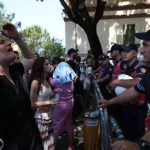
Anti-Government Protests Escalate in Tirana as Demonstrators Block Parliament
Change font size: - + Reset Tirana Times, July 03, 2026 – Albania’s month-long anti-government protest movement entered a more confrontational phase on Thursday, as demonstrators gathered outside Parliament, blocked access points
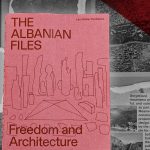
Are Europe’s Star Architects Helping Launder Albania’s Criminal Economy?
Change font size: - + Reset The Albanian Files suggests that international architecture may have served not only as design, but as a prestigious façade for opaque money, captured institutions and one-man
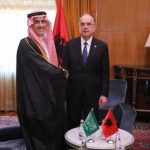
Saudi Ambassador Presents Credentials To Albanian President As Ties Gain Momentum
Change font size: - + Reset Tirana Times, June 05, 2026 – Saudi Arabia’s new ambassador to Albania, Turki Ibraheem Almadhi, presented his credentials to President Bajram Begaj, marking the formal start