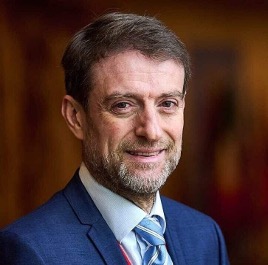
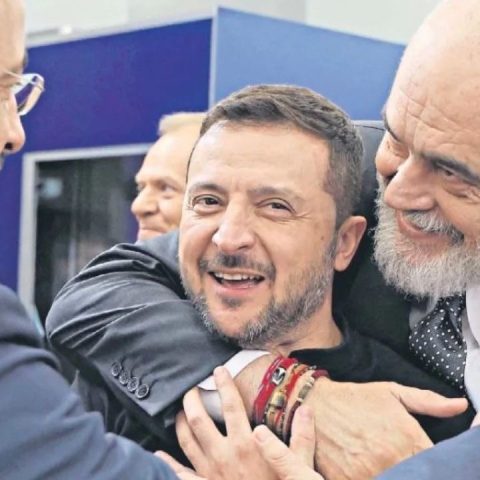
Joining half the government to defeat the other half means the Socialists’ torch to lead the opposition to a ‘rebirth’ just got dimmer.
TIRANA TIMES EDITORIAL
Tirana, Apr. 5 – Less than three months before the country is scheduled to hold parliamentary elections on June 23, the main opposition Socialist Party has formally invited the junior governing coalition partner, the Socialist Movement for Integration, to leave the government and run in a joint opposition coalition. SMI, led by Ilir Meta, has accepted in principle and left the government, which will stay in power with borrowed votes from independent MPs until the upcoming elections.
This sudden turn is an unprecedented event in Albania, and given the nuances of the deal, such a move would be rare in the wider circle of modern liberal democracies as well.
The move essentially means that the opposition invited one half of government to defeat the other half. SMI has been a powerful force inside the government for the past four years, holding key ministries and being the target of much of the criticism over corruption by the Socialists.
This new development in Albanian politics will have serious implications on the country’s democratic system, its values and principles. In addition, the new coalition could have serious implications in the short and medium terms in the way Albania is governed and the country’s stability.
After eight years in opposition, Socialist leader Edi Rama has reasoned that the only way for his party to gain power is by having a coalition with the SMI, the same party that has guaranteed the rule of rival Democratic Party of Sali Berisha since 2009. In essence, joining half the government to defeat the other half was seen by Mr. Rama as the only way for him to become prime minister.
The upcoming June 23 elections have always been Mr. Rama’s last chance to stay in politics. A third loss in a row would undoubtedly mean the end of Mr. Rama’s political career. He is gambling that by joining forces with Mr. Meta, he can’t fail. Mr. Rama might win and become prime minister after the June 23 elections, but that is as uncertain now as it was a week ago. This newspaper believes Mr. Rama has paid too high a price — in fact the entire opposition has – by joining half the government to defeat the other half.
Such an alliance is currently being analyzed in the moral realm, because the SMI has been part of the same negative trends for which all of the government has come under fire. The lack of morality in politics is nothing new in Albania, where there is a very poor tradition of democracy. But Mr. Rama’s political decision is not simply a matter of sacrificing moral principles and authority nor sacrificing the ideological program. Programs and ideologies are things that in Albania are not worth much because they haven’t in the past differentiated Albanian parties as they do parties in other countries. In fact, if we look at it in that context, the SP-SMI alliance is seen as natural because nominally both parties belong to the left of the political spectrum. In fact SMI simply split from the SP more than eight years ago because Mr. Meta and his supporters were unhappy inside the SP.
But while this alliance between SP and SMI ahead of the elections has seen criticism as unacceptable on moral grounds – because SMI has been target of many corruption allegations during it participation the Berisha government – something more important has happened here.
Mr. Rama, through this alliance has lost with full consciousness the scepter of the opposition. Put simply, the flame of the torch the opposition he is supposed to carry just got a dimmer. One can go as far as say that the opposition no longer exists in Albania because providing an alternative to the current government is not what is on the agenda.
The opposition’s stated goal is to replace a the current government with something better, eradicating nepotism and corrupt governance in Albania. But if a corrupt government has existed in Albania in the fast four years – it has existed in the full knowledge and cooperation of Mr. Meta and his party, who the Socialists have now taken in as their own.
If Mr. Berisha’s government is indeed built on the corruption the Socialists say they want to fight, then SMI is just as guilty as a partner of Mr. Berisha for the past four years.
The Socialist opposition over the past four years has promised a rebirth of Albania. It has said it wants to move the country forward and dismantle what it says is a corrupt regime built by Mr. Berisha and Mr. Meta. Joining forces with Mr. Meta now makes that rebirth less likely.