With an unfair image as Europe’s poster child for poverty, corruption and crime, Albania faces uphill battle as wealthier parts of the EU grow hostile to enlargement.
TIRANA, Oct. 23 – Faced with a European public that is increasingly hostile to EU enlargement to countries like Albania – which are seen as poor, corrupt and crime-prone – authorities in Tirana worry that they have an uphill battle to win the backing of all EU members states to move Tirana’s EU membership bid forward.
Having won a recommendation by the EU’s executive branch to move Albania’s EU membership application forward by getting official candidate status, Albanian authorities now face the need to gain the support of each member state to make it official in a vote that will take place in December.
They will need to convince countries like the Netherlands – one of the most skeptical EU members when it comes to enlargement.
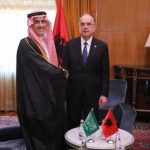
Dutch Foreign Minister Frans Timmermans, who held a one-day visit to Albania Wednesday, met with Prime Minister Edi Rama and Foreign Minister Ditmir Bushati. European integration matters were on top of the agenda, and Timmermans made it clear that they are still analyzing the annual progress report on Albania prepared by the European Commission and have still to decide whether to give the okay for the candidate status at the December EU Council of Ministers’ meeting.
Albania called on the Netherlands to support Albania, pledging to further make small steps until December. They also called for general support in the path to full integration.
Bushati also said that he will continue the diplomatic efforts in Germany and France to convince their governments on the willingness and commitment of the country’s new government to take and make all the required reforms to earn the trust of the EU member countries.
Albania counting on support of neighbors
Albania is likely to get backing from Athens and Rome in its movestoward EU accession, but the rise of euro-skepticism may unravel the entire process.
The European Commission has recommended Albania be granted EU candidate due to its achievements, but the members states must approve the recommendation for it to become official.
Tirana counts on the support of Athens and Rome to move toward the European Union.
Greece takes on the rotating presidency of the EU on Jan. 1, 2014, followed by Italy on July 1. Albanian officials hope of strong Greek support, particularly during its upcoming EU presidency, which they believe is a great time to push the EU enlargement agenda.
Speaking in the European Parliament last week, Enlargement Commissioner Stefan Fule for the first time mentioned some areas which Albania should work upon looking for the likelihood of also launching membership talks next year: the rule of law, strengthening economic governance, support for democratic institutions, respect for fundamental rights and ties between the enlargement countries and EU member states.
Vying for hearts and minds
Elections on the European Parliament are to take place in May 2014, and many Euro-parliamentarians in Europe’s wealthier members face constituents that are hostile to enlargement.
So in addition to official efforts on internal reforms, Albania must also win European hearts and minds so the country can overcome its deeply-entranced negative image and gain more support for Tirana’s bid for EU membership.
Prime Minister Edi Rama said in a recent interview to the Italian public broadcaster RAI that Albania wants to become part of the EU big family.
“We are in Europe. We are in the midst of Europe,” he said, adding that “our road continues. According to me this road has and will be not a road to go somewhere but toward ourselves, because we should and can be part of this family.”
EU Ambassador in TiranaEttore Sequisays the main challenge for Albania on the way to the EU is to stay committed to some fundamentals.
“These fundamentals are related to the rule of law, namely the reform of judiciary, fighting corruption and organized crime. Obviously it is necessary to keep focus on the protection of human rights,” he said.
Albania’s candidacy will now have to be approved by the European council in December. A heated debate may be expected there as Germany, the Netherlands, Finland and Denmark doubt the country’s ability to defend the progress that has been made.
Poster-child for fear-mongering campaign
The debate will take place as euro-skeptic media have started a fear-mongering campaign using Albania as the poster-child against EU enlargement.
“Millions of Albanians are one step closer to getting the right to come and work in Britain after Brussels gave the country the go-ahead to join the EU,” a British newspaper, The Daily Express, writes – inaccurately נin an article headlined: “Anger at Albania’s European Union plan as millions closer to getting right to work in UK.”
“It would be utter madness to bring Albania into the EU, another country with huge issues of criminal activity and terrifying poverty,” Paul Nuttall, the leader of the Britain’s anti-EU party, UKIP, told The Daily Express, a publication that has for decades opposed Britain’s membership in the bloc and regularly writes demeaning – some would argue racist – articles against southeast Europeans, including those from EU member states Bulgaria and Rumania.
While Britain is known for its lukewarm attitude toward EU membership, the segment of the media the Express represents reflect a growing feeling across northern Europe against enlargement – particularly due fears over massive immigration.
Data coming from Austria, for example, last week about how the public feels about EU enlargement is not encouraging for Albania. Only one in five Austrians today support Albania’s membership, according to the Austrian Society for European Policy’s survey of Austrian public opinion regarding potential membership of individual candidate countries, EuroActiv reports
According to the survey, approval for the accession of South East European countries is at very low level, compared to previous Eurobarometer polls.
Of these, Macedonia received the “highest” level of acceptance at merely 28%. Montenegro and Bosnia-Herzegovina were each approved by 26%. Close to one fourth of Austrians surveyed, 24%, said they would welcome Serbia into the EU.
Only one in five supported Albania, 20%, and Kosovo, 19%, joining. Turkey got the worst results, with only 15% of respondents being in favor to its EU membership.