 TIRANA, June 23 – Albania’s agriculture and livestock production registered only a moderate increase in 2014 when the Albanian economy accelerated to 2 percent.
Data published by the country’s state statistical institute, INSTAT, shows both production of field and permanent crops as well as livestock registered only a slight recovery in 2014 when the agriculture sector employing around half of the country’s population and providing around a fifth of the GDP was one of the key sources of growth.
Albania’s field crops in 2014 were led by forage with around 6.1 million tonnes, followed by vegetables with 950,000 tonnes, grains with 700,000 tonnes and potatoes with 240,000 tonnes, all of which registered modest growth rates of 1 to 3 percent.
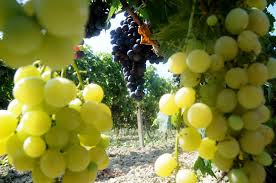
Permanent crops are led by fruit trees with around 220,000 tonnes, followed by grapes with 204,000 tonnes and olive with 98,000 tonnes.
Livestock also registered a moderate increase with the cattle dominated by cows rising to 499,6000 head, up 0.3 percent compared to 2013.
The number of sheep rose to around 1.9 million while goats were up by 4.2 percent to 904,000 head. The number of pigs also grew by 13.4 percent to 172,500.
Livestock products including milk, meat and eggs grew by only 0.1 percent to 1.3 percent in 2014.
Albania produced 1.13 million tonnes of milk in 2014, up only 0.1 percent compared to 2013. Eggs production also slightly rose to 835 million, up 0.6 percent compared to 2013, but down 6 percent compared to 2012.
Meat production also slightly rose to 155,000 tonnes while fish catch was up by 7.5 percent to 5,816 tonnes.
The INSTAT report shows the number of farms rose by 0.4 percent to 352,315 in 2014 but the size of the farm slightly dropped to 1.16 hectares, further increasing the fragmentation of agricultural land, a key barrier to the development of Albania’s agriculture.
The number of agricultural holdings in Albania during the past fourteen years has declined by 30 percent, according to preliminary findings of an agriculture census conducted by state Institute of Statistics in 2012. There were 324,013 agricultural holdings in 2012 compared to 466,809 back in 1998 when INSTAT conducted the last agricultural census.
The survey shows 70 percent of farms are engaged in livestock breeding, 99.77 percent of them have agricultural land and 70 percent are mixed-farming holdings.
The southwestern region of Fier has the biggest number of agricultural holdings with 52,504, followed by Elbasan and Tirana with 43,640 and 41,531 respectively. The regions of Gjirokastra and Kukes have the smallest number of holdings with 9,768 10,368 respectively.
With the remittances-fuelled construction boom almost over, more and more Albanian enterprises are turning to agriculture as a real opportunity of growth engaging mostly in egg, fruit and vegetable production, a considerable part of which are destined for exports.
Data published by the country’s state statistical institute, INSTAT, in its 2014 business register shows the number of new businesses engaged in agriculture, forestry and fishing quadrupled in 2014 when it rose to 1,031, up from only 259 in 2013.
The total number of businesses engaged in agriculture reached 2,260 at the end of 2014, accounting for only 2 percent of total active enterprises, the overwhelming majority of which are engaged in services and trade.
Agriculture, a sector which employs around half of the country’s population, is one of the least productive sectors in Albania’s economy. Although it has been the sector with the most stable growth in the past six global crisis years, the Albanian economy continues remaining largely dependent on agriculture imports which are around six times higher compared to exports.
The Albanian government spends only 0.5 percent of the GDP on agriculture while credit to the agricultural sector represents only 1.3 percent of total credit to businesses, according to central bank data.
Experts say the small size of farms, lack of appropriate management of land and agricultural infrastructure and technology make the Albanian agricultural sector more problematic compared to other countries in the region.
Agricultural cooperatives are now legally recognized as joint enterprises created on a voluntary basis, giving the Albanian farmers more opportunities to maximize their production and benefit more in funding from government and financial institutions but are not popular due to negative connotations to communist farm structures before the early 1990s.
Lack of organization creates a vulnerable position for farmers in Albania in the value chain, making them an unattractive segment for most banks, a study financed by the Dutch embassy in Tirana has found out.
“Although climate and soils are excellent for farming, targeted agri policies, infrastructure in rural areas, a solid regulatory framework and effective monitoring quality and food safety standards by the government, transparent land ownership systems, access to good quality agri inputs and access to markets, enforceable securities for banks are partly absent or poorly developed,” the study found.