
TIRANA, April 15 – This month marks the fifth anniversary of Albania’s membership in NATO, a major landmark in Albania’s progress toward Euro-Atlantic integration.
To commemorate the anniversary, but also discuss the new challenges ahead of Albania and the regional context of collective security, the Albanian Institute for International Studies organized an international conference on “Five years of NATO membership for Albania: The national-regional impact and challenges ahead”.
The conference aimed to provide domestic and regional context for NATO integration and discuss the international security environment and the challenges ahead in light of the recent developments in the world stage.
It also brought together opinions from policy-makers and state officials, on the one side and academics and researchers on the other, providing a forum for many fresh perspectives and approaches to come together.
In the opening session of the conference, Albert Rakipi, the AIIS executive director, identified NATO membership as one of the most important events in Albania, since the fall of communism at the beginning of the 90’s.
“It is safe to say that the efforts of post-communist administrations towards Euro-Atlantic integration have served as a driving force to reconstruct the state and its institutions, to establish a democratic society and to modernize the economy and the society at large,” he said “Five years after joining the alliance we are faced with a moment of critical reflection on the impacts of NATO membership in two directions: domestic and foreign politics.”
Defense Minister Mimi Kodheli acknowledged the role of the Albanian Armed Forces, which are serving as a bridge linking Albania with NATO. However, she responded to the latest accusations from the Democratic Party in opposition and criticized what she called a misuse and political pressure towards the military.
“For some time now the armed forces have become part of political attacks. … We will support AF, and we will not allow these attacks to damage the image of Albania. This, because the Armed Forces have contributed greatly to the peacekeeping operations in, but not limited to, the region,” she said in her speech.
Opposition leader Lulzim Basha, who shared the opening session panel with Kodheli, criticized the current government for ruining the political balance of the Armed Forces. More specifically he referred to the latest accusations, declaring that “the Armed Forces established their dignity due to the reform undertaken by the previous government. I think we should give up from syndromes of the year 0, because the Armed Forces themselves gained their dignity. As in every aspect of life, transparency helps and this also applies to the Armed Forces of Albania. Transparency and accountability help in building and preserving the dignity of the AF”.
U.S. Ambassador Alexander Arvizu concluded the first session with a few remarks on the current situation in Albania, in this fifth year of NATO membership. He also referred to the current crisis in Ukraine and the position of the United States considering it an illegal invasion from Russia.
“The road taken by Albania to receive membership in NATO was long and reflected a desire from all sides of the Albanian society to join together, to overcome party politics and party lines for the sake of the country,” he said.
The first panel: “Albania’s NATO membership: 5 years after”, gathered several members of the Albanian Parliament to reflect on Albania’s membership to NATO in the fifth anniversary and the current state of affairs as well as future steps. While charged with both political and technical matters, this panel provided a good start for the further presentations as it assessed Albania’s membership challenges including political and military responsibilities after the country’s membership, armed forces reform and modernization issues, as well as reaffirmed Albania’s commitment to serve as peace-promoter in the region while supporting further enlargement of the Alliance. This first panel also emphasized the democratization challenges addressed by Albania during the preparations for both NATO and EU membership.
In the second panel: “Membership implications on Domestic politics and Foreign Policy”, representatives of different institutions, governmental and private, discussed the impact of Albania’s membership to NATO in its foreign policy but also on domestic issues such as security sector reform etc. The panel included the Head of Army General Staff, a former member of parliament, civil society representative and a security issues expert. This panel provided a good connection between the previously politically oriented speeches to a more civil society and security perspective in order for some regional insights to come forward in the third panel.
The third panel: “Security challenges: a perspective from the region” gathered security issues expert from the Western Balkans, Greece and Italy, to share their views on NATO from their countries’ perspective, either members of NATO, aspirants and others. The third panel offered an extensive panorama of the region in relation to security challenges and the security environment in general. Panelists were renowned personalities in their field, representing Think Tanks, Atlantic Committees etc. While NATO and EU membership has been commonly emphasized in Albania ─ as both these entities represented the single narrative of ‘return to the West’ where Albania originally belongs ─ this third panel provided a more colorful picture on the different perspectives the other Western Balkan countries have on NATO. This was certainly affected by the post-communist developments in the Balkans, especially in the case of Serbia.
The Final panel: “NATO in a new International security environment” was comprised of the Polish Ambassador to Albania, who offered his country’s perspective especially in relation to the latest crisis in Crimea. A representative from the NATO Defense College in Rome discussed the relationship between NATO and the UN and finally a professor from the George C. Marshall European Center for Security Studies discussed the global economic crisis, challenges ahead for NATO, the Russian invasion etc. This panel closed the entire event and was followed by the lunch organized for participants in the conference.
AIIS conference marks fifth anniversary of NATO membership

Change font size:

Latest from News
Milošević’s Language Returns to Serbia’s Government
Change font size: - + Reset Ethnic Cleansing Remark Tests Serbia’s Claim to Have Broken With Milošević A Serbian minister’s declared willingness to expel Kosovo Albanians has drawn condemnation across the region
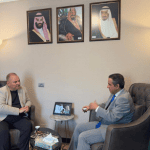
Saudi Ambassador Meets Head of Albania–Saudi Parliamentary Friendship Group
Change font size: - + Reset Tirana Times, July 6,2026 – Saudi Arabia’s Ambassador to Albania, H.E. Turki bin Ibrahim Al-Madi, received Albanian MP Baldi Çomo, Chairman of the Albania–Saudi Arabia Parliamentary Friendship

Anti-Government Protests Escalate in Tirana as Demonstrators Block Parliament
Change font size: - + Reset Tirana Times, July 03, 2026 – Albania’s month-long anti-government protest movement entered a more confrontational phase on Thursday, as demonstrators gathered outside Parliament, blocked access points
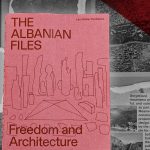
Are Europe’s Star Architects Helping Launder Albania’s Criminal Economy?
Change font size: - + Reset The Albanian Files suggests that international architecture may have served not only as design, but as a prestigious façade for opaque money, captured institutions and one-man
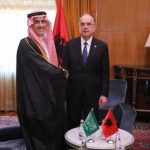
Saudi Ambassador Presents Credentials To Albanian President As Ties Gain Momentum
Change font size: - + Reset Tirana Times, June 05, 2026 – Saudi Arabia’s new ambassador to Albania, Turki Ibraheem Almadhi, presented his credentials to President Bajram Begaj, marking the formal start