
TIRANA, Nov. 17 – Albania’s top leaders and thousands of people paid their last respect on Saturday to the country’s only post-independence monarch, King Ahmet Zog I, half a century after he died and was buried in exile.
The nation’s television stations broadcast live the burial ceremony in the capital, a day after Zog’s remains were returned from France. He was buried in the family’s mausoleum, alongside his Hungarian wife, Queen Geraldina, his son Leka I and his wife Susan.
The ceremony was also attended from Kosovo President Ahtifete Jahjaga and the Hungarian deputy premier.
But it represented another issue of contest in the country.
The ceremony was not attended from the opposition Socialists who do not agree with the government on the merits of the exiled king to the country. They repeat the fact that he left the country when it was occupied and, moreover, also took with him large amounts of gold.
Zog proclaimed himself Albania’s monarch in 1928 and ruled until 1939 when he fled Albania after it was occupied by fascist Italy. Albania’s post-World War II communist regime abolished the monarchy in 1946.
Albania remains a parliamentary republic after the fall of communism in 1990.
The royal family returned to Albania in 2002 leading a quiet life though never relinquishing the claim to the throne.
Its return was not that easy.
After Albania’s Communist regime fell in 1990, Zog’s son, Leka I Zog, made two disastrous attempts to return home נ first in 1993 when Berisha’s government then threw him out and in 1997 when he was charged with leading an armed uprising after failing to convince Albanians to vote for monarchy in a referendum.
First Leka I Zog made the return effort in 1993. But he managed only to stay some hours at a hotel and then be fired back. It was agreed in 1997, the country’s’crazy’year following the fall of the failed pyramid investment schemes, that a referendum on the monarchy was held.
It was held and the monarchy did not win. But Leka I Zog put arms in his belt and made a revolt attempt leading some hundreds of thousands of people toward the Central Election Commission to claim manipulation of the results. A few days later he left the country. The next year he was charged for the uprising. But in 2002 the president pardoned him and let his family be back in the country.
Prime Minister Sali Berisha said that Albanians honor Zog “for his historic contribution in building up this country.”
Some Albanian historians do not agree with that and say that, though Zog as a personality has a place in the country’s history, the tribute paid this time and what the government is doing with it now is really not worth it.
Berisha was joined at the ceremony by President Bujar Nishani and Kosovo’s President Ahtifete Jahjaga at the ceremony. The ceremony was ignored by the country’s opposition parties.
Nishani said Zog “is one of the most important figures of the Albanian history.”
Since then, the family has been given back some of its old royal properties and granted diplomatic passports. Zog’s grandson, Leka II Zog, has since served as an adviser to several Albanian governments.
It is not easy to understand why Berisha has changed his stand so much on exiled king. An easy answer would be because of the electoral impact. The monarchists have certain support and their ballots will really be worth it next year.
Albania holds ceremony for exiled king’s remains

Change font size:

Latest from News
Milošević’s Language Returns to Serbia’s Government
Change font size: - + Reset Ethnic Cleansing Remark Tests Serbia’s Claim to Have Broken With Milošević A Serbian minister’s declared willingness to expel Kosovo Albanians has drawn condemnation across the region
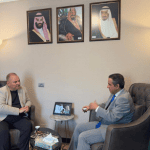
Saudi Ambassador Meets Head of Albania–Saudi Parliamentary Friendship Group
Change font size: - + Reset Tirana Times, July 6,2026 – Saudi Arabia’s Ambassador to Albania, H.E. Turki bin Ibrahim Al-Madi, received Albanian MP Baldi Çomo, Chairman of the Albania–Saudi Arabia Parliamentary Friendship
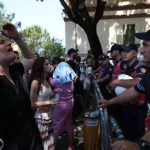
Anti-Government Protests Escalate in Tirana as Demonstrators Block Parliament
Change font size: - + Reset Tirana Times, July 03, 2026 – Albania’s month-long anti-government protest movement entered a more confrontational phase on Thursday, as demonstrators gathered outside Parliament, blocked access points
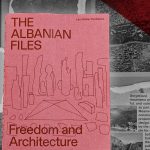
Are Europe’s Star Architects Helping Launder Albania’s Criminal Economy?
Change font size: - + Reset The Albanian Files suggests that international architecture may have served not only as design, but as a prestigious façade for opaque money, captured institutions and one-man
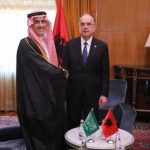
Saudi Ambassador Presents Credentials To Albanian President As Ties Gain Momentum
Change font size: - + Reset Tirana Times, June 05, 2026 – Saudi Arabia’s new ambassador to Albania, Turki Ibraheem Almadhi, presented his credentials to President Bajram Begaj, marking the formal start