TIRANA, Dec. 24 – As the global economic crisis slowly comes to an end, the biggest threat to Albania’s economy in 2010 remains the country’s political instability.
The country will continue to see some economic growth in 2010, and macroeconomic indicators will likely be within acceptable limits. The banking sector, which faced some challenges this year, will likely be stable and continue to lend in 2010. The Albanian government says it will continue to have large investments in infrastructure and put additional money in the healthcare and education systems as well as work to improve the country’s IT infrastructure.
Albania’s economic outlook for next year is not too bad considering the shape of the country’s EU and non-EU neighbors, but much remains to be seen on the political front. Here is a selection of issues likely to be in the business page headlines next year.
Political situation to have direct effects on the economy
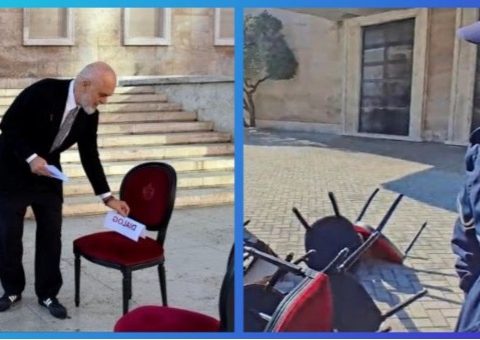
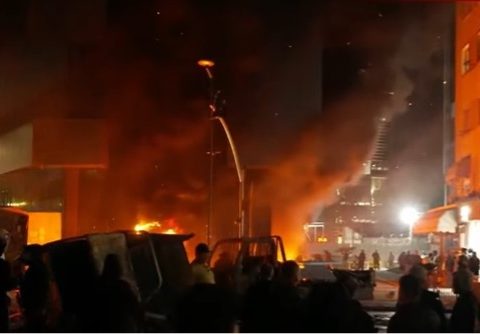
Albania’s ongoing political crisis saw no solution in 2009 and appears to have no end in sight in 2010. The parties remain entrenched in their positions, and the Socialist Party has given no indication as to when it will officially end the boycott of parliament.
Economically, that means that political institutions in Albania are viewed by domestic and international businesses as still not solid, increasing the risk outlook of the country and damaging its business climate.
While NATO membership was a boost, as long as the political crisis continues, there will be further delays in the path to EU membership, causing further harm to the economy.
In practical terms, it means that laws that require a certain amount of votes to pass in parliament cannot be approved.
For example, the bill that would establish an Administrative Court System, which has general support in the business community and the political class, has so far been victim to the politics, as the opposition refuses to take its seats in parliament.
Approving the Administrative Court bill requires 60 percent of the votes in Parliament, which means it needs the votes of 84 of 140 deputies. This means that the law can not be adopted without the support of the opposition Socialist Party, which is currently boycotting the legislative body over its dispute of the election results.
Another example likely to unfold next year is the situation in the construction sector, one of the country’s most important industries. The government has publicly attacked several large companies accusing them of illegal activities and corruption. Tax bills are due, and the industry is now threatening to go on a national strike.
Economic growth will keep Albania in the black
There is disagreement as to the exact number of the real economic growth that is likely to happen in 2010, but the general agreement is that there will be some growth, so Albania will continue to be in the black. And that’s good news, considering the economic shock most of the world went through in the past couple of years.
Taking into consideration the high economic activity in the first half of 2009 and a softening during the second half of the year, the IMF has predicted that economic growth will be about 2 percent in 2009, and 3 percent for 2010.
The Albanian government’s maintains a higher forecast, that the growth will be 6 percent in 2010 – even with the global economic crisis.
Albania’s finance minister, Ritvan Bode, has said that based on the Albanian government predictions, the economic growth for 2009 will be 5 percent, while this level will rise in next three years, reaching 9 percent in 2012.
“We think that for 2010 we will approach the 6 percent level again,” Mr. Bode said.
The finance minister said there would be accelerated economic growth in 2010, as the government will use a fiscal and monetary framework aimed at growth and meeting planed budget revenues.
Macroeconomic indicators going in the right direction
Generally stable macroeconomic indicators are expected by Albania’s central bank for next year, although there will be some key challenges, including financing the large trade and current account deficits.
Fiscal risks remain as the government continues to subsidize underperforming state-owned utilities, especially water, power generation and transmission, where revenues do not cover necessary maintenance and investment, according the EBRD.
Albania’s central bank governor, Adrian Fullani, has also warned that the first quarter of 2010 would suffer from an economic slowdown as the government faces difficulties if the tax revenue does not meet expectations.
According to Mr. Fullani, in 2010 fiscal policies will continue expansionist tendencies, but tax revenues have declined as a result of the decline in VAT and profit taxes. But at the same time there have been increased budgetary costs, causing what remains the biggest economic problem, the budget deficit.
While budget deficit is the range of 4-6 percent of GDP this year, and government forecasts a deficit of less than 4 percent in 2010.
The finance minister, Ritvan Bode, said recently that the inflation rate is moderate and the banking system is stable and that will carry on in 2010.
“Money markets, the banking system are now completely stable. The level of inflation is moderate within the target set by the Bank of Albania in December 2009, and it is the public commitment of the central bank and the government to keep it in that target, which is below 3 percent,” Mr. Bode said.
Banking sector to be more stable
Albania’s banking sector passed the most critical problems in 2009, and the outlook in 2010 is considered more stable by the economic experts.
Albania’s less-advanced financial sector and limited exposure to international goods and capital markets provide buffers against the crisis, and local banks seem well placed to overcome the current crisis due to strong capitalization, limited reliance on wholesale funding and still-low loan-to-deposit ratios, according to the EBRD.
One area of concern for 2010 will be related to Greek economic crisis due to strong presence of Greek banks in Albania, Albania’s central bank recently said.
Remittances will keep declining
Money sent home by Albanian emigrants abroad has been shrinking every year in the past few. It’s a normal process with the passage of time, experts say, but the global economic crisis has accelerated it.
And in a country like Albania, where remittances have counted for between 10 to 15 percent of the total GDP, a rapid decline would cause a lot of problems.
The global recession will continue to affect remittances in 2010, much like it did in 2009. The amount of the decline might not be as large as the 200 million euros in 2009, but it could match up the 2007 number, 150 million euros.
This is due to the economic crisis that has hit the host countries of migrants, experts had anticipated the decline in remittances.
Major projects in infrastructure to continue
The government will continue with big projects in infrastructure in 2010, a trend inherited from the previous mandate. The government has given a large chunk of its budget of the Transport Ministry.
“The 2010 budget will make possible huge ambitious projects in infrastructure and other sectors. We will invest all the necessary funds so that the Arbri Road will be completed by 2011 or by the first half of 2012 at the latest,” Mr. Berisha has said.
The Arbri Road is the latest road project following the construction of the Patriotic Highway, a 1.4 billion euro highway connecting Albania with Kosovo and the rest of Western Balkans. This time, the Arbri Road will connect the north of Albania with its south.
However, Mr. Berisha has said there will be also be investments in the construction and restoration of rural roads.
“More than 400 million dollars will be gathered from foreign donators for the construction and restoration of the rural network of roads,” the prime minister has said.
An interesting fact is also the government’s Mr. Berisha’s promise to plant 20 million new olive trees in the next four years.
Investments in information technology, healthcare and education.
Albania has slowly been moving many of its government services online (with the help of foreign donors). The next year’s budget sets aside funds to further expand the use of information technology in Albania.
Programs like the compulsory IT training of all public employees will be funded to give them skills to compete in the highly computerized world.
The government also plans to invest more money in certain key sectors for the welfare of Albania’s population.
A new financial reform in the healthcare will aim to improve financial compensation of doctors and nurses in order to drop corruption levels. On the other hand, state funds will be directed to improve service quality in hospital and health centers.
Steps will also be taken toward the modernization of all educational cycles. The new government hopes that by 2013, Albanian education system will be ready for the reintroduction of the obligatory high school education.
EU membership prospect helps keep economy stable
One of the main reasons Moody’s, the international rating agency, recently gave Albania a stable outlook rating for next year was its EU membership prospects.
“A mainstay of assessment of Albania is a long-term perspective of EU membership. Recent developments have been mixed: the EU failed to lift visa restrictions for Albanians to travel to the bloc of 27 countries, but supported their membership preparations. The importance of the latter should be exaggerated as it is only an estimate by the European Commission for Albania’s readiness to start membership talks,” Moody’s said in its report. “Even if ultimately successful results, Albania is not likely to join the EU for at least 10 years. But the steps that Albania will have to take if it wants to become a member, such as economic, political and institutional, are undoubtedly the positive assessments.”