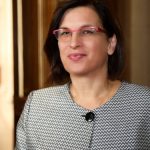
Bernd J. Fischer is a historian specialized in Albanian and Balkan studies. He is known through a list of publications concerning Albanian history: King Zog and the Struggle for Stability in Albania; Albania at War, 1939-1945; Albanian Identities: Myth and History with Stephanie Schwandner-Sievers; Balkan Strongmen: Dictators and Authoritarian Rulers of Southeast Europe, with a group of authors.
Bernd J. Fischer was doing research work in Albania on the eve of the visit that the Vice President of the United States, Joe Biden, made in three Balkan states, Bosnia, Serbia and Kosov묠on the 19th, 20th and 21st of May. Artan P쳮aska, from Tirana Times, met Bernd J. Fischer and asked his opinion of this visit:
Bernd J. Fischer: Vice President, Joe Biden’s visit in the Balkans is a clear indication that the Unites States (USA) is still concerned with developments in the Balkans, especially in Kosov뮍
The situation in Kosov롩s very much unresolved. This visit indicates that the USA is concerned about this issue. In my opinion, once the security is established in Kosov묠the Unites States will to a certain extent if not remove itself, at least pull back and leave the European Union to concern itself with economic development.
Security and economic issues are, though, very much related. Stability has been achieved. But, I think that security in Kosov롩s not yet established. In a way, once the traditional security is secured, the USA will defer to the EU for economic development.
This is an important visit. There is a slide shift in emphasis.
The Vice President, Joe Biden, visited Bosnia, Serbia and Kosov렅
It is necessary that the USA and the EU give the Serbs something. This is realpolitik. Many people in Serbia recognize that Kosov롷ill not go back. There are elements in the Serb government willing to see a new stance. But it is difficult for them to take the turn.
Serbia must be offered something: a fast track to the European Union, or development money, or something in the way of making them feel responsive ō
That might help them take the turn.
Do you think that at the acceptance of such an offer, Serbia could rapidly recognize Kosov렿
No. It could take some time for Serbia to officially recognize Kosov뮠But it could stop Serbia from encouraging other states not to recognize Kosov뮠In this point, Serbia’s policy has been very successful. To date 60 countries have recognized Kosov뮠More countries could have formally recognized the new state, if the Serbian foreign policy was less active and less successful.
Serbia’s policies are mainly obstructionist policies. They can be destructive for Kosov롡s they prevent the government from constructing Šand as they mobilize time, energy and people on the issue of the recognition process.
Trying to advance the recognition process and taking care of the issues of Serbian minorities are the main problems that mobilize the politics.
And Serbia is the key to these issues. In the while, Kosov롩s facing many problems.
As you said, a good number of people in Serbia are convinced that Kosov롷ill never go back. What is the influence of this “cognition”of no return in realpoltik ? ŠDo you think that it is the government and the political parties that inject ideological or nationalist stands and policies on the public opinion over the issue of Kosov롯r that the government is circumscribed / besieged in this issue from mass opinion?
Realpolitik would help find the best attitude. In my opinion, it would require the Serbian government be helped to survive. How much did you say that there are Serbians convinced that Kosov롷ill never go back to them?
From assessment way earlier than the proclamation of independence on the 17th of February 2008, they were over 50 %. More than 50 % and less than 60 %.
Well, that is still very much Serbians who don’t think so. No government is willing to undermine its own political path and stand. Boris Tadi硣annot do it and survive.
The issue of Kosov롢rings to the main parties support from a lot of mainstream people.
Much of the problem that Serbs and Serbia is facing today is the problem of victimization. They also feel that big Western organizations such as and NATO and the EU exclude them. Something must be done to undercut victimization.
Serbia is a big country and perhaps central to the Balkan region stabilization. Without stabilizing Serbia, it would not be possible for the Balkans to stabilize.
Entry in the European Union could become more difficult or belated for the whole region. Not only for Kosov묠but also for Albania, or other neighboring states.
What would be the success of any attitude towards Serbia, if it were to be countered by the Russians ?
Russia’s stance, action and implication on the issue of Kosov롨ave been very unhelpful. The Russian policies are not based on ideological principles or kinship feelings. Their policies were simply inspired by hoping to gain some sort of advantage. Putin is a pretty pragmatic politician.
Russians can be talked to. Russians can be dealt with. I expect Obama’s policies to be more successful. With the new administration, emphasis is put on diplomacy. If you’d want to understand this you need only see the money put in the State Department. You can also see the level of people who are being named. Career diplomats, not politicized people. All these make ground to expect more from Obama and the new administration.
Russia’s position on Serbia can be negotiated. Kosov롳hould focus on its development and does not need to compromise. But American, Russian and Serbian can compromise.
On the 28th of June 2009, Albania will hold parliamentary elections. You may have followed former voting polls. What is your opinion on the upcoming elections?
The elections may potentially be a big problem. The principal issue is the issue of Identity Cards. The government needs to take responsibility. They had enough time to develop a reasonable system.
Once Albania is admitted into NATO, the responsibilities of the government have become even more engaged.
If Albania does not succeed in holding free and fair elections, many people in NATO countries will begin to think that Albania’s admission in NATO was premature.
That would be pretty much the same as people who have begun to think in the EU that Romania’s or Bulgaria’s admissions were premature.
I am afraid that it has not been well understood that NATO admission means significant responsibilities and important steps in the rule of law and democratization are adamant milestones that need not only be preserved but also furthered and enriched.
Admission in NATO raised the bar for Albanian government and society in terms of internal governance and policies. This is true indifferent to government composition.
Government interference with judiciary and flawed elections should be excluded. If the democratic criteria are not satisfied in the electoral process, the 28th of June 2009 elections may be a repeat of the elections in the past.
Actually there is not enough time now to solve problems. It might be a wise prospect to postpone the elections. That would be perceived as honestly recognizing more has to be done to make sure for free and fair elections.
How would postponing the elections affect the economic situation? Though the government does not recognize the crisis, today Albania finds itself in a crisis context.
In my opinion, postponement of the elections would not significantly affect the economic situation. But if postponed, the government should take responsibility for a crisis [crisis of the electoral process] and the government, not any government indeed, is not in the business to put itself in difficulties.
On the other hand, possible foreign investors might see in a possible postponement an honest recognition that more needs to be done to ensure free and fair elections. This might encourage them to watch what is happening in Albania and keep up interest in investment. Otherwise, if the electoral process was not as good as desirable, they might feel discouraged and leave Albania out of their investment plans.
For the foreign investors the principal goal is the rule of law, a democratic society and the protection of investment.
Albania is now a NATO member. What are the possible benefits? What are your views on the recent admission of the country in the politico-military organization?
Admission in NATO was perhaps made less for strategic purposes, than for inclusion in a group. This admission is a badge of acceptance, a perception Albania is moving in the right direction. A badge of acceptance – that’s where its importance will be.
Before the admission, Albania was facing no particular threats. At the same time, NATO is changing. New definitions, new missions, new challenges … In my opinion, in this admission the military aspects are less important than other aspects.
With the admission in NATO more will be expected from Albania. More eyes will be on the country and its development. There will also be more pressure on the government to speed up the process of internal reforms.
The benefits are substantial. Albania can expect more in the way of economic investments. NATO will bring more people to Albania. Albania will be better known in NATO countries and throughout the world.
The government, indifferently from its composition, needs to take advantage of this situation. Albania should put positive impression through its admission in NATO and keep it up. It is not recommending to have a second secretary or whatever diplomat be implicated in smuggling affairs.
With the admission in NATO perhaps more care needs to be taken. The diplomats need to be active and well respected in the area where they represent the country. Albania needs to take advantage of their NATO membership.