Analysis: Elections and political parties in Albania since 1991
This report is a product of the Tirana Center for Journalistic Excellence, visit TCJE.org for the latest updates about the general elections.
Albania will hold parliamentary elections on June 23, 2013 in a process that marks the seventh consecutive general parliamentary elections since the fall of the communist regime in 1992. More than two decades have passed since Albania held its first multiparty elections, yet there are still serious concerns about whether the country has the ability or political will to organize entirely free and fair elections that are based on the best international standards.
A NATO member since April 2009, Albania also applied for membership in the European Union in 2009, but the European Commission has been reluctant to grant the country candidate status, a first step in this process, because of failing to meet criteria. As a result, Albania has received three negative answers in a row on its application to advance the EU bid. Albania’s government and opposition blame each other for failing to obtain candidate status. Both see European integration as a major objective for Albania, yet the government and opposition have failed to work together to speed up the process.
Compromise and consensus are rare commodities in the political life of post-communist Albania. A lack of will and an inability to assert fully legitimate power through democratic election processes accepted by all parties is at the core of the ongoing deep political disagreements and a permanent conflict of the past two decades. As a result, the basic feature of Albanian politics over the past two decades has been a zero-sum game נa philosophy that has encouraged and continues to encourage parties in the race to win elections at any cost. That has led to deformation of democratic standards in the election as well as rejection of the results, actions that have at times affected the very stability and security of the country during a difficult transition that appears to have no certain end in sight.
Albania is the only country in the Balkans that still holds only problematic elections. Despite implemented reforms and the fact that progress is sometimes made in the electoral process, the country still needs to set a clear example in which power is transferred or confirmed through an election process that is accepted by all the parties in the race and that is judged to be entirely free and fair by the international community.
The June 23 parliamentary elections, which decide the composition of Albania’s 140-member parliament, will be a new test of the willingness and ability of the country’s political elite to implement free and fair elections and to leave behind a legacy of conflict and contestations of elections, the foundation of any democratic system. At the same time, these elections will also be a test for the Albanian society in general, measuring the extent of its modernization and democratization. Moreover, the elections will be crucial for the country’s wellbeing and economic development at a time when Albania is increasingly feeling the effects of the European economic crisis.
Albania’s progress in preparing for EU membership depends on the success of domestic reforms, starting with the normal functioning of its political system and institutions. In this context, a normal election process that is legitimate and based on the legal framework would be an investment that will help the country move in the right direction. However, if there are problems during the 2013 elections, it would not merely mean that Albania would maintain the status quo. A controversial election process, in which the laws are not respected and international standards are not met, would actually constitute a setback that would be very detrimental to the aspirations and expectations of Albanian society.
The following is a historical look at Albanian elections and an analysis of the parties in the current race, their programs, ambitions and coalitions, as well as some background information about the political and economic context in which these elections take place.
Albanian elections נA story of disputed results and conflict
Albania has a short and poor history of operating under a multiparty political system, one that provides several alternative parties and candidates on which voters then decide through elections. Albania’s first experiment in democracy, back in the 192os and 1930s, was short lived. It ended tragically with the establishment of the communist regime after World War II. In December 1945, the communist regime organized the first parliamentary elections after coming to power. They were the first and last nominally pluralistic elections held by the communists. Immediately after the elections, the communist regime launched a campaign of terror against the liberal opposition that had begun to emerge. A number of opposition candidates who ran in the 1945 election were arrested and severely persecuted. After that, the parliamentary elections in Albania were simply a charade. While elections took place every four years, voters had no alternatives from which to choose. They were rubber-stamp elections for a rubber-stamp parliament, since the creation of political parties or organizations other than the Communist Party (later renamed the Labour Party) was banned by the constitution. The so-called elections were always won by Democratic Front candidates, an organization set up by the Communist Party, and they were won with results that consistently went to up to 99.99 percent. Turnout was also 99.99 percent, if not 100 percent. Non-participation in elections was considered treason to the Communist Party and the country and it came with harsh penalties such as imprisonment, political internment and loss of right to vote in the future.
With this dark legacy, Albania held its first pluralistic election on March 31, 1991, after nearly a half century of communist dictatorship. For the first time, there was a true opposition party in the race. The Democratic Party had been founded in December 1990, following a pro-democracy movement led by students at the University of Tirana. That first electoral process was conducted in an atmosphere of chaos, intimidation and violence. The opposition won a clear victory in the big cities, however, failed to win the election in the rest of the country. The case of the 1991 election was, among other things, an example of the opposition (the Democratic Party at that time) not competing with just the party in power נthe Communists of the Labour Party נbut with the entire state apparatus with its bureaucracy, resources נhuman and material נincluding instruments and institutions of violence and terror, such as the secret police, which were still very much feared at the time.
The use of all the state’s power in the 1991 election, including instruments of violence as well as propaganda (primarily through the public information institutions like the Albanian Radio Television) continued what had been common practice during the fake election processes held under the communist regime. But unlike previous elections, in the first multiparty election of March 31, 1991, the state and its institutions were used against a real political opposition. Unfortunately, such practice of using state resources against the opposition continued to be present in all future democratic elections. The circumstances and dynamics were different, but the practice of using the state’s power and resources to favor of the ruling party has been a continuous feature in all Albanian elections.
On March 22, 1992, parliamentary elections were organized by a caretaker government, following the resignation of the last communist-led government in May 1991. The polls brought to power the non-communist opposition, represented by the Democratic Party1. These 1992 parliamentary elections entered into Albania’s post-communist history as one of the few processes where the losing side did not contest the results. However, it is difficult for these elections to be seen as normal and a pure case of an uncontested process, because these elections did not simply mark a change in government, they marked a change in regime, one that had completely lost its legitimacy2.
On May 26, 1996, Albania held the next parliamentary election. The race marked the first confrontation between the ruling Democratic Party and the opposition Socialist Party, a rebranded and reformed Labour Party. In many respects, these elections were seen as a real test of the ability of Albania’s fragile democracy to function. The process was a failure. The Socialist Party and its smaller allies abandoned the election, saying the process had been rigged. What could have been a normal victory for the Democratic Party became a charade after government candidates “won” almost all constituencies3. The Socialist opposition disowned the results of these elections and boycotted parliament and other institutions. Within a few months, the country was engulfed by anarchy, following the collapse of pyramid schemes that accompanied the failure of the electoral process. These Ponzi investment schemes took away the savings of most of the country’s citizens, leading to riots and rebellion. The 1997 crisis, the worst in the modern history of Albania, led to the entire collapse of the state. This crisis was not just associated with the failure of pyramid schemes, it also had roots in the failure of the political elite to organize proper parliamentary elections.
Slightly more than a year after the election of 1996, the country went to the polls again in early elections, which were held during a grave period for Albania, and with the presence of a multinational military force, which was called in to maintain law and order.
The elections of June 29, 1997 were held under a climate of tension in which there was lack of state control over large parts of the territory, lack of security, and an inability of candidates to go to almost half of Albania depending on the party they represented. As such, more than an election, the polls were an institutional effort to find a solution for the crisis in Albania. The elections were won by the Socialist Party and its allies. For a time, President Sali Berisha’s Democratic Party, in opposition, did not recognize the electoral process as free and fair. Just as the Socialists had boycotted parliament after the elections of 1996, the Democrats boycotted parliament after the 1997 polls.
By this time, a dominant feature of post-communist Albania had appeared: a trend in which the election results are contested by the losers who then boycott institutions, creating a crisis that demands the involvement of the international community.4 In the future, even if any progress was made, it would not solve the essence of the problem in Albanian democracy: the intention to distort the outcome of the elections and lack of commitment to organize a legitimate electoral process, based on laws and procedures in the books.
The next parliamentary elections were held on June 24, 2001, and were a key second test after the failure of 1996. Elections were held in a political atmosphere dominated by conflict. A government attempt to manipulate the results in favor of its candidates, using a legal vacuum that allowed candidates to be both party representatives and independents failed after an intervention by OSCE-ODIHR.
However, the government was able to change the results in a more sophisticated way, which stood in a legally grey area. The voting process was delayed in one hundred constituencies and in a single area. The ruling Socialist Party then instructed its members and supporters to vote for the allied parties, using the electoral system to produce more deputies for its coalition through strategic voting that distorted the true results of the elections. From that strategic voting, ten MPs were awarded to parties allied to the Socialist-led government. The Socialist Party managed to secure through such distorting efforts three fifths of seats in parliament, which enabled it to have the majority required to have the ability to elect the next president and all heads of independent institutions.
The Democratic Party of former President Sali Berisha, in opposition, rejected the Socialists’ victory, which it saw as fabricated, and under international pressure, the Socialists were forced not to use the power of three-fifths they had in parliament. In 2002, the country’s new president was elected with the consent of the opposition, marking a rare example of consensus in Albanian politics.
The parliamentary elections of 2005 marked the first electoral process that enabled a normal transfer of power from the governing Socialist Party to the Democratic Party, which was able to return to power after eight years in opposition. There were again charges of rigging and violations of rules in the election process and procedures, but ultimately the election enabled the transfer of power from government to opposition. The Socialist Party, which had been in power for eight years, went into the elections divided. After internal clashes, a faction of the party led by former Prime Minister Ilir Meta (2001) split and created the Socialist Movement for Integration (SMI). This division affected the results of the parliamentary elections of 2005, along with other factors related to bad governance and loss of public trust in the Socialist-led government.
The impact such rift had on the Socialists’ loss remains unknown. Many other hypothetical questions remain unanswered as to how parties would have behaved should the ultimate results not have been in favour of the opposition. However, the fact remains that the parliamentary elections of 2005 made it possible for the first transfer of power from government to opposition through normal elections. Nevertheless, it remains questionable whether Albania’s parties had achieved political maturity, or whether the electoral process had ended the legacy of vote rigging, distrust and political conflict, which hurts the country’s wellbeing every time an elections cycle is completed.
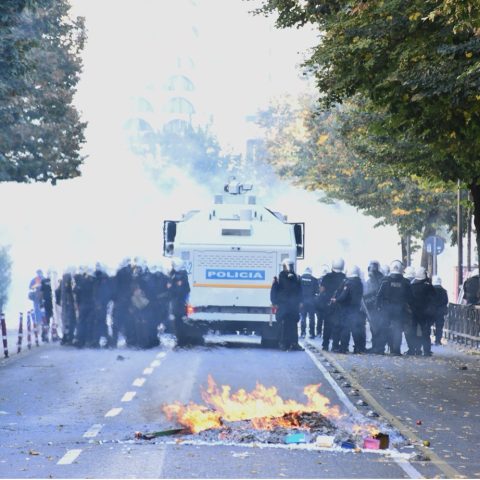
The 2009 parliamentary elections marked the return of the dominant characteristic of the post-communist Albania: the rejection of the results and boycott of institutions. The opposition Socialist Party accused the government, controlled by the Democratic Party, of rigging the elections and demanded the opening of the ballot boxes so a recount could take place. The Socialist opposition protest radicalized through consistent boycott of parliament and other institutions for a long time and then a number of Socialists, including MPs, went on hunger strike in front of the prime minister’s office. In April 2009, Albania had been a member of NATO for only four months, and its parliament was in shambles, boycotted by the parliamentary opposition. In addition to not recognizing the election results, the opposition had gone to the extreme of organizing a hunger strike to demand a recount. An angry Socialist opposition, continued its boycott of parliament for more than one year following the election. The election results did not actually give a governing majority to either of the two major parties. But the Democratic Party was able to create a governing majority coalition by inviting the Socialist Movement for Integration into the government. SMI had competed in the 2009 elections as an opposition party and asked for the support of voters to remove the Democratic Party from power and send Prime Minister Sali Berisha to “political retirement”. But after the election, SMI votes were used to keep the Democrats and Berisha in power.
With such history of conflict, one needs to go back to the early days of post-communist Albanian democracy, to look for a better example. The local government elections of July 26, 1992 were the first administrative elections after the fall of the communist regime. Local and international observers enthusiastically claimed that the elections were organized in a generally democratic process. A number of problems were observed during the electoral campaign and polling day, but these were related to the lack of experience of organizing elections and the political culture of the society.5 Otherwise the process was fair and legal. The local administrative elections of 1992 to this day remain the only democratic process fully accepted by the parties in the race.6 For the former Communists of the Socialist Party it was probably too early to claim coming to power at the local level, when only three months earlier they had suffered a major loss in the parliamentary elections, which, as noted above, was a regime change and not just government change.
However, in local administrative elections, the precedent did not last, and just like the general elections, the same pattern was established: There are attempts to manipulate or influence the results and the loser does not accept the outcome of the elections. Twenty years after the first local elections took place in an environment close to political anarchy and instability, with the completion of local elections in Tirana, in 2011, the country has not moved forward. The Socialist Party accused the government of rigging the vote counting in Tirana. Socialist Party leader Edi Rama was competing for mayor, a post he had held for more than a decade. In the first count, Rama finished ahead, but with an extremely small margin נten votes. But the Central Election Commission decided to recount the votes and Democratic candidate Lulzim Basha was declared the winner instead.
Parties, programs and coalitions
Although new players have entered the political scene in Albania, the upcoming parliamentary elections of June 23, 2013 will primarily be a battle between the ruling Democratic Party and the opposition Socialist Party and the coalitions either party will lead. These two parties have dominated the political scene for the past 20 years in Albania, and despite attempts to create a third option, Albania has created a political system that is bipolar in nature, with the two parties taking turns at being in power. This two-party system is showing signs of cracking, however, as seen particularly during the recent parliamentary elections of 2009. Neither of the two major parties was able to secure enough of a majority on its own to form a government, 71 out of 140 members of parliament. The Democratic Party was only able to create a government by inviting SMI to join the government. Chances are that this bipolar two-party system could face further erosion in the next parliamentary elections, due to two new political parties: the Red and Black Alliance and the New Democratic Spirit.
From the ideological point of view, the Democrats and Socialists are actually very similar. These two major parties have almost the same general program, twenty years since their founding, but the dominance of these parties seems to be assisted by the nature of the electoral system, a regional proportional system that does not allow free competition of small political parties, especially for new parties, if they do not join coalitions with one of the two major parties.
The Democratic Party, in power since 2005, aims to get a third term in the upcoming elections. Established in 1990, the Democratic Party was the first non-communist opposition in Albania. More than a political party, DP was a large opposition front that won a great victory in 1992. Five years later, Democrats would leave power in conditions of complete anarchy after the collapse of pyramid schemes that followed the controversial parliamentary elections of 1996.
The Democratic Party returned to power in 2005 after bad governance and corruption by the Socialists. Prime Minister Sali Berisha has led the Democratic Party since its inception. He is a strong and uncontested leader who has not only dominated the Democratic Party, but all of Albania’s politics since the fall of communism more than two decades ago. Since 1997, many members of the senior leadership of the Democratic Party opposed the leadership of Berisha, who has been accused of using authoritarianism and undemocratic methods to control the party and the government of the country, have left the Democratic Party, creating new parties in opposition to the DP. Others competed for leadership of the Democratic Party and lost. But since 2004, and certainly after 2005, when the Democratic Party headed by Berisha came to power, almost all former opponents of Berisha returned to the party and took important positions in the cabinet, and to a certain extent in the party.
The Democratic Party’s program sets it as center-right organization, however, in Albania, it is still difficult to distinguish among party programs, as they have little or no ideology. The left and right are defined as such not because of political and economic programs. They are rather labeled due to their legacies: the Socialists, the former Communist Party, must necessarily be left, and Democrats right or center-right. However, some ideological differences are now starting to show. For the first time in Albania, tax-related policies are actually made subject to election campaigns and political programs. For perhaps the first time in twenty years of transition, the two major parties are actually following their left or right labels. The Democratic Party insists that it will continue to apply a flat tax of 10 percent as an opportunity to increase investment and employment. Local and international experts believe that the flat tax of 10 percent is very attractive for foreign and local investment, for which there is a great need in Albania.
There is almost no difference in foreign policy and international relations in the programs of the two major parties and their goals are similar. During the past eight years, with Berisha’s Democratic Party in power, the country managed to join the North Atlantic Treaty Alliance (NATO). From 2011, Albanian citizens have had the opportunity to travel to much of the EU without first having to obtain a visa of the Schengen area countries. This is an excellent achievement that will help modernize Albanian society and improve the economy, trade flows and quality of life. The Albanian government under the leadership of the Democrats, applied for EU membership a few days before the parliamentary elections of June 29, 2009, but the European Commission has rejected granting candidate status three times, and thus Albania has failed to make a first step in the accession process. The center-right government of Sali Berisha accused the Socialist opposition that it has intentionally hampered the country’s progress toward EU integration. The governing Democrats support this charge with the boycott of institutions by the Socialists, starting with the long boycott of parliament, but particularly, more recently, with the refusal of the opposition to vote three reform-related laws, which require a qualified majority.
In Albania, there are no political parties, organizations or influential individuals that challenge the country’s goal for membership in the European Union. Western observers say that Albania would already have the status of candidate country if the government and the opposition would agree to work together. More than the content of the laws, it seems that Brussels places importance in the spirit of consensus and compromise. The argument the Socialists offer that they won’t approve the three laws because other laws are not properly enforced is essentially wrong. At the same time, the Democrats’ equation that the three laws’ approval equals EU candidate status is also not true.
During the last six months, there has been a rise of populism and nationalist rhetoric, where all parties talk about national issues and finding solutions. This is a new development in Albanian politics, which actually began with the emergence of the Red and Black Alliance, initially as a social movement and then as a political party. The idea was to use patriotism to gain support. The fact that the Red and Black Alliance seemed to gain an increasing number of supporters was seen as a threat by the Democratic Party, which had seen the patriotism card and nationalist voters as its own. In turn fear of the RBA, pushed the Democrats and Berisha further into nationalist rhetoric, causing worry internationally.
The Socialist Party comes to these elections after eight years in opposition. The results of these elections will to a large extent decide the future of the Socialist leadership today, especially its leader, Edi Rama. Since the Communists of the former Labour Party transformed their organization into the Socialist Party, its leadership has seen some significant changes. The Socialists were led for a long time by former Prime Minister Fatos Nano, though his leadership style was not as absolute as Berisha’s in the Democratic Party. Berisha and Nano dominated political life in post-communist Albania. However, while Nano has largely withdrawn from the political scene, Berisha continues to dominate to this day.
Clashes within the Socialist Party between the historic leader, Nano, and Ilir Meta, one of four Socialist prime ministers since the fall of communism, led to the secession of Meta and his supporters and the creation of another party, The Socialist Movement for Integration. In the 2005 elections, the Socialist Party lost the general election and Nano resigned from the leadership of the party and to some a large extent left active politics. Socialists elected Edi Rama as party leader, who was then mayor of Tirana. Rama had joined the Socialists in 1997, when Nano invited him to join the cabinet as Minister of Culture, following the victory of the Socialist Party in those elections. Rama’s political career with the Socialists would proceed with getting elected as mayor of Tirana, which he ran for three terms, more than a decade. Rama’s Socialist Party lost the parliamentary elections of 2009. In 2011, he lost his post as Mayor of Tirana as well. Rama claims both votes were rigged. However, if Rama fails to bring the Socialists to power after eight years of opposition, he will likely have to leave politics.
The Socialist Party’s program sets it as social-democratic center-left party. Rama’s Socialists propose a tax debate with the Democratic Party. The Socialists are seeking to return to progressive taxation, eliminating the flat tax. SP says it will create 300,000 jobs in its first mandate, a huge number approximately equal to half of Albanian families currently living in Albania,7 (or at least more than 40 percent of workforce Albania.) SP says it will cut the tax burden to 95 percent of people. Just as almost all Albanian parties (at least 67 have been registered so far for elections), SP says it will resolve the property rights issue, one of the fundamental unsolved problems of the post-communist Albania.
The Socialist Party and its leader talk about a new renaissance in Albania under its rule, setting the word as their campaign slogan. They also say they will dismantle a corrupt regime installed by the government (composed until very recently by a coalition of DP and SMI.) However, their slogan might lose some of its color since Socialists decided in April to join forces with SMI, a key partner in the Democrats’ ruling coalition. The SMI left the government and announced it would join the opposition. This is a very rare event in modern history and party pluralism. In January 2011, Ilir Meta, Deputy Prime Minister and Minister of Economy resigned under charges of corruption and Socialist Party immediately organized a protest against what it said was a corrupt government. Four Socialist protesters were killed, marking a dark day for Albania.
Local and international observers see the new opposition coalition as a pragmatic choice with short-term goals for personal power by Rama and Meta. However this change will also have other implications. By joining SMI, Socialists think they can get more votes, but by contrast, the moderate segment of Albanian society, that actually makes a difference, could also be disenchanted by this pragmatic alliance, and media debates show a portion of the population is unhappy that there will be no pure “rebirth” of sorts since part of the 2009-2013 government could be in power when the election results come out. In terms of programs, the SMI-SP alliance is at odds over taxation, since SMI had supported the 10 percent flat tax set up by the government. But there could be more serious implications in the near future if the coalition wins. It is very likely that Rama and Meta could return to their old rivalry if Meta would be able to again make his party a kingmaker if the coalition is victorious.
The Socialist Movement for Integration (SMI) was a faction of the Socialist Party, which split in 2004, under the direction of Ilir Meta, prime minister in the Socialist government from 2002 to 2004. Secession from the Socialist Party was mainly due to a power struggle between two rival figures, Nano and Meta. This disruption of the left is thought to be one of the reasons Socialists marked consecutive losses in parliamentary and local elections. In the 2009 parliamentary elections, SMI ran alone and managed to secure four seats in the 140-seat parliament, enough to win the kingmaker’s role. Although SMI, as noted, ran as an opposition party in the 2009 elections, urging citizens to vote in order “to remove the Democratic Party from power and send Sali Berisha to political retirement,” at the end of the election, it joined forces with the Democrats, giving it the ability to create the government. SMI was in government during the past four years having three key seats in the cabinet נsome of most important portfolios, the ministries of the economy, health and foreign affairs. Meta himself held the posts of Deputy Prime Minister and Minister of Foreign Affairs and later Minister of Economy, before he resigned to face corruption charges. Although it is difficult to place the SMI program in the ideological spectrum, nominally it is perceived as left-wing due to the fact that it was part of the Socialist Party before the split. SMI left the governing coalition in April only two and a half months before the elections, stating that it would join the opposition Socialist Party in a coalition. SMI has indicated that its top goal is the EU integration of the country, although some of charges the party has faced from critics make it hard to see it as living purely by EU standards. All political parties in Albania want EU integration, moreover there is no party or organization or individual with influence against integration. As long as the SMI was in power with the Democratic Party of Prime Minister Sali Berisha it had supporter his policies. Now that the two Socialist parties have joined forces, it will be interesting to see how programs will shift to meet new realities.
The Red and Black Alliance initially appeared as a social movement and registered as a political party a year ago (March 2012). RBA’s entrance into politics marks the first time a nationalist political party could have presence in the Albanian political scene. RBA sees its program as defending the country’s national interests and protecting the interests of Albanians regardless of where they live. RBA has successful in fostering an image of a protest movement and focused on issues of strengthening the state and the nation, which according to the RBA have been at best disrespected or betrayed by the current political parties. Its cause celebre was the maritime border with Greece, which the alliance says the current government wanted to give territory away. The Red and Black Alliance has also called for national unification, and has even proposed holding a nationwide referendum on Albania and Kosovo joining into one country. RBA leader Kreshnik Spahiu has applied at the Central Electoral Commission to hold a “referendum for unification” in order to unite Albania with Kosovo.
Setting RBA somewhere in ideological spectrum is a difficult because its supporters represent several layers of society. Spahiu himself has labeled the alliance as “nationalist”. The RBA program also appears to lack any ideological clarity. In the case of the Albanian parties, except the left-right divide, which comes from the legacy of the past, the communists and non-communists, it is still difficult to identify the parties and their distinction, based on the political program. However, RBA talks about the creation of a strong state, strong rule of law, economic development and voiding what it says are corruptive concession contracts.
The New Democratic Spirit Party comes from a split in the Democratic Party. It is the only recent split in DP, after the New Democratic Party, founded by Genc Pollo in his early efforts to take leadership of the Democratic Party. NDS is led by former President Bamir Topi, a former key figure in the Democratic Party. His deputy is Gazmend Oketa, a former deputy prime minister in the 2005 – 2009 government of the Democratic Party, and NDS includes a number of other officials of lower ranks in the Democratic Party. NDS says it is a center-right party. It also notes in its program that it aims to build a stronger state, making similar points to the RBA, SP and DP.
The political future of both parties, the NDS and RBA, will depend on the results of the June 23 parliamentary elections. Both parties have stated that they are not willing to make pre-election coalitions with the two major parties. So they are going at it alone. RBA negotiated with the SP, to join the left-wing coalition, but decided against it. DP tried to get the NDS to talk to it, but Topi’s party rejected the idea.
In addition to the parties analyzed above, there are also a number of smaller parties, such as the Human Rights Union Party, identified primarily with the Greek minority and which currently has one member of parliament. The Justice and Unity Party represents the Cham community and is mainly identified with its head, a former customs official who was elected MP on behalf of the SP in 2009. It also has a second member of parliament it elected on its own. Besides some traditional right-wing parties, such as the National Front Party and the Party of Legality with pre-WWII roots and allied with DP, but which have no MPs at this time, there are some small leftist parties allied with SP also with no seats in parliament at this time. These include the Social Democratic Party and its various factions which have become independent parties over time. The current electoral system encourages the formation of coalitions with as many parties as possible. And Albania has no shortage of such political organizations. SP is going to the elections with 39 parties. DP has 26 in its coalition. Most voters will be unfamiliar with the names of most of the smaller parties.
RESULTS FOR THE PARLIAMENTARY ELECTIONS IN ALBANIA (1991-2005)
Parliamentary Elections 1991
Turnout 98.92%
Election results as % of seats in parliament
Labour Party 67.60%
Democratic Party 30%
Omonia 2%
National Committee of Veterans 0.4%
Parliamentary Elections 1992
Turnout 90.35%
Election results as % of seats in parliament
Democratic Party 65.71%
Socialist Party 27.14%
Social Democrat Party 5%
Union for Human Rights 0.71%
Parliamentary Elections 1996
Turnout 89.00%
Election results as % of seats in parliament
Democratic Party 87.00%
Socialist Party 7.00%
Republican Party 2.00%
National Front 1.50%
Union for Human Rights 2.00%
Parliamentary Elections 1997
Turnout 72.96%
Election results as % of seats in parliament
Socialist Party 65.1%
Democratic Party 15.5%
Social Democratic Party 5.8%
Union for Human Rights 2.5%
National Front 1.9%
Legality Party 1.3%
Democratic Alliance 1.3%
Republican Party 0.6%
Social Democratic Union 0.6%
Christian Democratic Party 0.6%
Democratic Union Party 0.6%
National Union Party 0.6%
Agrarian Party 0.6%
Parliamentary Elections 2001
Turnout 55.59%
Election results as % of the votes and
number of seats in parliament
Socialist Party 41.00% 73
Union for Victory (coalition) 36.81% 46
Composed by: Democratic Party, Legality Movement, National Front Party, Republican Party, Liberal Union.
New Democracy Party 5.80% 6
Social Democratic Party 3.64% 4
Party Union for Human Rights 2.61% 3
Agrarian Party 2.57% 3
Democratic Alliance Party 2.55% 3
Independent 2
Parliamentary Elections 2005
(Zonal results only, without proportional corrections, %, seats)
Democratic Party of Albania 44.1 % 56
Socialist Party of Albania 39.4 % 42
Socialist Movement for Integration 8.2 % 4
Parliamentary elections of 2009
(New electoral code implemented, closed lists, raises bar for small parties)
Alliance of Change (Democrats and allies) 46.92 % 70
Union for Change (Socialists and allies) 45.34 % 66
Socialist Alliance for Integration (SMI) 5.56 4
1 In addition to the Democratic Party, other opposition parties such as the Republican and Social-democratic parties had been founded.
2 Albania was the last country in the former communist Eastern Europe to end its communist regime. By then, then the chances of keeping such regime going in Albania were nearly nonexistent.
3 Democratic Party won 87 percent of seats in parliament, and together with its allies, the victory went to 93 percent, while the opposition held only 7 percent of the seats. This absolute domination of the political scene, however, was on shaky ground from the beginning.
4 Elections were held under the presence of a military force mainly from EU member states, led by Italy, including Romania and Turkey. OSCE led international presence. From this year, the OSCE continued to maintain a presence in Albania. The international community continues to be involved in a significant degree in domestic politics and in particular in elections.
5 For example, family voting in some areas of Albania is marked as an irregularity and illegal even today twenty years later. But the deformation of electoral process in Albania has not come from this or similar irregularities but rigging the results and not accepting them.
6 It is interesting that the only contested electoral processes, parliamentary elections or local elections more democratic and uncontested are those of the beginning of the political transition in Albania, although the country completely lacked experience of a pluralistic competition, as well as being inexperienced in organizing and administering the electoral process.
7 At least 50 percent of Albania’s workforce is in Greece and Italy. The economic crisis in these countries, particularly in Greece, has forced a number of immigrants to return home.