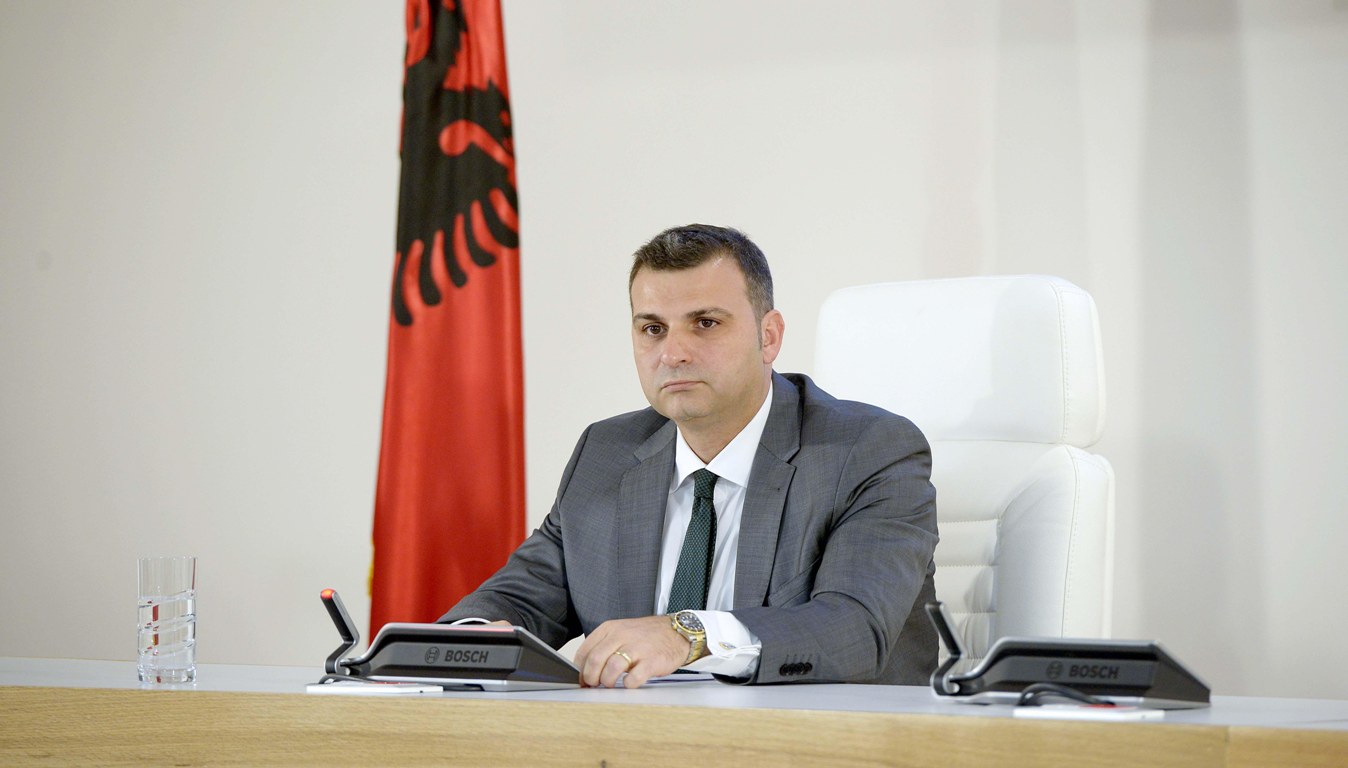
TIRANA, May 7- During the enclosing press conference held by the International Monetary Fund (IMF) yesterday regarding its second Post-Program Monitoring (PPM) discussions, the Bank of Albania (BoA) governor Gent Sejko said that from BoA’s assessment the cyclical position and overall balances of the Albanian economy have continued to improve.
Sejko said that the expansion of aggregate demand, mainly due to increased consumption and private investment, has enabled maintaining a positive growth trend and increasing use of production capacities. Parallel with them, the external balances of the economy have improved, domestic debt has been reduced and private sector financial balances have been strengthened. The increase in employment and wages has led to the strengthening of internal inflationary pressures. However, the inflation rate (2 percent) remains under the targeted 3 percent as a result of the strengthening of the exchange rate and of the fact that aggregate demand is still insufficient to ensure the return of inflation to target.
Internal financial markets appear to be quiet and appropriate to support economic growth. Liquidity in the banking sector is abundant, interest rates on loans are low and the exchange rate is relatively stable. Also, bank lending has improved the growth rates and the gradual diversification of the portfolio structure. Key indicators on the banking sector’s state – liquidity, capitalization, profitability – remain at high levels, while the non-performing loan indicator has a downward trend. Together with the ongoing consolidation of the banking sector, they open the door to a more active lending position.
Sejko said that these development trends have reflected: (i) improving the external environment; (ii) harmonization of fiscal consolidation with monetary stimulus and stabilization and development policies of the financial sector; and (iii) structural reforms undertaken during this period.
“As far as the Bank of Albania is concerned, during 2018, we have continued and even strengthened the monetary stimulus, further reducing financing costs and mitigating the foreign exchange market fluctuations,” said Sejko during the conference.
He added that BoA during 2018 has also achieved the following points:
- has worked on the implementation of the plan for measures for reducing non-performing loans;
- has taken concrete actions for the implementation of the national program to increase the use of the lek in the economic and financial life of the country;
- has worked to improve the regulatory framework, supervisory practices of the banking sector and strengthen financial system security networks; and,
- has further exercised its powers to develop the financial market and payment systems.
Country development perspectives remain positive, and economy will continue to grow in the medium term in the absence of shocks, boosting employment and wage growth, returning inflation to target and further improving overall macroeconomic balances. The materialisation of these projections and the fulfillment of our objectives requires the maintenance of the current economic policies: monetary stimulus, fiscal consolidation and financial stability. In particular, the normalization of monetary policy will be cautious and the monetary stimulus intensity will adjust to the balance of inflationary pressures.
On the other hand the balance of risks appears to be significantly shifted downstream. In particular, the deterioration of the foreign environment and the increased political tension in the country can have negative consequences for the economy. The BoA is closely monitoring foreign developments, aiming at identifying the appropriate response and timely undertaking it. They are in the believe that any attempt to calm the political situation would contribute to maintaining the positive trend of economic developments. In any case, BoA’s response through its core instruments including the monetary policy and banking regulation and supervision, will be consistent with the challenges ahead and consistent with the fulfillment of the Bank’s set objectives.
In the long run, BoA continues to find that the country needs to continue structural reforms. These reforms should aim to increase productivity and competitiveness, accelerate the pace of growth and the pace of convergence with the European Union, and increase the sustainability of the Albanian economy and financial system. Structural reforms should continue to be farsighted, ambitious and inclusive. They should be anchored more and more in the European integration process and aim for broader political and social consensus.
“Within its area of expertise, the Bank of Albania has been and will remain a committed and serious partner in advancing the country’s development agenda,” concluded Sejko.