A Q&A with Gallery Kalo founder Përparim Kalo on art, cultural heritage and the gallery’s expanding vision along the Vjosa Valley.
Introduction
Gallery Kalo is more than an exhibition space. It is a cultural meeting point where art, memory, dialogue and contemporary creativity come together. Founded with the vision of promoting artistic ideas and cultural exchange, the gallery has worked to support artists, encourage public engagement and bring art closer to communities.
Over the years, its vision has expanded beyond Tirana, reaching villages and towns along the Vjosa and Drino rivers through initiatives that connect art with landscape, heritage and local identity.
Q&A
How did the idea of opening an art gallery begin?
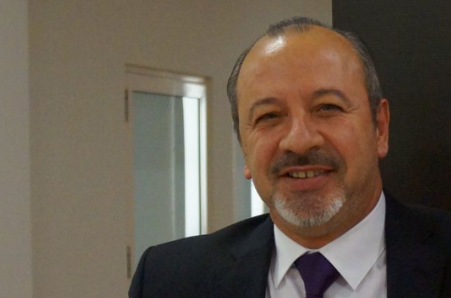
Gallery Kalo was physically born in 2014, although it had existed for a long time in the minds of my wife Ardjana and myself, given our personal connection with art, music and culture.
Two months ago, when we inaugurated a Bektashi temple in the village of Luzat, Tepelena, I heard a wise man say that the world stands on three pillars: poetry, music and architecture. I believe he was right.
At a time when gambling and slot machine businesses were thriving in Tirana, creating an art space felt like a logical and necessary step. As our private collection continued to grow, we wanted to create a place where artworks could be displayed and shared with the public, but also a space where artists could meet, express themselves freely and where the public could encounter art in a direct and meaningful way.
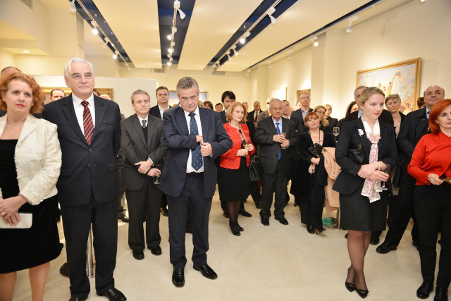
Over the years, the gallery has become not only an exhibition venue, but also a place of dialogue, reflection, artistic discovery and networking for the art community.
Was there a particular philosophy behind the gallery?
The philosophy has always been to respect artistic authenticity. We believe that art should speak honestly to people and create emotion, curiosity and thought.
The gallery has tried to balance well-established artists with emerging voices, while remaining open to different styles and forms of expression. Inclusiveness has also been part of our practice. The gallery has opened its space to children, women, emerging artists, people with different abilities and many others.
How important is art in today’s society?
Art remains essential because it helps people understand themselves and the world around them. It educates our sense of aesthetics and our love for beauty, which exists everywhere but often remains hidden and needs to be discovered and shared.
In difficult or fast-changing times, art preserves sensitivity and humanity. It creates communication beyond politics, language or borders. Artists are often influencers in the best sense of the word. They can put pressure on leaders and societies to change policies or behavior when they believe something is wrong.
What challenges has Gallery Kalo faced during its 12 years of activity?
Like many cultural initiatives, sustaining long-term artistic activity requires persistence and dedication. There are financial challenges, organizational challenges and the constant challenge of maintaining public engagement.
But passion for art, together with the support of artists and visitors, has kept the gallery alive and active. Support from public institutions responsible for art and culture would always be welcome, as it has often been missing.
A person who deserves gratitude for her moral support is former Culture Minister Mirela Kumbaro. She cut the ribbons at two galleries, in Tirana and Luzat, respectively, and has visited exhibitions from time to time.
Support for art galleries and museums is always needed and requires more attention and care. Private galleries should be considered partners of public cultural institutions. We often see government agencies rushing to attend business events, but not showing the same enthusiasm when it comes to artistic activities.
The gallery seems to have expanded through projects outside the city. Can you tell us more about that?
Yes, indeed. One important step was the opening of two other galleries, one at Tirana Business Park near Tirana International Airport and another in the residential area known as Magnet. Both were later closed as we decided to expand outside Tirana, along the Vjosa and Drino rivers, where artistic life is rather limited.
The idea was to connect art with landscape, memory and cultural heritage. Bringing artistic activity to a village environment creates a different experience and helps cultural tourism.
Under a project we named Art in Village, we inaugurated Gallery Kalo Luzat in March 2025 and Gallery Kalo Memaliaj in May 2026.
What are your hopes for the future of Gallery Kalo?
The hope is to continue creating meaningful exhibitions, international collaborations and cultural exchanges.
A gallery should never remain static. It should evolve continuously while preserving its identity and values.
Could Këlcyra, which lies between these areas, also become an art destination within your vision?
Absolutely. Këlcyra has a very special position along the Vjosa valley and possesses a powerful natural and historical atmosphere. Places like Këlcyra are important because they preserve authenticity, simplicity and a close relationship with the surrounding landscape.
In many ways, smaller towns and villages can offer a more intimate artistic experience than large urban centers. The silence of the mountains, the rivers, the stone architecture and local memory create conditions where art can breathe differently and where visitors can feel a deeper connection.
The broader vision is not to create isolated galleries, but rather a cultural route along the Vjosa region a network of artistic and cultural spaces connected by nature, history and human experience. In that sense, Këlcyra could certainly become an interesting artistic stop in an itinerary that includes Memaliaj, Tepelena, Luzat and Përmet.
Such development could also encourage young artists, cultural exchanges, small festivals, artist residencies, music gatherings and collaborations with local communities, while preserving the spirit of the region itself.
What kind of artists are you most interested in presenting?
We are interested in artists who show sincerity and individuality in their work. Technique is important, but artistic truth is even more important.
We appreciate artists who can create emotion and who remain faithful to their inner vision. We are also open to contemporary art, including installations, video and other forms of expression, and we encourage young artists to be more active in these areas.
What role does Albania play in the contemporary art scene?
Albania has talented artists and a strong cultural identity. The contemporary art scene is still developing, but there is plenty of energy and creativity.
International connections are becoming stronger, and galleries and cultural institutions can help create greater visibility for Albanian artists. Albania is currently presented quite decently at the Venice Biennale and has attracted visitors, making our art better known.
The area has long been known for its tradition of religious tolerance. Are you considering this as part of its attraction for visitors and tourists?
Yes, and in a very natural way. The Vjosa valley and the surrounding regions are not only rich in landscape and heritage, but also in a long-standing culture of coexistence. Religious tolerance here is not something constructed for tourism. It is lived history, part of the everyday social fabric.
This is important because contemporary cultural tourism is no longer only about monuments or scenery. Visitors increasingly look for authenticity: how people lived and live together, how traditions are preserved and how communities maintain respect across differences.
In that sense, the coexistence of faiths and cultural traditions in the area becomes part of a deeper narrative of the region one of openness, harmony and continuity. It is not an “attraction” in a commercial sense, but it certainly enriches the cultural experience of those who come.
For an art-based project like ours, this environment is meaningful. Art thrives where there is openness, dialogue and mutual respect. Rather than highlighting it separately, it becomes part of the overall spirit of the place that visitors inevitably feel when they experience the region.
In this context, we are working to bring back religious objects such as tyrbes, Catholic and Orthodox churches and the mosque in the village. This has been very well received by the inhabitants and by people in the surrounding area.
One of the serious issues today is demographic change and migration. Do you see your contribution bringing art into the area as a factor that might help keep the local population engaged and reduce the tendency to leave?
Migration is a complex reality, and it cannot be addressed by culture alone. It is driven by economic, social and personal factors that go far beyond the reach of any single initiative. However, culture and art can still play a meaningful role within that broader picture.
Projects like those along the Vjosa valley are not designed as substitutes for economic opportunity, but as contributors to a sense of belonging and perspective. When a place becomes culturally active when it hosts exhibitions, residencies, encounters and creative exchange it begins to generate different forms of energy and visibility.
For young people especially, it is important to feel that their environment is not disconnected from contemporary life. Art can help build that bridge between local identity and global dialogue, between tradition and modern expression. It can also create small but real opportunities temporary work, collaboration, tourism-related activity and creative engagement that did not exist before.
But perhaps the most important contribution is less tangible. It is about the dignity of place. When a region is seen not only as something to leave, but also as something to experience, interpret and invest in emotionally, it changes the way people relate to it.
So yes, art can be part of a wider effort to keep people connected to their environment, history and values. We do not claim to stop migration through art initiatives, as that would be unrealistic. But by making local spaces more alive, more meaningful and more open to possibility, we believe we contribute to healing that wound.