TIRANA, June 21 – Fuelled by favorable hydro situation and the launch of operation by more than a dozen new hydropower plants, private and concession HPPs registered record high income in 2016, despite the sale price slightly being revised downward.
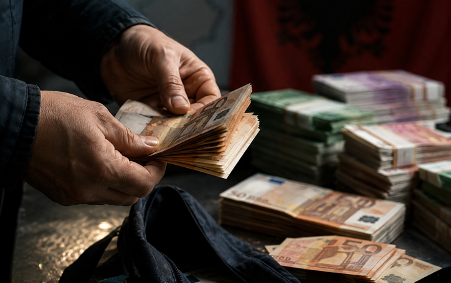
An annual report by energy regulator, ERE, has shown private and concession HPPs increased their income to a record high of 10.8 billion lek (€80 million) in 2016, up 35 percent compared to 2015.
A revise downward in electricity prices had a negative income on higher production.
Albania’s concession HPPs sell their electricity to state-run KESH power utility which manages the country’s three biggest HPPs on the Drin River Cascade in northern Albania. Recent legal changes have transferred the HPP concession contracts to OSHEE, the state-run electricity distribution operator.
Since 2015, prices are determined based on a formula taking into account average prices at the Hungarian Power Exchange, a 1.24 coefficient and the average annual euro/lek exchange rate in considerably lower rates affecting new concession HPPs. The government changed the formula following huge losses the state-run power utility was suffering under the previous differentiated rates.
“The increase in income did not follow the same pace to the production hike because of a lower adopted electricity sale price compared to the previous year following the fluctuation of prices at the Hungarian Power Exchange as a key element in the formula of calculating prices for these category of producers,’ says the energy regulator.
As a result, while the amount of electricity generated by private and concession HPPs rose by about 39.5 percent, income from the sale of energy rose by only 31.6 percent.
Power utility KESH bought electricity at a unified rate of 7.448 lek (€0.055)/kWh from all private, concession and new concession HPPs, down from 7.636 lek (€0.0556)/kWh in 2015 and differentiated higher prices for new concession HPPs until 2014.
Albania had plenty of rainfall in 2016 significantly improving the country’s wholly hydro-dependent domestic electricity generation while 16 new HPPs were made operational taking the number of private and concession HPPs to 139. Among the new HPPs launched was also the Banja HPP built by Norway’s Statkraft as part of its major Devoll Hydropower project that is expected to conclude by late 2018 with the completion of a bigger HPP. The two power plants are expected to produce about 700 GWh annually, increasing Albania’s electricity generation by 17 percent.
The wholly hydro-dependent domestic electricity generation rose by 21 percent to 7,136 GWh in 2016, meeting the overwhelming majority of the country’s needs.
State-run KESH power utility, which manages the country’s three biggest hydropower plants and produces about three-quarters of domestic electricity, saw its energy production increase by 14 percent to about 5,100 GWh compared to 2015.
Meanwhile, private and concession hydropower plants increased their share in the domestic hydropower production by 4 percent to 28 percent with a production of 2,000 GWH in 2016.
Albania had some 76 small private and concession HPPs with a capacity of up to 2 MW at the end of 2016, compared to 57 HPPs with a capacity of 2 to 15 MW and 6 HPPs of more than 15 MW.
Concession HPPs have seen a boom in the past decade with the government offering incentives to domestic and foreign investors in a bid to meet the country’s domestic demand and turn into a regional electricity exporter.
Concession contracts are usually awarded on a build, operate transfer basis for 35 years.
The nationalization of the country’s electricity distribution operator in 2013 following a failed three and a half years period of privatization and the launch of a nationwide campaign to collect hundreds of millions of euros in accumulated unpaid debts and cut off illegal connections has considerably improved the country’s electricity situation with grid losses estimated to have dropped to 28 percent, compared to a record 43.4 percent in late 2013.
With domestic energy production relying on rainfall dependent hydroelectricity, Albania has also diversified its electricity resources by building a new interconnection line to Kosovo but its operation is being held back by Serbia over a transmission grid dispute with Kosovo, in a conflict that continues nine years after majority ethnic Albanian Kosovo declared its independence from Serbia.
The new German-funded interconnection line and the expected joint power exchange will help Kosovo’s lignite-fired power plants and Albania’s hydro-dependent electricity system exchange electricity during their peak production levels, reducing dependency on costly imports.