By Karolina Risto
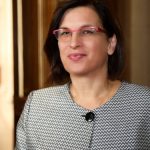
Laura Xhaxho is leaving Albania. She says she has thought long and hard about it but has no choice.
Educated in political sciences, with a diploma in international relations, the 27-year-old came back from Moscow with high hopes in March 2005.
Her good curriculum got her a job almost immediately with Albania’s Central Election Commission, CEC, and within a few months the chairman, Ilirjan Celibashi, had offered her the post of his assistant.
But in April 2006, after general elections saw the Democratic Party replace the Socialists in power, her career came to a full stop.
After a candidate of the new ruling party replaced Celibashi, in July, Xhaxho was also fired. Officially this was because her post had been opened up to competition.
Unofficially, she feels other factors were at work. According to her, the new boss had said she had worked too closely with the ex-chairman.
Months later, she remains jobless. After deciding her position is hopeless she is leaving again, this time for the Czech Republic, where for three years she will study for a doctorate.
Xhaxho is not the only highly educated Albanian leaving the country. One year after the elections, the new government’s pledge to introduce a “small but efficient government” is cutting a swathe through the public administration, leaving many who were hired under the Socialists jobless and feeling as if they are on a black list.
The Socialists claimed that only weeks after the polls, the new authorities dismissed more than a thousand people because they used to work for them.
An investigative parliamentary commission is still looking at these figures. In the meantime, out-of-work civil servants have the choice of finding a job in the private sector, waiting until the government changes again, or leaving.
Erjon Velia, of the human rights NGO Mjaft, which means “Stop”, said the sackings were forcing too many of the countries brightest and best to quit the country.
“Many of my friends came back after finishing studies in the best universities to work and live in this country,” he said. “After the change of power, they are jobless and have left again.”
The problem has been raised by the Ombudsman. He has reminded the new government that they complained of the practice of removing civil servants for political reasons when the Socialists were in power. Now they are doing the same.
It is a tradition in Albania. Each time the two main parties change power, the winner fills the administration with political allies. The sacked workers know they will have to wait a long time to get their posts back, so they leave the country.
The brain drain is widely seen as one of the biggest problems in Albania, though no one knows exactly how many educated Albanians have left in the last year.
Unemployment is obviously the main reason. In 2005, some 14 per cent of the workforce were without jobs, meaning 154,000 people.
The jobless rate has remained fairly stable for some years, though some economists hope it will fall as the economy grows steadily.
One good sign is that at least everybody admits the brain drain is a problem. A few days after marking one year as prime minister, Sali Berisha announced an initiative to lure some of the exiles back home.
On September 29, Berisha declared his programme would tackle three main categories of involuntary exiles – academics, public administrators and businessmen.
Whether his initiative will have results is unclear. So far, it involves little more than promises to improve the access of young people to work experience and practical-training programmes.
But such schemes already exist, permitting certain students, for example, to follow the daily round of the prime minister’s office.
The problem is that work-experience programmes do not necessarily lead to employment. After the courses finish, the youngsters have to get out and find a job by themselves. Who fails to do so is destined to leave the country.
The pattern of migration is set up at high school. Once the most talented teenagers finish high school, they usually insist on going abroad.
Take Jonilda Bozo who gained the highest marks out of the high school students of 2006 in Albania.
The ministry of education gave her a laptop for coming first. But her only request, addressed to the minister, was for a scholarship to study abroad.
She is still awaiting an answer. But her interest will have been stimulated by the premier’s pledge, made on the same day as the initiative to stop the brain drain, to draw up a deal with Harvard University “to enable our greatest students to study there”.
In reality, the problem of emigration is not just a matter of young intellectuals.
Ever since the country’s doors opened in 1990, people of all qualifications and none have poured out for the simple reason that if they go abroad they can expect to get paid far more than if they stayed.
Now Laura Xhaxho, who wanted to find a job in Albania, is about to join them.
Whether she returns after finishing her doctorate is uncertain. “If someone offered me a job, I would not leave, but no job means no future,” she said.
(Balkan Insight, 18 Oct 06)