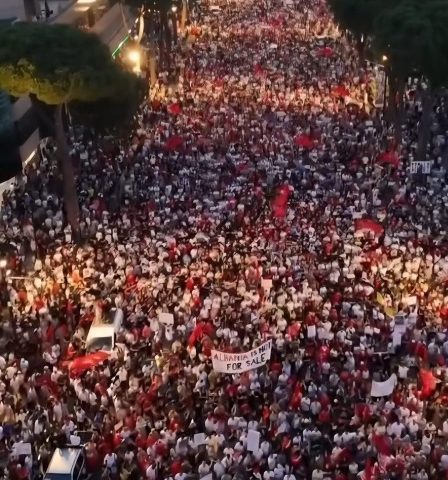
Slightly improving from last year, Albania is ranked economically as 25th freest among the 43 countries in Europe, and its overall score is above the world average, according to the annual Index of Economic Freedom by the Heritage Foundation.
TIRANA, Jan. 28 – Albania’s economic freedom has improved slightly compared to last year, but weak property rights and widespread perceptions of corruption are holding the country back, according to the annual Index of Economic Freedom by the Heritage Foundation.
The index gave Albania’s economic freedom a score of 66, making its economy the 53rd freest in the 2010 index. Albania is ranked 25th freest among the 43 countries in the Europe region, and its overall score is above the world average.
Albania’s economic freedom is comparable to that of other developing Balkan states like Croatia and Macedonia. Fiscal freedom, investment freedom, and financial freedom rate significantly higher than typical levels. However, Albania’s overall score is reduced by weak property rights and pervasive corruption, according to report.
“On the issues of property, the issue of corruption and labor market, we are below the global average. We would like to have seen better results, but that’s the truth despite the fact that we made some progress in 2009,” Finance Minister Ridvan Bode said in a press conference, answering reporters’ questions on the index.
Albania’s level of economic freedom increased by 2.3 points during the past year, due primarily to increases in trade freedom, property rights, freedom from corruption, and labor freedom.
On the positive end, the report says that Albania’s tax rates are low. Personal income and corporate tax rates are a flat 10 percent. In the most recent year, overall tax revenue as a percentage of GDP was 23.3 percent.
It also says inflation has been relatively low, averaging 3.2 percent between 2006 and 2008. Regulatory agencies continue to oversee prices, and the government raised pensions and public-sector wages in May 2009 against the advice of the IMF.
On the negative end, the report says Albania’s independent judiciary is under political pressure, intimidation, widespread corruption, limited resources, and organized crime, which are obstacles to the effective administration of justice.
“Corruption is perceived as widespread, the report adds, and “rigid employment regulations hinder productivity growth as the non-salary cost of employing a worker is high, and dismissing a redundant employee is relatively costly. The high cost of laying off workers is a disincentive for companies that would otherwise increase employment.”
The report acknowledges that Albania is one of Europe’s poorest countries despite economic and political reforms since 1992, when nearly 50 years of Communist rule ended, adding that the government has been pursuing greater integration into the Euro-Atlantic community for several years, and in April 2009, Albania achieved full membership in NATO.
“Despite the global economic slowdown, Albania has been able to maintain relatively sound macroeconomic stability,” the report’s authors write. “It has acted to enhance its business and investment environment. Albania now has a flat rate of 10 percent for individual and corporate taxes, and structural reforms to foster private-sector growth have led to increased production and consumption, as well as a substantially reduced poverty rate.”