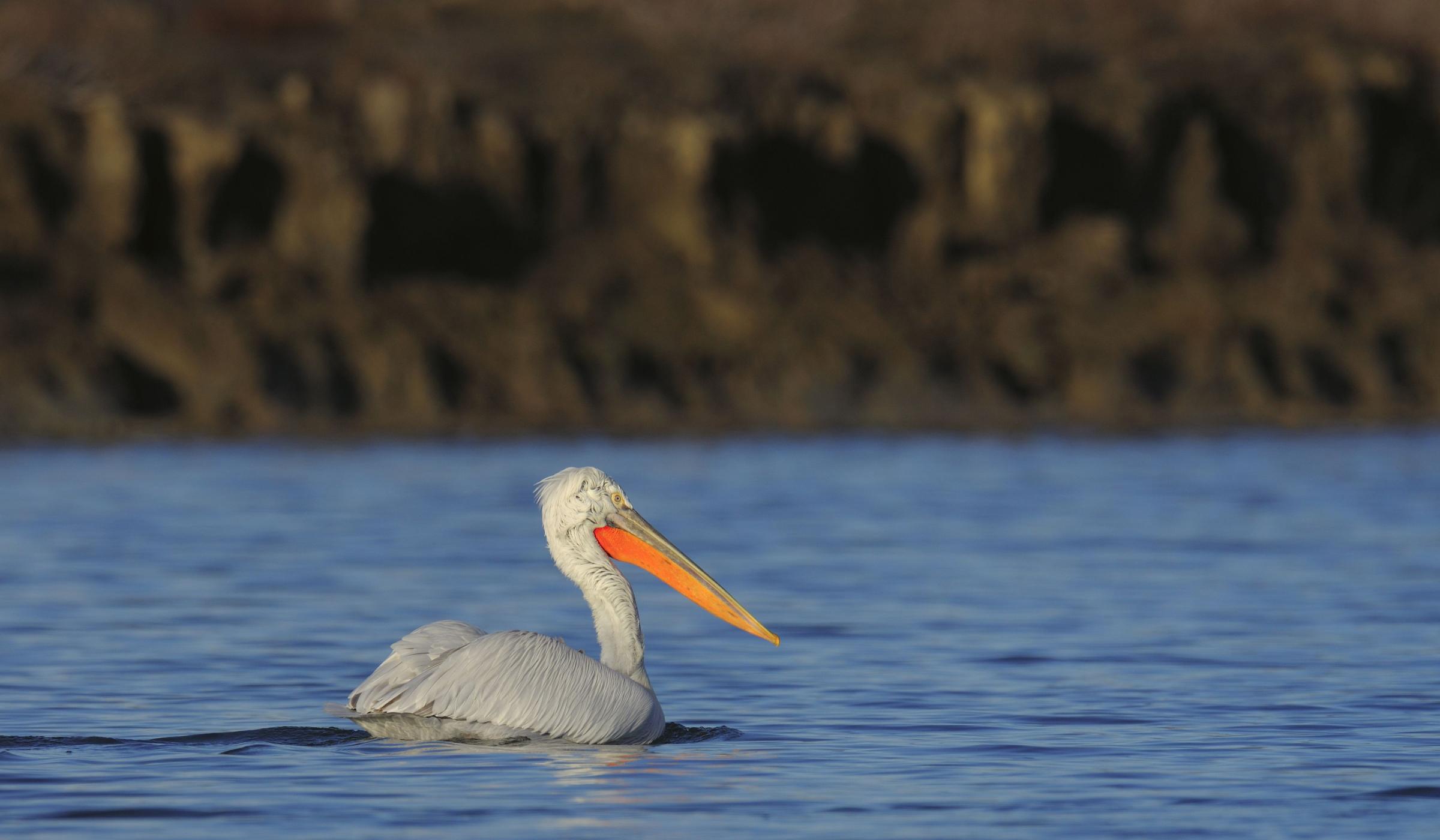
The Curly Pelican, also known as the Dalmatian Pelican, is one of Albania’s best-known wildlife species. What makes the local Curly Pelican special is that its nesting spot at the Karavasta Lagoon, 90km south of the capital Tirana, represents the most westward site of this pelican’s European habitat, says Albania’s National Tourism Agency.
Tour operators suggest observing these pelicans in boat trips near the island where they usually perch.
Inside the lagoon, there is a small sandy island where flocks of pelicans typically come together. The Curly Pelican is considered an endangered species and the numbers of this bird continue to decrease worldwide.
About 5 percent of the entire worldwide population of the Curly Pelican breed at the Karavasta Lagoon, which has been under the Ramsar Convention protection since 1994.
The Lagoon has a surface of 4,330 ha and is the largest lagoon of the Albanian coast and one of the largest along the Adriatic. Soft and wild pines dominate the lagoon where the large crown pines stand out. The multistory forest is very rich in herbals and tall woods. The nearby Divjaka sea sand is rich in iodine and temperatures above 20 degree Celsius start from the second half of May and continue until the beginning of October. The site is national park where beach activities mix with eco-tourism.
In this ecosystem, there are 210 kinds of birds, 12 kinds of mammals and 16 kinds of reptiles. Lagoon waters of about 1.5 meters deep are rich in fish, especially mullet and eel, which are served in many restaurants on the Divjaka beach. The flora of the National Park of Divjaka is famous for its beauty and special freshness.
Bird watching tour
Lonely Planet, which in 2011 placed Albania as the number one global destination to visit, suggests the Divjake-Karavasta national park as the top destination for tourists taking bird-watching tours in the wetland areas of Albania’s Adriatic coast.
According to the Albanian Ornithological Society, which also runs bird-watching tours, Karavasta offers shelter to more than 245 species of birds.
Albania is home to an impressive number of species of birds that vary from residents, that stay all year around, to breeding birds that spend a good part of the growing season in the country to raise their young, migrants who pass through the country with the seasons, to wintering birds who like to spend a good part of the winter in Albanian to escape colder conditions up north.
One of the most special species is the Dalmatian pelican in the Karavasta lagoon where only a few dozen have survived in the past two decades due to illegal hunting.
Albania has banned hunting since 2014 in a bid to put an end to uncontrolled and illegal hunting, which has decimated wildlife populations in the country over the last two and a half decades after the collapse of the communist regime in the early 1990s. The current ban is valid until 2021.
Development project opposed
Last year, a proposed billion dollar mass tourism resort at the Karavasta Lagoon triggered strong reaction by Albanian environmentalists worried over the development project, putting at risk the local ecosystem and its flora and fauna, including the already endangered Dalmatian Pelican population.
The Kosovo company which proposed the project seems to have temporarily withdrawn from its development plans following strong public reaction.
“The company is seeking to occupy about 12 km of coastline for an amount of only 1 Euro and planning to build 2,400 apartments, 370 villas, a 90-hectare tourist resort and a town for 18,000 residents, almost double compared to population of Divjaka town spanning in a much bigger area,” environmental NGOs warned last year about the proposed development project at the protected national park.
The Divjaka-Karavasta national park spans over a surface of 22,230 hectares offering a variety of habitats such as a river delta, lagoons, sand dunes and rich flora and fauna.
The park is also known for its sandy beaches, pine forests and trekking.