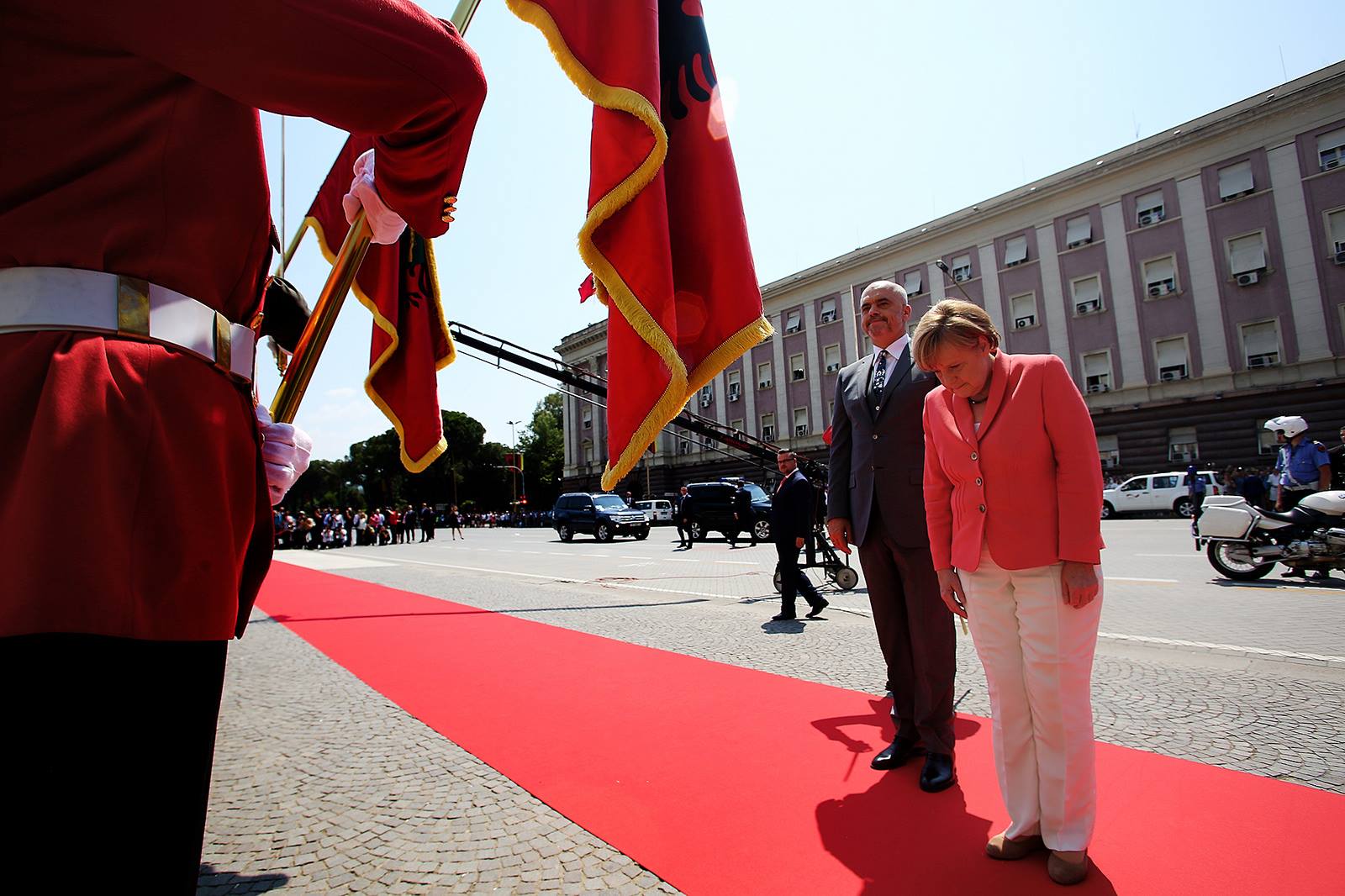
German Chancellor Angela Merkel’s visit to Tirana this week was important first and foremost because of its timing.
In a European Union that that is surrounded by crisis and conflicts – from Ukraine to Syria in the outskirts to Greece within – the fact that the German chancellor — perhaps the most powerful political leader inside the EU right now — finds time to visit the region is in itself a message: Germany and the EU do care for the Western Balkans – they do want to give the region a clear European perspective.
Beyond that, the news on the EU integration aspect for the visit was that there was no news. Merkel mentioned priorities Albania faces in its EU path, such as judicial reform and economic development, but repeated the line Albanians have been hearing for a decade or more – the country will at some point join the EU but there is no time-line.
It falls first and foremost on Albanian leaders to create the conditions which would make Albania ready for the EU, not the other way around, the EU stance is, and we agree with it.
Let’s hope the Albanian prime minister’s optimistic pledge to fulfill all requirements that lead to opening of accession negotiations by November comes true.
It is also important not to create myths about the Merkel visit. Albanians are fond of myths and have a lack of clear vision about this small country’s weight in the world stage and global affairs. Merkel did not come to Albania because she has a special or preferential relationship with Albanians or personally with Prime Minister Edi Rama. She came here for the same reason she went to Serbia and Bosnia – to say that the region is not being forgotten and to urge reforms that improve the quality of life for the region’s citizens.
It is understandable to see why Germans are perplexed with the high number of asylum claims from Albania, for example. The country’s people are indeed safe from political oppression. But they are not immune from another form of oppression – lack of hope and economic opportunities in their native land. The root cause of the problem needs to be addressed – as Merkel put it – by creating better living conditions within Albania.
Thankfully Germany is taking a leading role in making sure the Western Balkans do not fall off the wagon and start drinking the intoxicating syrup of nationalism and extremism. The deadly sirens of the East are calling some of the Balkans’ people back to their past, and someone has to tie them to the ship so they don’t jump into the dangerous sea.
One reason Albania has come into renewed German focus could be as a counterbalance to Serbia, however. With Croatia now in the EU, a new dichotomy needed to be created to keep Belgrade away from Russia’s embrace. Albania fits the bill best as the other Western Balkan countries are too small and too ethnically divided.
The EU and Germany now see Albania and Serbia as a couple. They want the two to get along. It won’t be an easy project, but it is one that can help both countries overcome their difficult past and move toward a better joint future inside the European Union.