
TIRANA, Oct. 23 – National poet Gjergj Fishta was born Oct. 23, 1871, thus grown up during the Renaissance times. His work is a clear example of such an influence. Fishta was born in Fishta village of Zadrima commune and first started to work as s shepherd. At six years old he was noticed by the Catholic person in the village who took him to the Franciscan Seminar in Shkodra. Fishta then followed the Troshan seminary where he expressed his first signs of a poet. In 1886 he went to study in Bosnia for philosophy. Those are the years that produce the first lines until he graduated in 1893. Fishta died in Shkodra in 1940.
Fishta was the first Albanian writer to be declared a Nobel Prize candidate. He was considered highly by the Albanian other personalities like Lasgush Poradeci calling him a ‘militant of the Albanian literature,’ or Eqerem Cabej “Albanians’ national poet.” Fishta’s first poem was published in 1899 “Albania.” His works were also published in some 15 magazines of the times. During his more than 40 years as a writer Fishta has used as many as 24 pseudonyms. His best work has been considered the “Lahuta e malesise” to which he dedicated his whole life. The first lines were published in 1904 until the last part in 1937. His other epical work “Moisi Golemi and Deli Cena” was partially published at the media. Other works are “Anza e Parnasit,” “Pika vese,” “Mrizi I zanave,” etc. His words expressed heroism and the resourceful Albanians’ character, nature that have made him be really considered as Albanian Homer. Fishta published in 1913 his magazine “Hylli I drites” and also put the national flag at the Shkodra church Oct. 23. Under the Austrian occupation he published Posta e Shqypnise magazine. He was highly evaluated in 1931 when Greece awarded him the Phoenix prize while in 1939 Italy made him member of its academy. Other awards came from the people in Shkodra, Berat, but also from Austria’s king, Greece and Turkey. Fishta has a distinguished patriotic activity as well, member of many organizations and also of the Monastery congress. He was a member of the Albanian delegation at the peace Conference in Paris in 1920. He also participated at the June revolution in 1924 and then was followed by the monarchic regime. He moved to Italy. Nevertheless Albanians managed to have his full works only after the fall of communism in 1990.
Fishta’s birthday

Change font size:

Latest from Culture
Gazmend Freitag Named “Painter of the Year 2025” in Gjirokastër
Change font size: - + Reset Kosovo-born, Austria-based artist honored for a career that has turned memory, displacement and identity into a bridge between cultures Tirana Times, September 29, 2026 – Kosovo-born Albanian

Spain Rules the World Again
Change font size: - + Reset Spain clinches second FIFA World Cup title as Europe continues its dominance on football’s biggest stage By Gautam Karve, Editor-in-Chief, World Media Organization Tirana Times, July
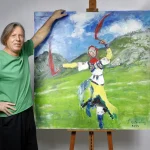
K’cimi dancing of Tropojë – Gazmend Freitag
Change font size: - + Reset by Monika Grill Tirana Times, July 11, 2026 – “K’cimi i Tropoja” – the dance that endured over centuries and kept the Albanian identity alive, has
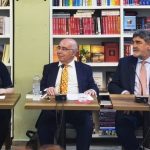
In Search of Albania’s Soul: Manuel Montobbio Returns to Tirana Through Literature
Change font size: - + Reset Tirana Times, July 02, 2026. The Albanian Institute for International Studies and Tirana Times book house hosted a special literary evening in Tirana with Ambassador Manuel Montobbio, diplomat, writer, poet

This Auditorium Comes With a Price Tag -Corruption in Albania’s Public Universities
Change font size: - + Reset Corruption remains one of Albania’s most stubborn obstacles toward development and its dream for European integration. Although the country marked its biggest historical leap in Transparency