 TIRANA, July 6 – The historic centers of Gjirokastra and Berat, two UNESCO World Heritage sites in southern Albania, are no longer endangered to be included on the List of World Heritage in Danger, Culture Minister Mirela Kumbaro has announced.
Speaking at a press conference last weekend, minister Kumbaro informed that UNESCO’s World Heritage Committee had unanimously decided that Gjirokastra and Berat will not be inscribed on the List of World Heritage in Danger.
“Because of widespread illegal constructions and lack of measures to curb them, the historic centers of Gjirokastra and Berat had been placed under strict monitoring with a warning to be included on the List of World Heritage in Danger,” said the minister.
Illegal construction dating from the late 1990s, lack of specific monitoring indicators, a program of archaeological excavations, adequate fire fighting arrangements in the historic urban zone, a detailed tourism development plan, management activities, systems and plans had been identified as barriers affecting the conservation of both Gjirokastra and Berat, inscribed on the World Heritage List as rare examples of an architectural character typical of the Ottoman period in 2005.
In its latest report, the World Heritage Committee said it welcomes the efforts undertaken by Albanian authorities to respond to the recommendations of the Committee and those of a 2012 ICOMOS Reactive Monitoring mission and encourages the timely adoption and implementation of the new draft law on cultural heritage as well as the new regulation on the protection, conservation and management of the historic center of Gjirokastra and its buffer zone.
The report notes the progress made with controlling illegal constructions, the maintenance and conservation works, as well as the awareness raising and educational initiatives, and requests the Albanian authorities to continue to implement the previous recommendations, in particular to develop an overarching integrated management plan and maintain the moratorium on any new constructions within the World Heritage property and its buffer zone, until the approval of the new Regulation for the protection, conservation and integrated management of the historic center of Gjirokastra and its buffer zone.
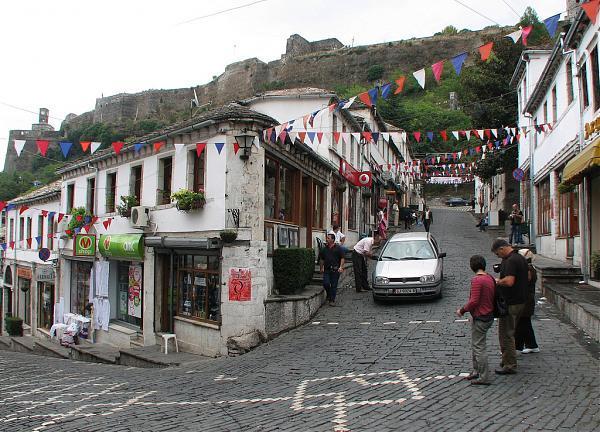
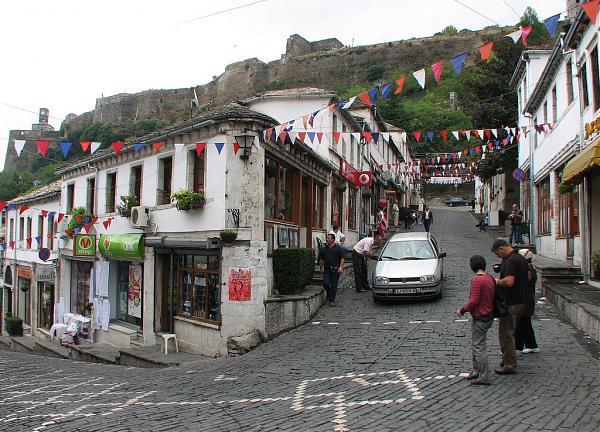
Berat and Gjirokastra are inscribed as rare examples of an architectural character typical of the Ottoman period. Located in southwestern Albania, Berat bears witness to the coexistence of various religious and cultural communities down the centuries. It features a castle, locally known as the Kala, most of which was built in the 13th century, although its origins date back to the 4th century BC. The citadel area numbers many Byzantine churches, mainly from the 13th century, as well as several mosques built under the Ottoman era which began in 1417. Gjirokastra, in the Drinos river valley in southern Albania, features a series of outstanding two-story houses which were developed in the 17th century. The town also retains a bazaar, an 18th-century mosque and two churches of the same period, says UNESCO in its description.