By Cedric Rehman
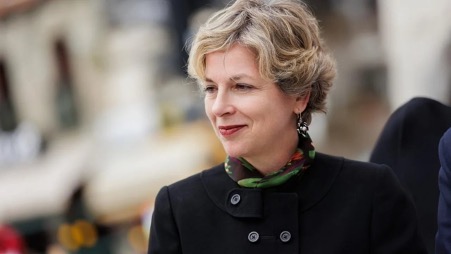
It was not the most obvious choice for Anne Lambaek, when she decided to take her school class for an excursion to Albania. While other colleagues take their pupils on a trip to London or Paris, the History, Danish- and Biology-teacher voted for a country, that still in the eyes of many Western Europeans has the reputation of being remote. The reason for her choice was simple: Albania and its complex history appeared to her as the “best teacher” on the consequences of totalitarian rule and the genuine development of a democratic society. The features of Albanian communism Lambaek knows well from her own experience. 1986 she was given the possibility to travel to Albania – a rare thing to happen at that time. “Traveling to Albania in the late 1980ies was a very special thing because it was so difficult to get into the country”, she remembers. Also she was strongly supervised by a communist tourist guide, Lambaek could, in very restricted limits, get in touch with the local population. “I was amazed by the friendliness of the people and stunned by the beauty of the country and after my return to Denmark I was always wondering if I once would be able to come back”, she says.
Sponsorship by fund
The opportunity finally came long time after the fall of communism with the help of a fund that financed her idea of a school excursion to Albania. Working in Ryslinge in central Denmark for a so called “Free School” – a reformist pedagogic school that leaves the teacher more freedom to organize instruction and to choose methods of tuition – she was also free to employ large parts of her History lessons in the class she choose to take to Albania to prepare the trip. “I tried to introduce my pupils into the culture and history of Albania from the ancient times till the recent days to make them ready for what will confront them on site.”
Lambaek also benefited from the fact that one father of her pupils was Albanian and could help her in organizing the trip. “The reaction of the parents to my plan was basically good,” Lambaek reports.
Close contact to Albanians
In Albania Lambaek took her class – all 15 year old youngsters – on a round-about-trip from the north to the south. Bearing in mind her own experiences of forced-upon isolation, she assured that her pupils would be given the opportunity to exchange freely with Albanians. Therefore she accommodated the teenagers during the two day stay in Tirana in Albanian host families. An experience her pupils appreciated a lot.
“Our host families cared about us with a lot of affection”, says Mie Ekman a 15-year-old girl from Anne Lambaeks class. She enjoyed to hang out with their Albanian exchange partners of their age very much: “When it comes to fashion, music or TV-series we really dig the same things – that made it easy to feel at home.” She will definitely stay in touch with her new Albanian friends via E-Mail, she says. Her class mate Peter Yingum, also 15-years-old, was astonished to find his expectations on Albania disprovedby what he finally found there: “I imagined Albania to be a poor country, but instead of horse-drawn carriages and old buildings, I found many construction sites and fancy cars on the streets.”
Albania as example
Anne Lambaek wanted to create awareness among her pupils of the consequences and different features the transition process has in Albania: “The host families where my pupils were accommodates were middle-class, so we also went to more remote areas of the country to learn how the common people live there.” She remembers staying with her class at a little farm in Southern Albania, where they were welcomed and catered for with a lot of cordiality. “You could see, that the farmers where not affluent, but still they shepherded us like kings – My pupils and I we were very much impressed by that.”
Has Anne Lambaek reached the pedagogic aims she wanted to achieve by taking her pupils to Albania? “Danish tend to take democracy for granted, because it was established long time ago. My pupils now could see with their own eyes, how hard Albanians fought for their democracy to come and how hard the price for transition sometimes is. I am sure they will value things more, when they will be back at home.”