
TIRANA, March 9 – Prime Minister Sali Berisha has officially announced his Democratic Party-led coalition intends to implement a full tax amnesty, excluding only businesses connected to current and former public office holders and those whose origin of capital is not legal business.
Speaking on Wednesday’s government meeting, Berisha asked the finance ministry to start preparing a draft law which would pardon fines and unpaid taxes, as well as make a full amnesty on undeclared assets for all businesses except for those owned by officials and those whose origin of capital is trafficking, drugs and other illegal activities.
Inviting the opposition to support the bill which requires a qualified majority of 3/5 of votes, Berisha said the opposition could examine the government bill and make its own amendments based on its platform.
“Considering the obstructionist stances held by the opposition, we will prepare for two versions, the version of amnesty and forgiveness. The forgiveness will include all overdue tax obligations and fines,” said the PM, describing the forgiveness version as a new chance for all businesses and their declaration of employees to formalize the economy.
However, it remains unclear whether the opposition will support the government initiative with two months to go before the May 8 local elections. The opposition has not given its approval to any of the government bills needing a qualified majority of votes following the June 2009 general elections, which it claimed were rigged.
Few days after government initially announced it will start drafting the legal framework for the implementation of a full tax amnesty, the country’s business community represented by Konfindustria supported the initiative, saying that although delayed it would benefit businesses, consumers and the state, unfreezing large amounts. In a statement, Konfindustria says that it is completely unacceptable that in a 20-year period of such radical economic, fiscal and institutional changes, Albania remains the only country which has not implemented a real tax amnesty, especially when neighbours Greece and Italy continuously implement them. According to Konfindustria, delays are also affecting investment initiatives and keeping migrants’ savings abroad.
The business association says the best time to carry out this initiative is next summer, when thousands of immigrants return home to spend their holidays
Failure to establish the administrative court system and implement a tax amnesty reform were the two biggest disappointments with Albanian politics for the Tirana Chamber of Commerce and Industry in 2010. Finance Minister Ridvan Bode reiterated few months ago government’s stance in favour of carrying out the tax amnesty as a very positive measure for the country’s economic and financial system. However, he said the amnesty cannot be implemented without the opposition’s consent because the bill requires a qualified majority of 84 votes. According to Bode, the approval of the bill would first require the amendment of the country’s Criminal Code and that’s why government cannot implement the reform under a simple majority vote.
Bode said that the legalization of the informal business would produce positive results for the economy, unfreezing some USD $3 billion. The opposition and some experts were skeptical of the reform the Albanian government wants to make, considering it an effort and good opportunity to collect money in a time of crisis.
The International Monetary Fund has warned that a tax amnesty should nevertheless be only considered as a last resort, as it threatens to undermine future tax compliance and the credibility of the tax system.
The implementation of a full fiscal amnesty in Albania could legalize assets worth 6 billion dollars, a preliminary study by Tirana Chamber of Commerce and Industry revealed last year. The amount in case is considered hidden in the informal economy, estimated at 30 to 50 percent of the Albanian GDP. The legalization process is expected to be carried out under a modest tax of 2 to 10 percent per asset.
Govt announces tax amnesty reform, two versions to be examined

Change font size:


Latest from Business & Economy
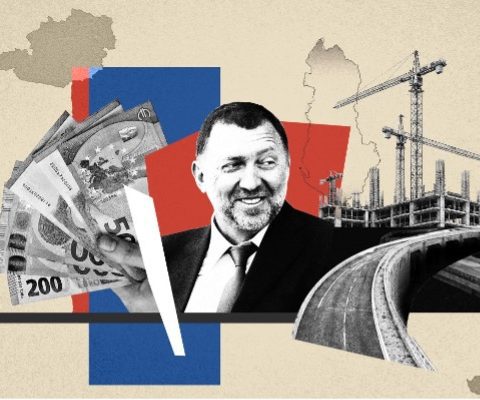
How a Sanctioned Russian Oligarch’s Business Interests Reached Albanian Public Contracts
Change font size: - + Reset Millions of euros flowed to companies linked to Strabag while Oleg Deripaska remained a major shareholder, exposing gaps in Albania’s ability to identify who ultimately benefits
Albania’s Cash Boom Raises Money Laundering Concerns
Change font size: - + Reset Cash outside Albania’s banking system reached a record 5.6 billion euros, last month. Tirana Times, August 30, 2026 – The amount of cash circulating outside Albania’s

Vlora Airport Heads to Arbitration
Change font size: - + Reset Albania faces another potentially costly international dispute after losing several arbitration cases in recent years that have exposed the state to hundreds of millions of euros

Concrete, Cocaine and Corruption: Albania’s Fragile Growth Model
Change font size: - + Reset Albania’s Concrete Economy: How Construction Became the Country’s Dominant Growth Model Tirana Times, July 10, 2026 – A booming construction sector has made Albania an outlier

Austria Leads FDI, but Real Estate Tells the Bigger Story
Change font size: - + Reset Bank of Albania data show Austria topping first-quarter foreign investment flows, while property and construction continue to shape Albania’s FDI model. Tirana Times June 25, 2026