Start: Vlora
End: Vlora
Total distance: 74 km
Trip length: 4-6 hours
TOWN OF ORIKUM
(Approx 22 km south of Vlora – approx. 25 minutes on the Vlora-Saranda National Road)
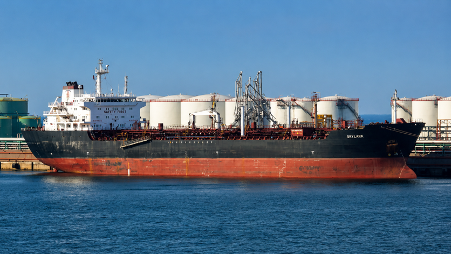
Take the Vlora-Saranda National Road and continue south to modern-day Orikum Orikum. About 2,500 years ago, Greek colonists settled and established a small city, Orikos, which lies at the southern end of Vlora bay. The Hellenistic and Roman period ruins of this ancient city can still be seen and can be visited at leisure. From modern Orikum, look south across the Bay along the Karaburun Peninsula – weather permitting, visitors can view the Pashaliman Army Base in the distance, which was a strategically important military installation for the Warsaw pact in Albania. The oldest known Albanian port, Pashaliman dates back to the Roman Empire and has been in near continual use since. The Pashaliman military base is still operational and no visitors are allowed; however, interested visitors can read about the port and base during the Soviet era in “The Long Winter of Loneliness”, written by Albania’s National poet and author, Ismail Kadare.
ARCHAEOLOGICAL PARK OF ORIKUM
(Approx 4 km west of modern Orikum – approx. 10 minutes on secondary and dirt roads)
Returning to the National Road, follow the signs towards Vlora Bay and Pashaliman Army Base to the Archaeological Park of Orikum Orikum. According to Pseudo- Scymnos, an nonymous Greek author and geographer, the city of Orikum was settled by the lost Euboeans, who were blown off course by strong winds on their return voyage from the battle of Troy, in the 12th-14th centuries B.C. Today preserved in a national park, the ancient Greek city sits on a favorable geographical position where the Adriatic and Ionian Seas meet. As well as its proximity to Italy and Greece, this made Orikum an important harbor on the Adriatic coast. Orikum was later occupied by the Romans as a defensive base in their wars against the Illyrians and the Macedonians in the 3rd century B.C. Archeological evidence shows that Orikum was a developed urban center, with an amphitheater that could hold around 400 spectators. Submerged under the Orikum lagoon, the city’s elaborate network of roads can be still seen today. Cost of admission ranges from 200 lek for Albanian visitors to 700 lek for foreign visitors. No guided tours are currently available, though locally-produced guidebooks are available for sale at the park entrance. An average visit lasts 30 – 90 minutes. Park hours are 09h00 – 16h30 daily.
MARMIROI CHURCH
(Approx 3 km of the Archaeological Park of Orikum – approx. 15 minutes on dirt roads)
On the outskirts of the Archaeological Park of Orikum is the Marmiroi Church Church, located on the primary access road to the park. Dating back to the time of Byzantine Emperor Theodorus, around the 13th century A.D., the church walls still contain fragments of Byzantine wall paintings and frescos. Traces of the church’s narthex are also still intact. The church has three entrances and is renowned for its complex construction and architectural values. The Marmiroi Church represents one of the rare examples of cross-shaped churches with a dome poised over a high cylindrical roof.
CASTLE OF GJON BOȁRI
(Approx 8 km east of Orikum – approx. 20 minutes on secondary and dirt roads)
From Marmiroi Church, return to Orikum and turn east off of the National Road, heading towards the village of Tragjas, away from Vlora Bay. Continuing 5km past Tragjas village, you will reach the Castle of Gjon Bo袲i Bo袲i, an important fortification of the 16th-17th centuries A. D. This fortification features a characteristic “arrow loop” design which began to be used in Albanian building construction in the 16th century. Typical of castles built along the southern Albanian coast during this period, the castle itself is a large fortification with towers on the northern and eastern corners of the building. Admission is free. Visitors are advised to exercise caution when walking on the steep slopes and often slippery stones surrounding the castle fortifications. After your visit at the Castle Gjon Bo袲i, travelers may stop for an Albanian coffee in the village of Tragjas, served Turkish-style, or enjoy a late lunch by the sea in Orikum, before returning to Vlora by late afternoon for overnight and dinner.