By Juxhina Malaj
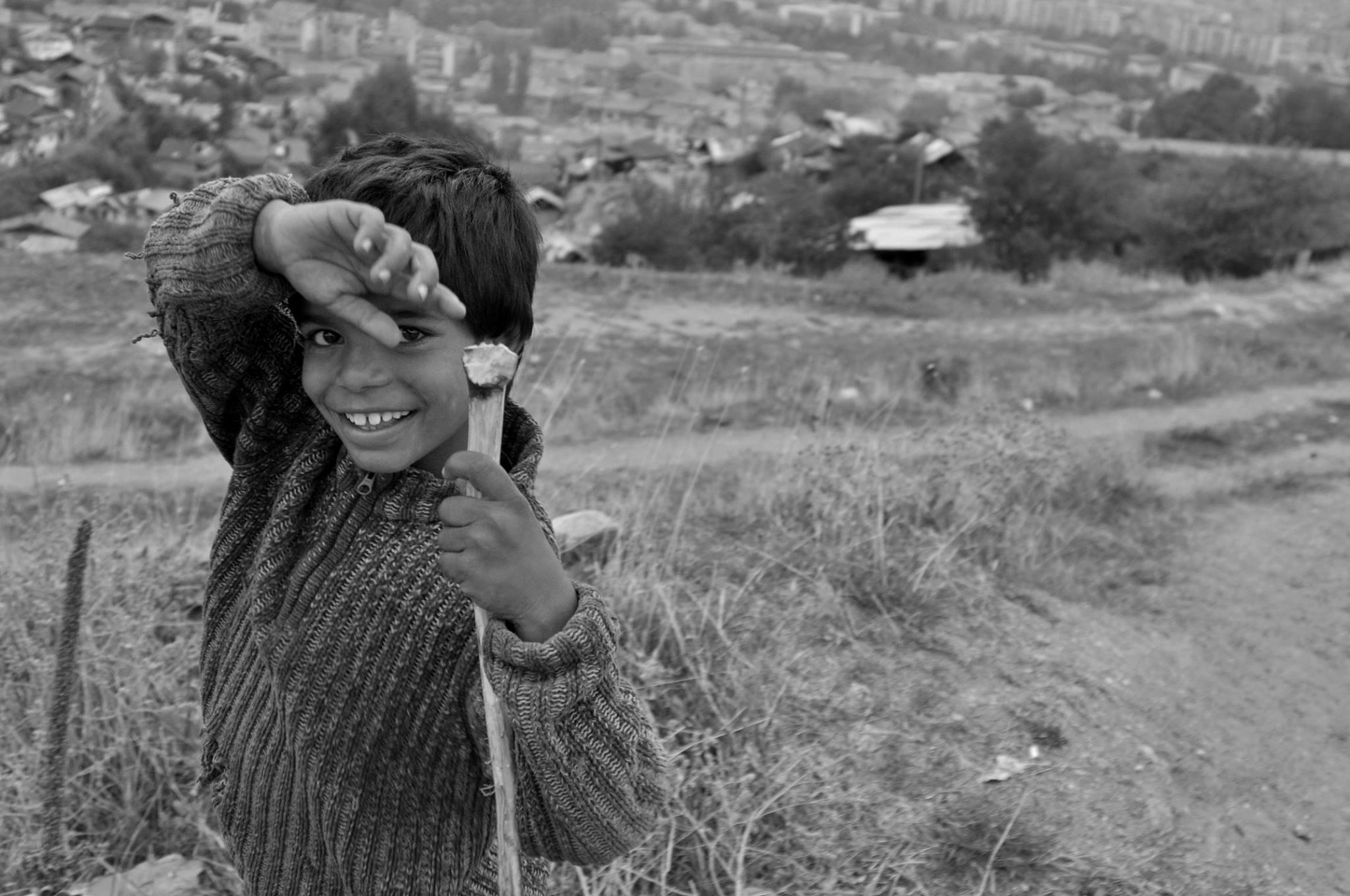
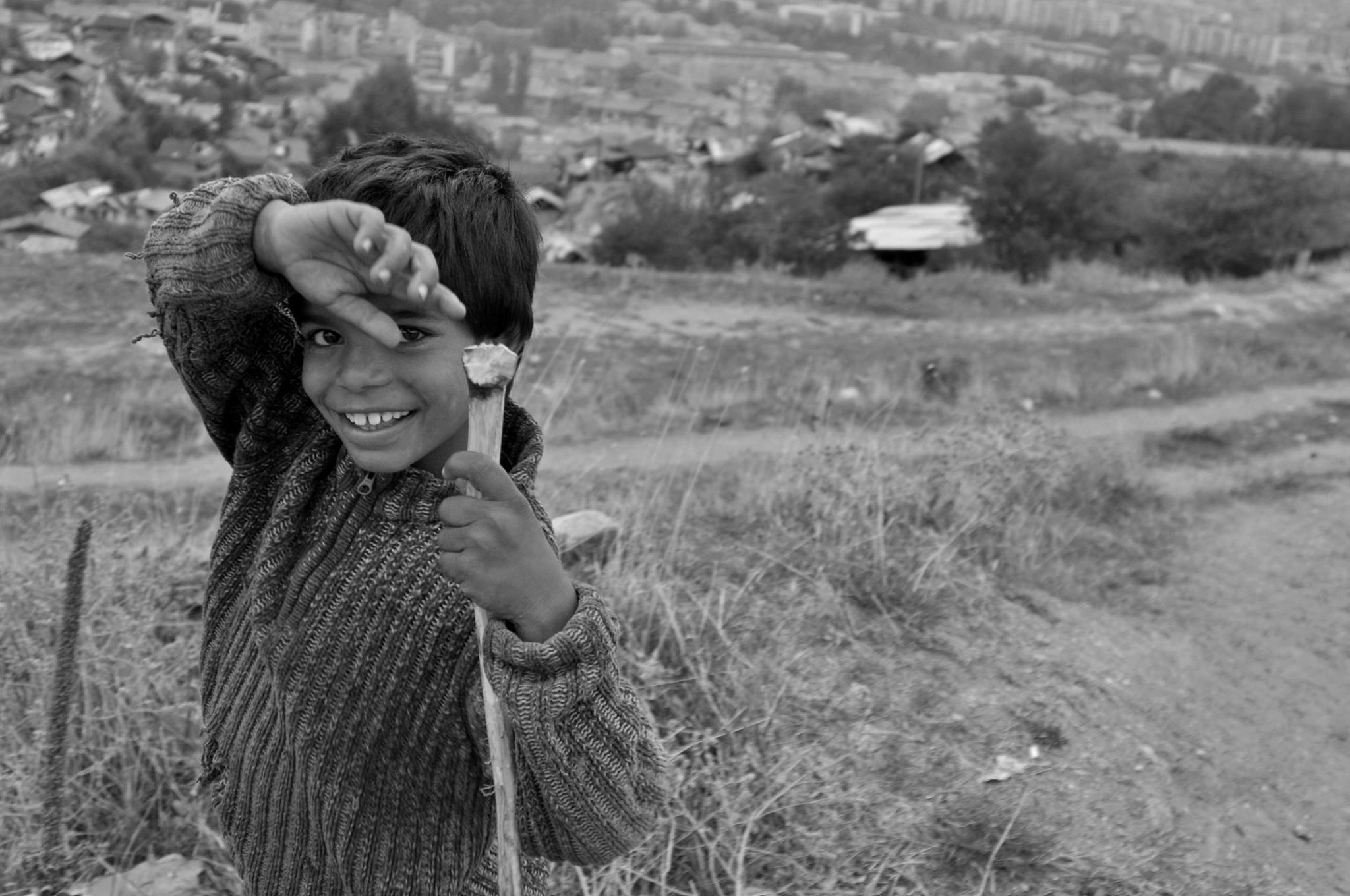
It was a cold February morning. The bus driver was screaming his lungs out and cursing at the car in the front until the light turned red. The bus stopped. So did his cursing. I looked out of the bus’ front window and I saw a little boy with two large bouquets of mimosas wrapped in his little arms. It was freezing outside, and I couldn’t help but shiver while seeing how light the little boy was dressed. The cold didn’t stop him. Nor people’s disregards. He continued strolling from car to car trying to sell his mimosas. No luck. The green light turned on and so did the bus driver’s cursing.
That exact scene happened quite a few times over the following days. Almost like a dà©jà -vu. Different bus, different cursing, same little boy wearing the same clothes with his arms full of mimosas. That was his daily life, his “childhood” . But he is not the only one. There are many other Roma children out there that are “forced” to go out on the streets and earn money every day in order to survive. Some have mastered the art of begging. Some sell little things to people passing by on the streets. Whatever they ‘choose’ to do for the following day is anything but go to school.
Why is that? Is it their choice to live this life? Do their parents and relatives force them to go on the streets? Do they love to make a few bucks instead of going to classes? There is no single reason, as they all apply to different Roma people.
If you take a walk in any street in Tirana, you will most probably pass by a few Roma lying on the streets, begging for money. Most of them are not too pushy. You ignore them, they move on begging to the next person without making a big deal out of it. There are of course cases when you’ll get cursed if you pass by them and don’t bother to give them anything. But there are also cases when some of them will keep blessing you, whether you give them something or not.
Not all Roma are the same and behave the same even though they are raised in the same poor conditions without strong role models.
Whenever I see a very young girl holding a baby in her arms I always think the baby and other children next to her are her siblings, but in most cases they’re not. They are her children. Faced with difficult financial situations, most parents ask their daughters to get married without finishing their studies first. But that is not the only reason. According to a report by Open Society Foundation for Albania- Soros, several interviews with Roma people showed other reasons why girls marry at a very young age without getting an education first.
“During communism we married our girls young to shut people’s mouths. Unless your daughter would get married, she would get harassed.” (Women focus group – Levan, Fier)
“We’ve kept getting married young due to the family’s difficult condition. Parents themselves tell girls to better go create their own family because they cannot afford to keep them.” (Women focus group – Shkozà«, Tirana)
“If a girl finishes her studies, by the time she graduates it is going to be very difficult for her to marry because she cannot find any guy her age. Maybe this is the reason why girls don’t continue their studies. For guys it is different.” (Interview with a young Roma guy, Pogradec)
Child marriages among Roma people are part of their tradition and one of the main reasons why the education level is very low among Roma community. Lack of education drags the majority of them down, like a heavy luggage they have to carry everywhere. Eventually the luggage gets heavier and heavier and they continue living the same lives their parents lived. They get married and have kids. Even though they cannot provide for them, they keep bringing more children into their misery. Sometimes children are seen as a ray of hope for Roma. Sometimes they are seen as an opportunity to make more money. And the cycle keeps going.
Another study from 2008 by Claude Cahn and Elspeth Guild entitled Recent Migration of Roma in Europe showed that Roma’s ability to access goods and services “is limited throughout Europe by factors including lack of educational qualifications among significant segments of the Romani communities, as well as by ethnic or racial discrimination, driven in particular by antiGypsyism — that is, a widespread, deeply rooted prejudice and intolerance directed against Roma in Europe.”
The luggage keeps getting heavier and prejudice is like the cherry on the top. Will Roma one day have the necessary education to get a decent job and stop wandering around begging and selling on the streets? Will they stop having children until they make sure they can provide for them and their education so that they don’t end up like them? Will governments ensure that they have access to education and decent housing so they can have the same opportunities as the rest of the society?
Nobody knows the answer yet. Maybe no one will. The cycle may go on and on forever, until there are no more people to beg and no more mimosas to sell.