 TIRANA, Feb. 23 – A new bill is being introduced aiming to regulate the rights of minorities in Albania.
Albania’s government has set up a special work group that will draft and complete the legislation that will include suggestions from stakeholders and minorities as well.
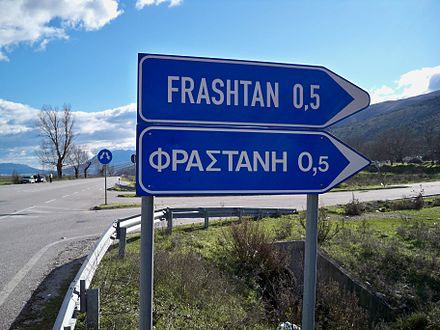
The bill provisions state in areas where minorities represent 20 percent of the population, street addresses and services provided will also be in the ethnic language of the minority. Furthermore, members of these minority groups that account for no less than 20 percent of the general percentage of population are entitled to receive electoral related information in their ethnic language.
According to the draft that aims to protect the rights and liberties of minorities, “people who belong to national minorities have the right of peaceful gatherings, freedom to organize, freedom of having an opinion and the right to manifest their religion or creed.”
The State Committee of Minorities said that Ministry of Foreign Affairs will send the final draft of the bill to Council of Ministers by March 15.
In January, public hearings were held on the subject. Those revealed that minorities in Albania feel unrepresented in the country and unprotected from state institutions.
Currently Albania acknowledges two groups of minorities, those who are considered national ethnic and those who are considered cultural and lingual minorities. The first category includes the Greek, Macedonian and Serb-Montenegrin minorities.
The 2011 census carried out by Albania’s Institute of Statistics reveals that ethnic minorities at the time made less than 1.5 percent of the population. The data showed that ethnic Greek minority now accounts for only 0.87 percent of the population and ethnic Macedonians make up 0.2 percent.
Meanwhile, Bulgarian MEPs are pushing for the rights of Bulgarians allegedly living in eastern Albania, a minority disputed by Albania. Bulgaria’s unofficial data show that about 50,000- 100,000 people of Bulgarian ethnic origin live in Albania. Albania has not listed those claiming Bulgarian ethnicity in any of the minority categories.
While organizations representing Bulgarian ethnic minorities were not invited to the hearings, representatives of the Vlach community believe that the draft does not protect the right of minorities and does not reflect EU standards that allow each minority group to have a parliamentary representative.
Many of the minority groups in Albania oppose the census data arguing that it does not reflect the real presence of minorities in the country. Article 6 of the bill says that “no one is forced to reveal his or her ethnic, language or religious affiliation,” and “a person can declare his ethnic affiliation during periodical censuses, based on the right of self-identification” .
In the 2011 Census, the first official census held in decades, 83.2 percent of the respondents declared themselves ethnic Albanians, while 14.07 percent refused to answer questions on the basis of nationality, mostly, it is believed, to be Albanians that did not believe the question should not be asked in the first place, following calls of a nationalist party.