
TIRANA, August 9 – While Albania emerged from the global financial crisis relatively unscathed, H210 and 2011 could yet prove to be a key test for the country, with the unfolding debt crisis in Greece and elevated political risk as a result of the opposition Socialist Party’s ongoing parliamentary boycott doing little to buttress foreign investors’ confidence at this juncture, said UK-based companiesandmarkets.com in a report.
The Q4 2010 Albania Business Forecast Report highlights the key views on the main challenges confronting underlying political and economic stability in the Western Balkan state over the medium term.
With the government’s ability to pass necessary legal and regulatory business environment reforms minimal, the prospects of Albania progressing further in its efforts at EU membership are steadily diminishing.
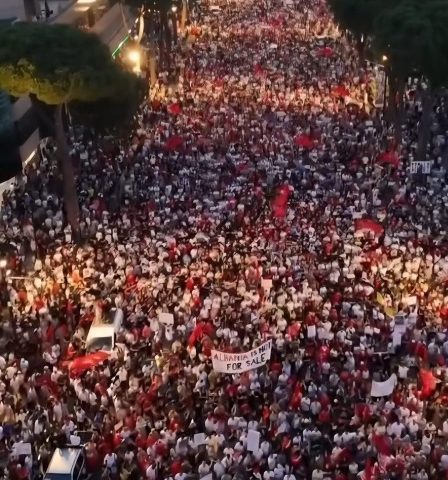
“The ongoing political crisis is doing little to improve the country’s image for foreign investors in surveyors’ view, and we caution that a failure to reach a lasting solution to the now one-year old stalemate could significantly undermine the country’s prospects for EU membership,” said the report. Going forward, the potential for a power-sharing agreement to emerge before end-year, does not rule out the possibility for the stalemate to continue, which will further raise the risks of large-scale public unrest.
Albania’s external asymmetries have started to unwind concomitant with a surge in energy exports, which is a trend expected to continue over the medium term. The current account deficit is projected to fall to 13.9% of GDP by end-2010 and to 12.7% by 2011. Over the long term, however, the report cautions that Tirana will need to carry forth with crucial business environment reforms should the country wish to sustain foreign investment inflows, which will be necessary if the Western Balkan state is to avoid a broader balance of payments crisis.
Consumer price inflation in Albania continued to tick lower through May according to latest data from the Institute of Statistics, with the headline print falling to 3.1% year-on-year (y-o-y), compared with 3.5% and 4.4% in April and March respectively. The inflationary environment throughout Albania is expected to remain benign through the foreseeable future, particularly as an expected slowdown in global growth in H210 and 2011 weighs on prices across the global commodities complex. “That said, we stress that risks to our end-2010 and 2011 inflation forecasts of 3.2% and 3.7% remain to the upside, particularly given the potential for a more sustained depreciation in the Albanian lek over the coming quarters,” concluded the report.
Political stalemate hampers foreign investments, report

Change font size:



Latest from Business & Economy

OTP Bank Albania inaugurates new Private Banking premises in Tirana
Change font size: - + Reset Tirana Times, May 18, 2026 – OTP Bank Albania has inaugurated new premises dedicated to the Private Banking segment, unveiling an exclusive space designed for clients

Building a Trusted Health Tourism Ecosystem: Albania’s Next Competitive Advantage
Change font size: - + Reset by Professor Alaa Garad Tirana Times, March 17, 2026 – There are countries you visit, and there are countries you remember. Albania is rapidly becoming the

Behind Albania’s Collapsing Roads: Clientelism and Corruption
Change font size: - + Reset Tirana Times, February 12 2026 – The rapid deterioration of newly inaugurated roads and tunnels across Albania has exposed far more than technical shortcomings. What authorities

The Kurum Case and the Collapse of Environmental Oversight in Albania
Change font size: - + Reset Tirana Times, 08 February 2026 – The Kurum waste file has exposed one of the most serious environmental and governance scandals in Albania in recent years,

Ivanka Trump Visit Reignites Property Dispute in Zvërnec
Change font size: - + Reset Plans by relatives of U.S. President Donald Trump to build a luxury resort in the scenic coastal area of Zvërnec have sidelined local residents and their