Border incident marks turning point for Albanian policy and public opinion. The country will no longer put up with being treated as
anything but an equal partner.
TIRANA, Sept. 5 – When an elderly Albanian couple who lives in the United States decided to go see their grandchildren in Greece on Aug. 22 as part of their brief visit to the region, they were prepared to sit for a long a time in the scorching heat of the Kakavija Border point between Albania and Greece, experiencing what Albanians who travel to Greece for any reason have known well since the early 1990s.
Long waits and grumpy border guards are the norm on the border, but this time it was something else. As they reached passport check, they were told to go back to Albania, as they did not have the needed funds to visit Greece. Several accounts of that day say the Greek guards demanded Albanians show they had 1,500 euros in cash on them, which many people simply don’t carry for security reason in an age of debit and credit cards. But the true reason for the border closure was also given in hints and curses: Greek anger over a property dispute between an Albanian local government and the Orthodox Church in the town of Permet.
“When I tried to explain, the Greek guard motioned as if he was going to tear up my passport,” the woman, Nexhije Lipaj, told a reporter of the Voice of America who was on the scene and described what happened in a report.
The Lipajs where not alone in their experience that day. Hundreds of Albanians, anyone traveling to Greece on Albanian passport without Greek residency permits – tourists and business visitors – were told they would not be allowed into Greece.
The news caused anger in public opinion in Albania, which had worked hard to earn an agreement with the European Union, of which Greece is a member, to gain visa-free movement for its citizens. Since 2010, Albanians have gone visa-free to watch football matches in Norway and to the beach in Spain, but more importantly, they have been free to travel to see loved ones in Greece and Italy.
The incident on Aug. 22 marked the first time a European state arbitrarily closed its borders to Albanian tourists. It prompted the Albanian border officials to resort to reciprocity for the first time. Greek citizens where simply sent back under the same pretext: Not enough cash to enter Albania.
The situation was quickly solved through diplomatic channels on both sides, but the incident clearly marked a turning point for Albanian policy and public opinion. It indicated the country will no longer put up with being treated as anything but an equal partner.
Permet incident draws ire
Relations with Greece have been essentially frozen for a long time over a dispute in the maritime border between the two countries, but with government changes in Athens and Tirana, many were hoping for a thaw as some high level visits are scheduled for the first time in years.
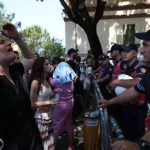
But things often don’t go smoothly between the two countries. The Greek government launched an official protest in late August over an incidents that involved Orthodox Church believers and clergy which physically confronted private security hired by Permet City Hall in a dispute over the ownership of the town’s Palace of Culture in the city center. The building had hosted a church, which had been ordered to vacate the promises by a court order years ago. The congregation cited an old church that used to stand on part of the property as the right to be there. The court, however ruled that the congregation must move from the communist-era building to allow for a new development.
But what surprised many, including some official representatives of the church itself, was the official and nonofficial involvement in Greece in the matter, which called a representative of the Albanian embassy in Athens to protest the treatment of a Greek citizen in a scuffle between the protesters and private security guards. Unofficially, banning Albanians from entering Greece on Aug. 22 was also retribution for the events in Permet.
A church official told an Albanian television it doesn’t want what is happening in Permet to be tied with holdups at the border. “There is no relation between the two,” he said.
A history of tension
Back in the early 1900s, a religious Albanian man in the Boston area was denied a church funeral by the Greek Orthodox Church because as an advocate for the Albanian national cause, he had been automatically excommunicated. As British historian Miranda Vickers puts it in her book, The Albanians, what happened traumatized the Albanian American community so much, as most of it was Orthodox Christian from the Korca area at the time, it forced them to create their own church, which later became the first Autocephalous Orthodox Church of Albania, with Fan Noli as head. Father Noli would later briefly serve as Albania’s prime minister.
The Autocephalous Orthodox Church of Albania was recognized as independent by the Ecumenical Patriarchate of Constantinople in 1937, but after the traumatic years of communism when all religion was banned, its revival has been seen with some concern among those who worry about the undue influence of Greek clergy in the church, starting with its head, Greek Archibishop Anastasios Yannoulatos, who has led the church since 1992, when he was appointed to much controversy within the Albanian Orthodox community and the Albanian society at large.
Perceived or real Greek interference in the Albanian Orthodox Church is deeply troubling for Albanians, because it goes against the very core national belief that a shared nationality, language and culture is what it means to be an Albanian, regardless of religious belief, analysts say. On the other hand, Greek nationalists often see Albanians of Orthodox faith as Greeks, despite their Albanian ethnicity.
Nikolla Marku, a popular Orthodox clergyman who heads an Orthodox congregation in Elbasan has been an unofficial spokesman of Albanian Orthodox believers who want the Albanian church to be fully independent from Greek influence. He recently wrote a letter asking the Ecumenical Patriarchate of Constantinople Bartholomew I, the leader of the Eastern Orthodox Church, to take action against Yannoulatos.
In the letter, Father Marku says Archbishop Yannoulatos is using the Orthodox Church for anti-Albanian purposes.
“Yannoulatos has turned the Albanian Orthodox faith into an annex of the Greek Orthodox Church with certain chauvinistic purposes, to the detriment of Albania. This man does not work for faith, but for the annexation of Southern Albania,” Father Marku writes. “By what right the Greek Church interferes in the affairs of the Albanian Orthodox Church? Why the Greek Church asks the Greek state to damage Albania’s Euro-Atlantic integration process? We have done nothing negative against the Greek Church or against the Greek state in the EU forums.” Marku called on the ruling body of the Eastern Orthodox Church to respect its own decisions of 1937 granting the Orthodox Church of Albania full independence.
Officially, Greek diplomats say the independence of the Albanian church has never been in dispute. But it appears the Greece sees a vested interest in the affairs of the church.
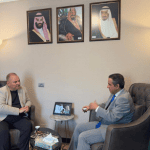
Greece’s top diplomat at its consulate in the southern Albanian city of Gjirokaster, Nicholas Kotrokoi, requested a meeting with the Mayor of Permet, Gilbert Jace, to discuss the situation in the city, which deteriorated into physical confrontation between priests and members of the congregation and private security, as the church members stormed the building.
“The Autocephalous Orthodox Church of Albania is not dependent on anyone and its decisions should be respected,” Kontrokoi was quoted by Albanian media. “The way, the time and the place of intervention in the Culture Palace is not appropriate.”